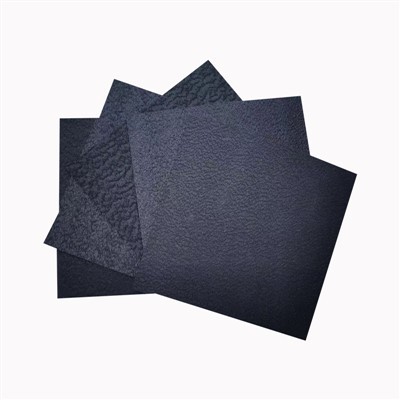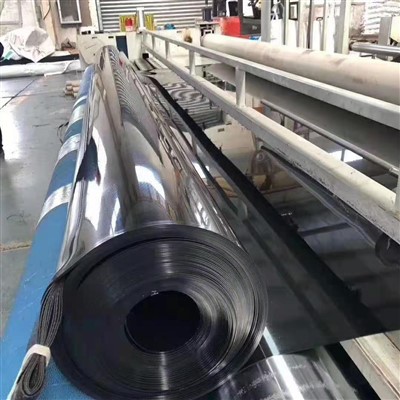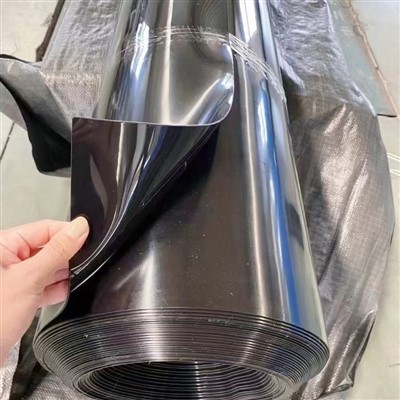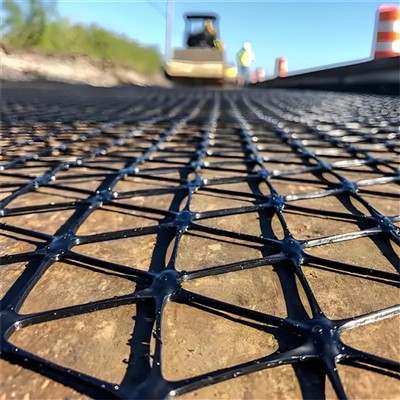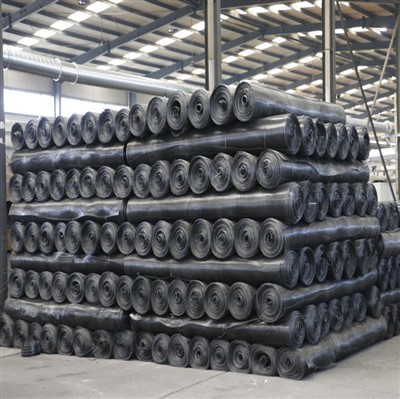
Geocells and geogrids are both geosynthetic reinforcement materials but serve different functions. Geocells provide three-dimensional confinement, improving load distribution and surface stability, especially in soft soils and slope protection. Geogrids offer high tensile reinforcement and soil interlock, making them more effective for structural applications such as retaining walls, embankments, and road base reinforcement.
Leading Geogrid Manufacturer & Supplier in China
We offer high tensile strength, low creep, excellent joint strength, and precise pore size design, along with ASTM/EN/ISO and third-party testing reports; we guarantee controllable delivery times and stable large-volume supply; we have a complete product line and customization capabilities, covering Biaxial Geogrid, Uniaxial Geogrid, Triaxial Geogrid, Fiberglass Geogrids, Polyester Geogrids, and Plastic Geogrid, and can customize strength, pore size, width, and coating according to project requirements to optimize engineering design; our R&D team can provide professional engineering technical support and one-stop solutions, from selection and design parameters to construction guidance, effectively solving soil stability, bearing capacity, and settlement problems.
Precision-Aperture Uniaxial Geogrid
Uniaxial geogrids are engineered to deliver exceptionally high tensile strength predominantly in a single, longitudinal direction. During the manufacturing process, the polymer sheet is precisely stretched along one axis, creating a unidirectional structure optimized to resist loads acting in the primary stress direction.
These geogrids are particularly suitable for applications where reinforcement is required to carry dominant loads in one direction, such as mechanically stabilized earth (MSE) retaining walls, reinforced embankments, steep slopes, and railway or roadway structures. Their high tensile capacity and low creep characteristics enable effective load transfer, improved stability, and long-term performance in critical soil reinforcement projects.

Biaxial Geogrid & Geogrid Fabric
Biaxial geogrids are produced through a controlled stretching process in both the longitudinal and transverse directions, resulting in a uniform, two-dimensional grid structure. This manufacturing method enables the geogrid to provide balanced tensile strength in perpendicular directions, allowing it to effectively resist multidirectional stresses.
With their ability to interlock with surrounding aggregates and confine soil particles, biaxial geogrids deliver excellent load distribution and improved structural stability. They are widely used in applications such as road and pavement base reinforcement, ground stabilization, retaining wall backfill, and landfill construction, where enhanced bearing capacity, reduced rutting, and long-term performance are critical.

High-Performance Triaxial Geogrid
Triaxial geogrids are advanced geosynthetic reinforcement materials engineered to provide load resistance in three principal directions. They feature a rigid, triangular aperture geometry formed through an integrated manufacturing process, enabling efficient stress distribution under multidirectional loading conditions.
This unique structural configuration delivers superior soil confinement and load-bearing performance compared to conventional uniaxial or biaxial geogrids. As a result, triaxial geogrids are particularly well suited for high-demand applications such as embankments, bridge abutments, foundation reinforcement, and heavy-duty pavement systems, where enhanced stability, reduced deformation, and long-term erosion control are essential.

Composite Geogrids/Geogrid with Geotextile
As the name suggests, these types of Geogrids have both geotextile and Geogrids. With this, you get both reinforcement and filtration.
These composites offer a comprehensive solution for soil stabilization and erosion control. You can select them for use in retaining walls, embankments, and protecting coastlines.

High Tensile Strength Fiberglass Geogrids
Fiberglass geogrids are manufactured from high-modulus glass fiber filaments that are precisely woven into a stable grid structure and then coated with a specially formulated polymer for enhanced protection and bonding performance. This advanced construction provides outstanding tensile strength, low creep, and excellent dimensional stability. Fiberglass geogrids exhibit superior resistance to chemical corrosion, moisture, and temperature variations, ensuring long-term performance even in harsh environments. When used in pavement reinforcement, slope stabilization, or foundation improvement, fiberglass geogrids effectively distribute loads, limit deformation, and significantly extend the service life of the structure, making them a reliable solution for high-performance civil engineering applications.

Technical Advantages and Performance Characteristics of Geogrids
Geogrids function by mechanically interlocking with surrounding fine-grained or granular fill materials. The open aperture structure allows aggregates or soil to penetrate through the grid and engage with the transverse and longitudinal ribs, forming a stable composite system. This interaction enables the stiff, high-strength ribs to effectively restrain and stabilize the overlying materials.


The reinforcement performance of geogrids is achieved through a combination of complementary mechanisms, including:
Tensile Load Transfer
Tensioned Membrane Effect,Under applied loads, the geogrid develops tensile forces that contribute to load-bearing capacity. This tensioned action helps redistribute vertical stresses and significantly reduces stress concentrations transmitted to the subgrade.
Lateral Restraint and Confinement
Interlocking between aggregates and geogrid apertures limits lateral displacement of the fill material. This confinement increases the stiffness of the reinforced layer, allowing it to sustain higher loads at the same level of deformation.
Improved Load Distribution Geometry
The inclusion of geogrids increases the effective load dispersion angle within the reinforced layer. As a result, stresses are spread over a wider area, lowering contact pressure on the subgrade and reducing long-term deformation and settlement.
See moreSee less
Structural and Reinforcement Advantages of Geogrids
Geogrids offer significant structural and reinforcement advantages by providing high tensile strength and effective interlocking with surrounding soil and aggregates. Their engineered aperture geometry enables efficient load transfer and soil confinement, reducing lateral displacement and differential settlement. By distributing applied loads over a wider area, geogrids enhance bearing capacity, improve overall stability, and extend the service life of reinforced soil structures in civil engineering applications.


Compared with conventional ground improvement and reinforcement materials, geogrids provide a range of technically proven advantages across geotechnical and civil engineering applications:
Soil Stabilization
Geogrids significantly enhance soil stability by creating a mechanical interlock between the grid apertures and surrounding soil or aggregate. This confinement effect improves shear strength, limits particle movement, and effectively controls erosion, making geogrids highly effective for slope stabilization and weak subgrade improvement.
Increased Bearing Capacity
By redistributing applied loads over a wider area, geogrids reduce stress concentrations within the subgrade. This load-spreading mechanism minimizes permanent deformation and rutting, enabling soils to support higher and uneven loads, which is particularly beneficial for pavements, embankments, and foundation systems.
Enhanced Reinforcement
Geogrids provide high tensile strength and stiffness, increasing the resistance of soil structures to lateral and dynamic forces such as traffic loads, earth pressures, and seismic effects. Their low creep behavior ensures long-term reinforcement efficiency, maintaining structural stability and extending the service life of reinforced systems.
Cost-Efficient Solution
The use of geogrids reduces overall project costs by improving the performance of marginal or weak soils, thereby decreasing the need for soil replacement and excessive fill materials. Faster installation, reduced construction thickness, and lower maintenance requirements further contribute to lifecycle cost savings.
Versatile Applications
Geogrids are adaptable to a broad range of soil conditions and engineering environments. They are widely applied in road and railway construction, retaining walls, reinforced slopes, embankments, landfills, coastal and hydraulic structures, as well as mining and heavy-duty industrial projects.
Easy Installation
Due to their lightweight and flexible nature, geogrids are easy to transport, handle, and install on-site. They can be quickly deployed, trimmed to required dimensions, and integrated into construction workflows, significantly improving installation efficiency and reducing labor demands.
Long-Term Durability
Manufactured from high-performance polymer or fiberglass materials, geogrids exhibit excellent resistance to creep, chemical exposure, moisture, and temperature fluctuations commonly encountered in soil environments. This durability ensures sustained mechanical performance and structural integrity throughout the design life of the project.
See moreSee less
Geocells Vs Geogrids


Geogrid Components: Materials and Structural
Geogrids are primarily manufactured from high-performance polymer materials such as polypropylene (PP), polyester (PET), or high-density polyethylene (HDPE), selected for their high tensile strength, low creep, and excellent chemical and environmental resistance. These materials are formed into structured grid patterns with engineered apertures and strong junctions, enabling effective soil interlock, efficient stress transfer, and long-term durability under sustained loads in civil engineering and infrastructure applications.


Polypropylene geogrids offer medium to high tensile strength with high stiffness and good construction adaptability. They provide excellent resistance to acids, alkalis, and common soil chemicals, making them widely used in road base reinforcement, subgrade stabilization, and soft soil improvement. However, PP exhibits moderate creep resistance and may experience higher long-term deformation under sustained heavy loads compared to PET-based geogrids.
Polyester geogrids are characterized by a high tensile modulus, low elongation, and excellent creep resistance, enabling superior long-term load-bearing performance. They are commonly applied in retaining walls, steep slope reinforcement, and mechanically stabilized earth (MSE) structures. To ensure durability, PET geogrids typically require protective coatings to prevent hydrolysis in moist or alkaline environments.
HDPE geogrids provide high toughness and good elongation capacity, along with outstanding chemical resistance and resistance to environmental stress cracking. These properties make them suitable for subgrade reinforcement, landfill engineering, and erosion control systems, particularly in aggressive environmental conditions. Their stiffness is generally lower than that of PET or fiberglass geogrids.
Fiberglass geogrids exhibit very high tensile strength, high stiffness, and near-zero creep, offering exceptional dimensional stability and fatigue resistance. They are widely used in asphalt pavement reinforcement and crack control systems, especially under high-temperature conditions. However, fiberglass geogrids typically have lower impact resistance compared to polymer-based alternatives.
PVA geogrids feature high tensile strength and excellent creep resistance, with strong bonding performance in cement and mortar matrices. They are mainly used in cementitious reinforcement systems and specialized structural applications. Due to controlled solubility, PVA materials are sensitive to water exposure and are suitable only for specific engineered systems.
How are Geogrid Mesh Made?
Geogrid mesh is manufactured by extruding or weaving high-performance polymer materials into sheets or grids, followed by precision punching or knitting to form uniform apertures. The material is then stretched and oriented under controlled conditions to increase tensile strength and stiffness. Final steps include heat setting, protective coating, and quality testing to ensure durability and consistent performance.


Raw Material
High-performance polymer materials such as polypropylene (PP), polyester (PET), HDPE, fiberglass, or PVA are selected based on the required tensile strength, creep resistance, and environmental durability. Raw materials are dried, compounded, and quality-checked to ensure consistency and performance.
Sheet or Yarn Formation
Depending on the geogrid type, materials are either extruded into flat sheets (for PP or HDPE geogrids) or spun into high-strength yarns (for PET or fiberglass geogrids). This step determines the base mechanical properties of the geogrid.
Aperture Formation
Extruded geogrids: Precision punching creates uniform apertures in the polymer sheet.
Woven or knitted geogrids: High-strength yarns are woven or knitted into a grid pattern with controlled aperture size and geometry.
Orientation and Stretching
The punched sheet or woven structure is stretched in one or multiple directions under controlled temperature. This molecular orientation significantly increases tensile strength, stiffness, and load-bearing capacity.
Junction and Structural Stabilization
Heat-setting or coating processes are applied to strengthen junctions, improve dimensional stability, and ensure efficient load transfer between ribs.
Surface Coating and Protection
Protective coatings such as PVC, bitumen, or polymer layers are applied to enhance resistance to UV exposure, moisture, chemical attack, and hydrolysis, especially for PET and fiberglass geogrids.
Quality Inspection and Testing
Finished geogrids undergo strict quality control, including tensile strength, creep resistance, junction efficiency, aperture size, and durability testing in accordance with ASTM, EN, or ISO standards.
Cutting, Packaging, and Delivery
Geogrid rolls are cut to specified widths and lengths, securely packaged, labeled, and prepared for shipment to meet project and export requirements.
Notes on Manufacturing Variations
Extruded Geogrids (PP / HDPE): Sheet extrusion → punching → stretching
Woven or Knitted Geogrids (PET / Fiberglass / PVA): Fiber forming → weaving/knitting → coating
Biaxial / Triaxial Geogrids: Produced through controlled multi-directional stretching or grid interlocking processes
See moreSee less
What is geogrid?
Geogrids are engineered geosynthetic materials, typically manufactured from high-performance polymers, specifically designed to improve the mechanical behavior of soils and other granular materials. By providing high tensile strength and effective interlocking with surrounding aggregates, geogrids distribute applied loads over a wider area, enhancing structural stability and reducing deformation.
In civil engineering applications, geogrids are primarily used for soil reinforcement in structures such as retaining walls, embankments, road bases, and slopes. Their engineered aperture geometry and tensile properties enable efficient stress transfer, control lateral movement, and mitigate differential settlement, resulting in improved load-bearing capacity and long-term performance of reinforced soil systems.
What is Geogrid uesd for?
1. Road and Pavement Reinforcement
Geogrids are widely used in road bases and pavements to improve load distribution and reduce rutting. By interlocking with aggregates, geogrids increase bearing capacity and extend pavement service life while reducing required base thickness.
2. Subgrade and Foundation Stabilization
In weak or soft soil conditions, geogrids reinforce the subgrade by limiting lateral soil movement. This improves overall stability, minimizes differential settlement, and enhances foundation performance for industrial floors and structures.
3. Retaining Walls and Reinforced Soil Structures
Geogrids provide tensile reinforcement in mechanically stabilized earth (MSE) walls and reinforced soil systems. They transfer loads within the soil mass, allowing the construction of higher, steeper, and more stable retaining structures.
4. Slope and Embankment Reinforcement
Geogrids stabilize slopes and embankments by increasing shear strength and preventing soil slippage. They are commonly used in highway embankments, steep slopes, and earthworks requiring long-term stability.
5. Railway and Airport Infrastructure
In railway track beds and airport pavements, geogrids improve ballast confinement and reduce deformation under repeated dynamic loads, resulting in improved track stability and lower maintenance requirements.
6. Pavement Crack Control (Asphalt Reinforcement)
Fiberglass geogrids are used within asphalt layers to control reflective cracking, improve fatigue resistance, and extend the service life of asphalt pavements.
7. Landfill and Erosion Control Systems
Geogrids are applied in landfill liners, cover systems, and erosion control projects to provide reinforcement, improve slope stability, and withstand aggressive environmental conditions.
What are the benefits of geogrids?
Geogrids improve load distribution and bearing capacity, reduce soil deformation and settlement, enhance slope and wall stability, and extend the service life of roads and pavements. Geogrids also lower construction costs by reducing aggregate thickness, improving material efficiency, and increasing long-term performance and durability.
How do I choose the right type of geogrid for my project?
Selection depends on application type, load requirements, soil conditions, and design life. Road bases typically use biaxial geogrids, while retaining walls and slopes require high-strength PET or HDPE geogrids with low creep.
What specifications should I check before purchasing?
Key specifications include tensile strength, aperture size, junction efficiency, creep resistance, durability, and compliance with ASTM or ISO standards.
Are geogrids cost-effective compared to traditional solutions?
Yes. Geogrids reduce aggregate thickness, minimize excavation, and extend service life, resulting in lower material and maintenance costs.
What certifications should a reliable supplier provide?
Reputable suppliers should offer ISO quality certification, third-party test reports, and compliance with relevant geotechnical standards.
How long is the typical delivery time?
Lead times vary by product type and order volume, but standard geogrids are usually available for prompt shipment, with customized products requiring additional production time.
Send Your Inquiry Today
-
![Triaxial Geogrid For Soft Soil Stabilization]() Triaxial Geogrid For Soft Soil Stabilization
Triaxial Geogrid For Soft Soil StabilizationBest triaxial grid manufacturer in China. Triaxial Geogrid is a high-performance geosynthetic reinforcement material featuring a triangular aperture structure. It provides multi-directional load
-
![Uniaxial Geogrid For Retaining Wall Construction]() Uniaxial Geogrid For Retaining Wall Construction
Uniaxial Geogrid For Retaining Wall ConstructionBest hdpe uniaxial geogrid maufacturer in China. HDPE Uniaxial Geogrid is a high-strength geosynthetic reinforcement material manufactured from high-molecular-weight HDPE with UV stabilizers and
-
![Biaxial Geogrid For Road Base Reinforcement]() Biaxial Geogrid For Road Base Reinforcement
Biaxial Geogrid For Road Base ReinforcementProfessional Geogrid Manufacturer and Supplier in China. Engineered for Structural Stability. We are professional biaxial geogrid manufacturer with advanced production lines. Strict quality control,
-
![High Strength Polyester Geogrid For Road Reinforcement]() High Strength Polyester Geogrid For Road Reinforcement
High Strength Polyester Geogrid For Road ReinforcementProfessional Reinforcement polyester geogrid Manufacturer and Supplier in China. Polyester warp-knitted geogrid, also known as high-strength warp-knitted geogrid, is a geogrid made of high-strength
-
![Fiberglass Geogrid For Municipal Roads]() Fiberglass Geogrid For Municipal Roads
Fiberglass Geogrid For Municipal RoadsBest Fiberglass Geogrid manufacturer in China. Glass Fiber Geogrid is a high-strength geosynthetic made from fiberglass yarns with polymer coating, designed to reinforce asphalt pavements, control
-
![Fiberglass Geogrid For Airport Runway]() Fiberglass Geogrid For Airport Runway
Fiberglass Geogrid For Airport RunwayBest Fiberglass Geogrid manufacturer in China. Glass Fiber Geogrid is a high-strength geosynthetic made from fiberglass yarns with polymer coating, designed to reinforce asphalt pavements, control
-
![Fiberglass Geogrid For Crack Prevention]() Fiberglass Geogrid For Crack Prevention
Fiberglass Geogrid For Crack PreventionBest Fiberglass Reinforced Geogrid manufacturer in China. Glass Fiber Geogrid is a high-strength geosynthetic made from fiberglass yarns with polymer coating, designed to reinforce asphalt pavements,
-
![Fiberglass Geogrid For Highway Overlay]() Fiberglass Geogrid For Highway Overlay
Fiberglass Geogrid For Highway OverlayBest Fiberglass Reinforced Geogrid manufacturer in China. Glass Fiber Geogrid is a high-strength geosynthetic made from fiberglass yarns with polymer coating, designed to reinforce asphalt pavements,
-
![Fiberglass Geogrid For Asphalt Reinforcement]() Fiberglass Geogrid For Asphalt Reinforcement
Fiberglass Geogrid For Asphalt ReinforcementBest Fiberglass Reinforced Geogrid manufacturer in China. Glass Fiber Geogrid is a high-strength geosynthetic made from fiberglass yarns with polymer coating, designed to reinforce asphalt pavements,
-
![High Tensile Fiberglass Geogrid]() High Tensile Fiberglass Geogrid
High Tensile Fiberglass GeogridBest Fiberglass Reinforced Geogrid manufacturer in China. Glass Fiber Geogrid is a high-strength geosynthetic made from fiberglass yarns with polymer coating, designed to reinforce asphalt pavements,
-
![Fiberglass Geogrid For Asphalt Pavement]() Fiberglass Geogrid For Asphalt Pavement
Fiberglass Geogrid For Asphalt PavementBest Fiberglass Reinforced Geogrid manufacturer in China. Glass Fiber Geogrid is a high-strength geosynthetic made from fiberglass yarns with polymer coating, designed to reinforce asphalt pavements,
-
![Asphalt Fiberglass Geogrid For Road Construction]() Asphalt Fiberglass Geogrid For Road Construction
Asphalt Fiberglass Geogrid For Road ConstructionBest Fiberglass Reinforced Geogrid manufacturer in China. Glass Fiber Geogrid is a high-strength geosynthetic made from fiberglass yarns with polymer coating, designed to reinforce asphalt pavements,


We are one of the most professional geogrids manufacturers and suppliers in China, specialized in providing high quality custom service. We warmly welcome you to wholesale high-grade geogrids at competitive price from our factory.