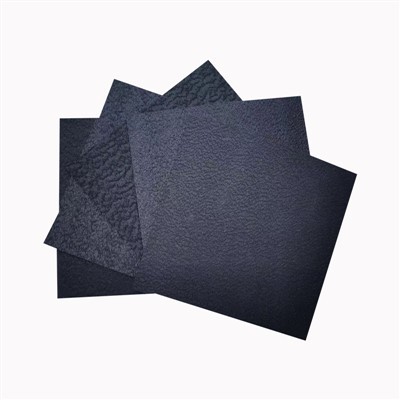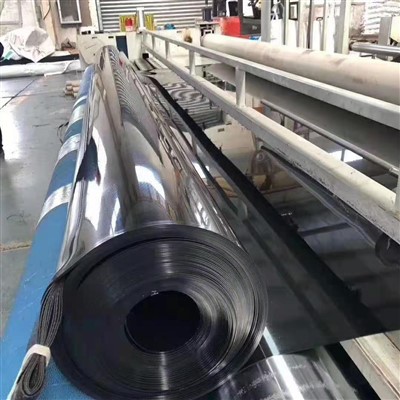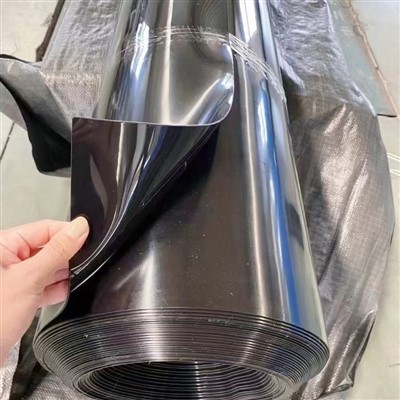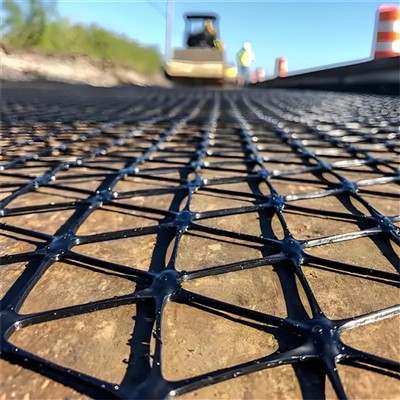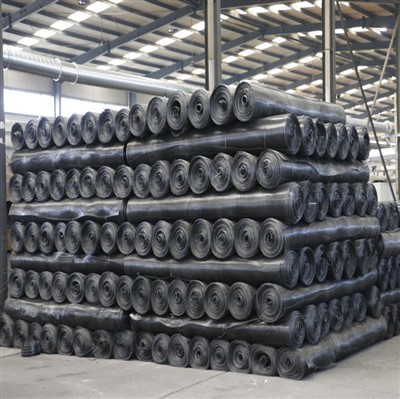
A uniaxial geogrid is a geosynthetic reinforcement material designed to provide high tensile strength in one primary direction. It is typically used for soil stabilization and reinforcement in retaining walls, steep slopes, embankments, and roadway foundations, improving load distribution and long-term structural stability.
Leading Uniaxial Geogrid Manufacturer in China | OEM & Custom Supply
As a leading uniaxial geogrid manufacturer in China, we specialize in the design and production of high-strength polymer geogrids for soil reinforcement applications. Our factory is equipped with advanced extrusion and stretching lines, ensuring consistent tensile strength and long-term durability. We provide OEM and custom supply services, offering tailored apertures, roll sizes, and performance grades to meet project-specific requirements. With strict quality control, international standards compliance, and stable global supply capability, we are a reliable partner for infrastructure and civil engineering projects worldwide.
Technical Support Capabilities
Engineering Selection Support
Assistance in selecting suitable strength grades and specifications based on load conditions, structure type, and design life.
Design Data & Parameters
Supply of key engineering parameters including tensile strength, creep reduction factors, and interface properties for design calculations.
Standards & Compliance Assistance
Full support for ASTM, ISO, and EN standards, including documentation for project approval and tender requirements.
OEM & Custom Engineering Solutions
Customization of aperture size, roll dimensions, and performance grades to meet specific project needs.

Application Scope of Uniaxial Geogrid
Uniaxial geogrids are primarily used for soil reinforcement in structures requiring strength in one direction, such as mechanically stabilized earth (MSE) retaining walls, steep slopes, embankments over soft soils, bridge abutments, and landfill containment systems, by providing superior tensile strength to stabilize soil and distribute loads, preventing failure, rutting, and erosion in infrastructure projects.
Retaining Walls & Abutments
Slope Stabilization:
Road & Pavement Reinforcement:
Embankments over Soft Soils
Landfills & Waste Managemen
Mining & Tunnelling

Best Material for Uniaxial Geogrid Supplier
Selecting the best material for uniaxial geogrid manufacturing is critical to achieving optimal performance, durability, and cost efficiency. High-quality polymer materials such as HDPE and PP provide excellent tensile strength, low creep behavior, and strong resistance to chemical and environmental degradation. Proper material selection ensures long-term load-bearing capacity, stable mechanical properties, and reduced lifecycle costs, making uniaxial geogrids reliable solutions for retaining walls, slopes, and other soil reinforcement applications.


HDPE Uniaxial Geogrid
Suitable for long-term load-bearing structures, it possesses excellent creep resistance and durability, making it the preferred material for retaining walls and steep slope projects.
PP Uniaxial Geogrid
Suitable for medium-to-low load projects, it offers a good cost advantage while meeting basic mechanical requirements.
PET Uniaxial Geogrid
Suitable for projects with high deformation control requirements; adequate protection should be ensured to avoid hydrolysis effects.
Technical Guide to Uniaxial Geogrid Construction and Applications
This guide presents key principles of uniaxial geogrid construction and engineering applications in reinforced soil structures. It covers installation methods, soil–geogrid interaction, and performance considerations for retaining walls, slopes, and embankments, serving as a practical reference for civil and geotechnical engineers.


1. Applicable Project Types
Uniaxial geogrids are mainly used in reinforced soil structures that withstand uniaxial tensile forces, including retaining walls, steep slopes, embankments, and bridge abutments.
2. Pre-construction Preparation
Confirm the geogrid strength grade, laying direction, and layer spacing according to the design documents.
Clean the substrate, ensuring the surface is flat and free of sharp objects.
Inspect the appearance of the geogrid; it must not be damaged or show signs of aging.
3. Laying Requirements
The direction of force must be consistent with the design tensile direction.
The laying should be straight and wrinkle-free, maintaining appropriate tension.
The overlap of adjacent geogrids should meet design or specification requirements.
4. Backfilling and Compaction
The backfill material should meet the design gradation requirements.
Backfilling should be carried out in layers to avoid direct compaction of the geogrid by construction machinery.
Each layer should achieve the specified compaction degree.
5. Connection and Anchoring
Anchoring or reliable connection to the panel should be carried out at retaining walls or slopes according to the design.
Ensure continuous stress and avoid local stress concentration.
6. Construction Precautions
Avoid prolonged exposure to sunlight.
Heavy equipment should not be driven directly on the geogrid.
Replace any damaged geogrids promptly.
7. Application Effects
Proper construction can significantly improve the overall stability of the soil, control deformation, and extend the service life of the structure.
Uniaxial Geogrid Technical Parameters
This guide presents key principles of uniaxial geogrid construction and engineering applications in reinforced soil structures. It covers installation methods, soil–geogrid interaction, and performance considerations for retaining walls, slopes, and embankments, serving as a practical reference for civil and geotechnical engineers.


Technical parameters of polypropylene (PP) uniaxial geogrid
| Item / Specification | W-35 | W-50 | W-80 | W-120 | W-160 | W-200 |
|---|---|---|---|---|---|---|
| Tensive Yield Strength per Meter (KN/m) | ≥35 | ≥50 | ≥80 | ≥120 | ≥160 | ≥200 |
| Tensive Force at 2% Elongation (KN/m) | ≥10 | ≥12 | ≥26 | ≥36 | ≥45 | ≥56 |
| Tensive Force at 5% Elongation (KN/m) | ≥22 | ≥28 | ≥48 | ≥72 | ≥90 | ≥112 |
| Ultimate Creep Strength (KN/m) | ≥15 | ≥21 | ≥30.2 | ≥41 | ≥49 | ≥64 |
Technical parameters of polypropylene (PP) uniaxial geogrid
| Item / Specification | W-35 | W-50 | W-80 | W-120 | W-160 |
|---|---|---|---|---|---|
| Tensive Yield Strength per Meter (KN/m) | ≤35 | ≤50 | ≤80 | ≤120 | ≤160 |
| Tensive Force at 2% Elongation (KN/m) | ≥7.5 | ≥12 | ≥21 | ≥33 | ≥47 |
| Tensive Force at 5% Elongation (KN/m) | ≥21.5 | ≥23 | ≥40 | ≥65 | ≥93 |
| Ultimate Creep Strength (KN/m) | ≥16 | ≥21 | ≥31 | ≥46 | ≥60 |
What is a uniaxial geogrid?
What is the difference between uniaxial and biaxial geogrids?
The main difference between uniaxial and biaxial geogrids lies in tensile strength direction. Uniaxial geogrids provide high strength in one direction, ideal for retaining walls and slopes. Biaxial geogrids offer strength in two directions, suitable for road bases and soil stabilization.
What engineering projects are Uniaxial Geogrid primarily suitable for?
Uniaxial Geogrid is mainly used for structures requiring high uniaxial tensile strength, such as reinforced soil retaining walls, steep slope protection, embankment reinforcement, bridge abutments, and port engineering. We can provide different strength grades and customized specifications based on project height, backfill type, and design load to ensure design requirements are met.
👉 Welcome to submit project parameters to receive selection advice.
What are the performance differences of Uniaxial Geogrid made of different materials?
Common materials include HDPE, PP, and PET.
HDPE: Chemically resistant, suitable for long-term underground projects.
PP: Cost-effective, suitable for general reinforcement projects.
PET: High modulus, low creep, suitable for high retaining walls and heavy-duty projects.
We can recommend the optimal material solution based on the design life and engineering environment.
👉 Material comparison tables and test reports are available upon request.
How to choose the appropriate tensile strength and aperture size?
Tensile strength depends on the retaining wall height, the internal friction angle of the backfill soil, and the safety factor, while the aperture size needs to form an effective interlock with the soil particles. As a manufacturer, we support customizing strength, aperture size, and width according to design drawings, avoiding over-design and reducing overall costs.
👉 Send your design parameters for quick selection.
Does our Uniaxial Geogrid meet international engineering standards?
Our Uniaxial Geogrid can be manufactured according to ASTM, EN, ISO, and project-specified standards, and we provide complete test reports for tensile strength, creep, durability, etc., meeting international engineering acceptance and bidding requirements.
👉 Samples and test documents can be obtained in advance.
As a manufacturer of uniaxial geogrids, what advantages do we offer in project support?
We not only provide products, but also support in technology selection, structural advice, construction guidance, and bulk delivery recommendations, suitable for EPC projects, distributors, and long-term partners. Stable production capacity and customization capabilities help clients reduce procurement and engineering risks.
👉 Contact us for project quotations and delivery timelines.
Send Your Inquiry Today
-
![Uniaxial Geogrid For Retaining Wall Construction]() Uniaxial Geogrid For Retaining Wall Construction
Uniaxial Geogrid For Retaining Wall ConstructionBest hdpe uniaxial geogrid maufacturer in China. HDPE Uniaxial Geogrid is a high-strength geosynthetic reinforcement material manufactured from high-molecular-weight HDPE with UV stabilizers and
-
![UX Rigid Uniaxial Geogrid]() UX Rigid Uniaxial Geogrid
UX Rigid Uniaxial GeogridTop Uniaxial Geogrid manufacturer in China. Uniaxial Geogrid is a high-strength geosynthetic reinforcement material manufactured from polymer sheets through precision punching and uniaxial
-
![Uniaxial Geogrid for Retaining Wall]() Uniaxial Geogrid for Retaining Wall
Uniaxial Geogrid for Retaining WallBest triaxial grid manufacturer in China. Triaxial Geogrid is a high-performance geosynthetic reinforcement material featuring a triangular aperture structure. It provides multi-directional load
-
![Uniaxial Geogrids For Civil Engineering]() Uniaxial Geogrids For Civil Engineering
Uniaxial Geogrids For Civil EngineeringTop Uniaxial Geogrid manufacturer in China. Uniaxial Geogrid is a high-strength geosynthetic reinforcement material manufactured from polymer sheets through precision punching and uniaxial
-
![Uniaxial Geogrid For Slope Stabilization]() Uniaxial Geogrid For Slope Stabilization
Uniaxial Geogrid For Slope StabilizationTop Uniaxial Geogrid manufacturer in China. Uniaxial Geogrid is a high-strength geosynthetic reinforcement material manufactured from polymer sheets through precision punching and uniaxial
-
![One-way Stretch Uniaxial Geogrid For Pavement]() One-way Stretch Uniaxial Geogrid For Pavement
One-way Stretch Uniaxial Geogrid For PavementTop UX Uniaxial Geogrid manufacturer in China. UX Uniaxial Geogrid is a high-strength geosynthetic reinforcement material manufactured from polymer sheets through precision punching and uniaxial
-
![Uniaxial Geogrids For Soil Reinforcement]() Uniaxial Geogrids For Soil Reinforcement
Uniaxial Geogrids For Soil ReinforcementTop UX Uniaxial Geogrid manufacturer in China. UX Uniaxial Geogrid is a high-strength geosynthetic reinforcement material manufactured from polymer sheets through precision punching and uniaxial
-
![UX Uniaxial Geogrid]() UX Uniaxial Geogrid
UX Uniaxial GeogridBest UX Uniaxial Geogrid manufacturer in China. UX Uniaxial Geogrid is a high-strength geosynthetic reinforcement material manufactured from polymer sheets through precision punching and uniaxial
-
![Polyester Uniaxial Geogrid]() Polyester Uniaxial Geogrid
Polyester Uniaxial GeogridBest Polyester Uniaxial Geogrid manufacturer in China. Polyester Uniaxial Geogrid is a high-strength geosynthetic reinforcement material manufactured from high-tenacity polyester yarns with a polymer
-
![Hdpe Uniaxial Geogrid]() Hdpe Uniaxial Geogrid
Hdpe Uniaxial GeogridBest hdpe uniaxial geogrid maufacturer in China. HDPE Uniaxial Geogrid is a high-strength geosynthetic reinforcement material manufactured from high-molecular-weight HDPE with UV stabilizers and


We are one of the most professional uniaxial geogrid manufacturers and suppliers in China, specialized in providing high quality custom service. We warmly welcome you to wholesale high-grade uniaxial geogrid at competitive price from our factory.
geo grid fabric, geogrid erosion control, uniaxial geogrid