


High-performance Biaxial Plastic Geogrid
High-performance biaxial plastic geogrids are manufactured from polypropylene (PP) or high-density polyethylene (HDPE) using extrusion, punching, and biaxial stretching. The resulting square or rectangular grid structure delivers balanced tensile strength in both longitudinal and transverse directions, providing reliable soil reinforcement and even load distribution for a wide range of infrastructure projects.
Key Features
- Balanced tensile strength in both machine (MD) and cross (TD) directions
- Rigid junctions ensure strong interlock with soil and aggregates
- High tensile modulus limits lateral deformation under heavy loads
- Resistant to chemical attack, UV exposure, and biological degradation
- Lightweight and easy to handle and install


Technical Specifications
| Parameter | Typical Range |
|---|---|
| Material | PP / HDPE |
| Tensile Strength (MD / TD) | 15 – 50 kN/m |
| Elongation at Break | ≤ 15% |
| Aperture Size | 25 × 25 mm to 65 × 65 mm |
| Junction Efficiency | ≥ 90% |
| Roll Width | 3.95 m / Customized |
| Roll Length | 50 m / 75 m / Customized |
Tip: Selecting the correct tensile strength and aperture size based on soil type and load conditions is essential for long-term performance.
Where to Use Biaxial Plastic Geogrid
Tensile strength in the range of 15–30 kN/m is typically used for light traffic roads and parking areas, while 30–50 kN/m is recommended for highways and industrial yards with heavy load.
Biaxial plastic geogrids are widely used in:
Road construction, highways, and airport pavements
Railways and embankments under heavy loads
Parking areas and industrial yards
Retaining wall bases and foundation reinforcement
Performance Insight: Using inappropriate tensile strength or aperture size can reduce soil confinement efficiency and shorten service life. Always match geogrid selection to project load and subgrade conditions.


Working Principle
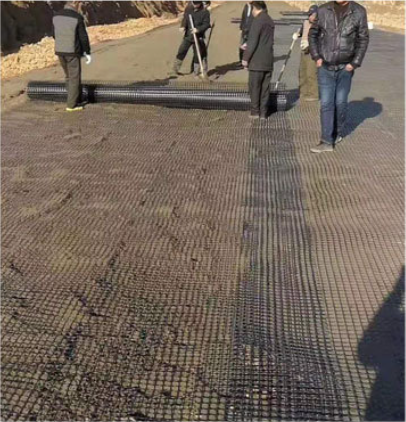
When installed within soil or aggregate layers, it interacts with surrounding materials through mechanical interlocking and friction. This interaction confines lateral movement, distributes applied loads more evenly, and significantly improves the bearing capacity and stability of the structure.
Field performance depends on proper compaction of aggregate and adequate aperture size to ensure effective interlock. Insufficient compaction may significantly reduce reinforcement efficiency.
Installation Guidelines
- Prepare and level the subgrade surface
- Lay the geogrid directly on the prepared base
- Overlap adjacent rolls by 200–300 mm
- Place and compact fill material promptly
- Avoid excessive handling that may stretch or damage the grid
Customization & Standards
Customized tensile strength, aperture size, and roll dimensions are available upon request. Products comply with ASTM, ISO, and EN standards and are suitable for international infrastructure projects.
Why Choose Our Biaxial Plastic Geogrid
- Stable production capacity with consistent quality
- Detailed inspection of tensile strength and junction efficiency
- Proven track record in highway, railway, and industrial projects
- Expert support for material selection and installation
Fact-Based Confidence: Our geogrids have been deployed in multiple international infrastructure projects, providing measurable improvements in load distribution and subgrade stability.


Hot Tags: biaxial plastic geogrid, China biaxial plastic geogrid manufacturers, suppliers, factory, biaxial geogrid, Biaxial Plastic Geogrid, geogrids