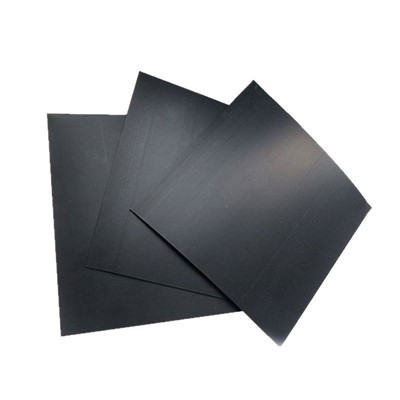

Reinforced Polypropylene Geomembrane
Reinforced polypropylene geomembrane is a composite waterproofing liner engineered with high-strength PP polymer base and internal reinforcement scrim structure.
It is designed for applications where conventional HDPE or PVC liners fail due to stress concentration, puncture propagation, or cyclic deformation.
It is designed for applications where conventional HDPE or PVC liners fail due to stress concentration, puncture propagation, or cyclic deformation.

1. Field Pain Points Observed in Real Engineering Discussions
In recent engineering discussions across Reddit communities, industrial forums, and X platform technical threads, practitioners repeatedly report similar failure patterns when using conventional geomembranes in real projects:
① Edge Tear Propagation in High Wind or Water Movement Zones
Users report that once a small puncture occurs in standard HDPE liners, the tear tends to propagate under hydraulic or wind load, especially in exposed pond and lagoon systems.
② Poor Performance Under Cyclic Loading (Fill–Drain Cycles)
Repeated expansion and contraction in reservoirs or wastewater basins leads to fatigue cracking along weld seams or stress points.
③ Installation Damage Sensitivity
Contractors frequently mention that even small subgrade stones or installation pressure can permanently damage thin polymer liners before commissioning.
④ Seam Weakness vs Sheet Strength Mismatch
Field feedback shows that weld seams often become the weakest point in HDPE systems, especially under differential settlement.
⑤ UV + Thermal Aging in Open-Air Projects
Long-term exposure in tropical and desert environments leads to surface embrittlement and reduced elongation capacity over time.
① Edge Tear Propagation in High Wind or Water Movement Zones
Users report that once a small puncture occurs in standard HDPE liners, the tear tends to propagate under hydraulic or wind load, especially in exposed pond and lagoon systems.
② Poor Performance Under Cyclic Loading (Fill–Drain Cycles)
Repeated expansion and contraction in reservoirs or wastewater basins leads to fatigue cracking along weld seams or stress points.
③ Installation Damage Sensitivity
Contractors frequently mention that even small subgrade stones or installation pressure can permanently damage thin polymer liners before commissioning.
④ Seam Weakness vs Sheet Strength Mismatch
Field feedback shows that weld seams often become the weakest point in HDPE systems, especially under differential settlement.
⑤ UV + Thermal Aging in Open-Air Projects
Long-term exposure in tropical and desert environments leads to surface embrittlement and reduced elongation capacity over time.


2. Root Cause (Polymer Engineering Perspective)
The above failures are not installation errors alone-they are primarily material behavior limitations:
Polypropylene base polymer exhibits moderate crystallinity, limiting energy dissipation under impact loading.
Lack of reinforcement structure in conventional geomembranes leads to localized stress concentration.
Weld-dependent integrity design creates single-point failure risks in large containment systems.
Creep deformation under sustained hydraulic pressure reduces long-term dimensional stability.
From a geosynthetic engineering standpoint, failure is driven by insufficient tensile load distribution and crack arrest capability.
Polypropylene base polymer exhibits moderate crystallinity, limiting energy dissipation under impact loading.
Lack of reinforcement structure in conventional geomembranes leads to localized stress concentration.
Weld-dependent integrity design creates single-point failure risks in large containment systems.
Creep deformation under sustained hydraulic pressure reduces long-term dimensional stability.
From a geosynthetic engineering standpoint, failure is driven by insufficient tensile load distribution and crack arrest capability.
3. Reinforced Polypropylene Solution Mechanism
✔ Reinforced Load Distribution System
Internal scrim reinforcement distributes tensile stress across biaxial directions, significantly reducing localized failure risk under settlement and hydraulic pressure.
✔ Crack Arrest & Tear Resistance Design
Reinforcement layer acts as a crack termination barrier, preventing small punctures from propagating into full-system failure.
✔ Enhanced Dimensional Stability Under Cyclic Loads
Designed to maintain structural integrity under repeated fill–drain cycles and hydraulic fluctuation environments.
4. Engineering Applications
• Mining tailings ponds and containment basins
• Industrial wastewater treatment lagoons
• Agricultural irrigation reservoirs
• Aquaculture ponds with high mechanical disturbance
• Landfill secondary containment systems
In all above cases, structural movement + puncture risk + long service life demand makes reinforced PP geomembrane a more stable solution than conventional liners.
• Industrial wastewater treatment lagoons
• Agricultural irrigation reservoirs
• Aquaculture ponds with high mechanical disturbance
• Landfill secondary containment systems
In all above cases, structural movement + puncture risk + long service life demand makes reinforced PP geomembrane a more stable solution than conventional liners.
5. Engineering Performance Summary
• High tensile strength with reinforcement scrim support
• Improved puncture resistance compared to standard PP/HDPE membranes
• Reduced seam failure dependency through load redistribution
• Better fatigue resistance under cyclic hydraulic loading
• Balanced cost-performance ratio for large-scale containment projects
• Improved puncture resistance compared to standard PP/HDPE membranes
• Reduced seam failure dependency through load redistribution
• Better fatigue resistance under cyclic hydraulic loading
• Balanced cost-performance ratio for large-scale containment projects
Engineering RFQ – Get Technical Proposal for Your Project
To provide an accurate solution, please share your project conditions. Our engineering team will evaluate material selection, thickness design, and installation strategy.
Please include in your inquiry:
• Application type (pond / mining / landfill / wastewater)
• Water depth or load condition
• Subgrade condition (soil / rock / slope)
• Expected service life
• Installation environment (UV exposure / climate)
• Application type (pond / mining / landfill / wastewater)
• Water depth or load condition
• Subgrade condition (soil / rock / slope)
• Expected service life
• Installation environment (UV exposure / climate)
Hot Tags: reinforced polypropylene geomembrane, China reinforced polypropylene geomembrane manufacturers, suppliers, factory, composite geomembrane, distributor geomembrane, geomembrane, geomembrane fabric, hdpe geomembrane, supplier geomembrane