


What are the Tensile Strength of PVC Geomembrane?
As a supplier of PVC geomembrane, I often encounter inquiries about the tensile strength of our products. Tensile strength is a crucial property that determines the performance and durability of PVC geomembranes in various applications. In this blog, I will delve into the concept of tensile strength, its significance for PVC geomembranes, and the factors that influence it.
Tensile strength refers to the maximum stress that a material can withstand while being stretched or pulled before it breaks. In the context of PVC geomembranes, it measures the ability of the membrane to resist tearing and rupture under tension. This property is essential because PVC geomembranes are frequently used in applications where they are subjected to significant mechanical forces, such as in landfill liners, artificial lake projects, tunnels, and roofing systems.
The tensile strength of PVC geomembranes is typically measured in units of force per unit area, such as pounds per square inch (psi) or megapascals (MPa). The higher the tensile strength, the more resistant the geomembrane is to tearing and damage. This is particularly important in applications where the membrane may be exposed to sharp objects, heavy loads, or extreme environmental conditions.
One of the key factors that influence the tensile strength of PVC geomembranes is the formulation of the PVC material itself. High - quality PVC geomembranes are made from specially formulated PVC resins that are designed to provide excellent mechanical properties. These resins may contain additives such as plasticizers, stabilizers, and fillers, which can enhance the flexibility, durability, and tensile strength of the membrane.
For example, plasticizers are added to PVC to make it more flexible and easier to handle. However, the type and amount of plasticizer used can have a significant impact on the tensile strength of the geomembrane. If too much plasticizer is used, the membrane may become too soft and lose some of its tensile strength. On the other hand, using the right balance of plasticizers can improve the flexibility of the membrane without sacrificing its strength.
Another important factor is the manufacturing process. The way the PVC geomembrane is produced can affect its internal structure and, consequently, its tensile strength. Advanced manufacturing techniques, such as extrusion and calendering, can produce geomembranes with a more uniform and consistent structure, which generally results in higher tensile strength.
In addition, the thickness of the PVC geomembrane also plays a role in its tensile strength. Thicker geomembranes typically have higher tensile strength than thinner ones. However, the choice of thickness depends on the specific application requirements. For example, in some applications where weight and flexibility are important considerations, a thinner geomembrane may be preferred, even though it may have slightly lower tensile strength.
Let's take a look at some of the common applications of PVC geomembranes and how tensile strength is relevant in each case.

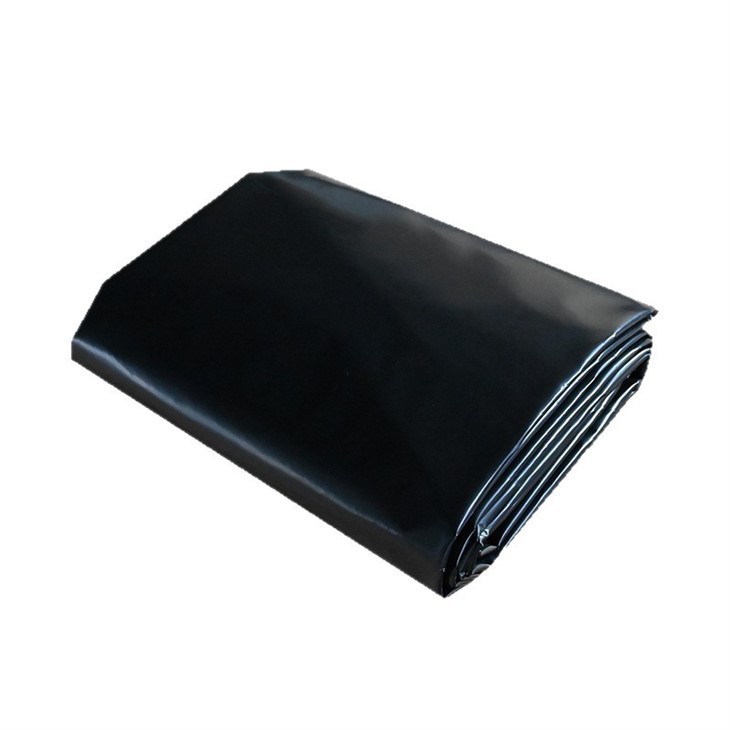
Landfill Liners
In landfill applications, PVC geomembranes are used as liners to prevent the leakage of leachate (liquid that has passed through the waste) into the surrounding soil and groundwater. The geomembrane is subjected to the weight of the waste, as well as the movement and settlement of the landfill. A high - tensile - strength PVC geomembrane is essential to ensure that the liner remains intact and does not tear under these stresses. You can find our PVC Geomembranes For Landfill on our website, which are designed to meet the rigorous requirements of landfill applications with excellent tensile strength.
Artificial Lake Projects
For artificial lake projects, PVC geomembranes act as a waterproof barrier to retain water. The membrane may be exposed to the forces of water waves, the weight of sediment, and the movement of the lake bed. A strong and flexible PVC geomembrane is required to prevent water leakage. Our Flexible PVC Geomembrane For Artificial Lake Project offers high tensile strength along with flexibility, making it an ideal choice for such projects.
Tunnel and Roofing Systems
In tunnel and roofing applications, PVC geomembranes are used for waterproofing. They need to withstand the pressure from the soil or the building structure above, as well as potential impacts from construction activities. Our Waterproof PVC Membrane For Tunnel & Roofing is engineered to have sufficient tensile strength to resist these forces and ensure long - term waterproofing performance.
Geomembrane Liners
PVC geomembrane liners are used in a variety of applications, from agricultural ponds to industrial storage facilities. The tensile strength of these liners is critical to prevent punctures and leaks. Our PVC Geomembrane Liner is available in different specifications to meet the diverse needs of our customers, with a focus on providing high tensile strength and durability.
Smooth Flexible PVC Geomembrane Liners
Smooth flexible PVC geomembrane liners are often used in applications where a smooth surface is required, such as in some types of water storage tanks. These liners need to be strong enough to withstand the pressure of the stored liquid. Our Smooth Flexible PVC Geomembrane Liner combines smoothness with high tensile strength, making it suitable for a wide range of applications.
To ensure that our PVC geomembranes meet the highest standards of quality and performance, we conduct rigorous testing on all our products. Tensile strength testing is one of the key tests we perform. This involves subjecting samples of the geomembrane to a gradually increasing tensile force until they break. The results of these tests provide us with valuable information about the mechanical properties of our products and allow us to make any necessary adjustments to the manufacturing process or formulation.
In conclusion, the tensile strength of PVC geomembranes is a critical property that determines their suitability for various applications. As a supplier, we are committed to providing our customers with PVC geomembranes that have high tensile strength, excellent durability, and reliability. Whether you are working on a landfill project, an artificial lake, a tunnel, or a roofing system, our products are designed to meet your specific needs.
If you are interested in purchasing PVC geomembranes or have any questions about their tensile strength or other properties, please feel free to contact us. We are more than happy to discuss your requirements and provide you with the best solutions for your projects.
References
- ASTM International. (Year). Standard Test Methods for Tensile Properties of Geotextiles. ASTM D4595 - XX.
- Geosynthetic Research Institute. (Year). Technical Report on the Properties of PVC Geomembranes.
- Manufacturers' Technical Data Sheets on PVC Geomembranes.


