
What is the mechanism of soil - triaxial geogrid interaction?
The interaction between soil and triaxial geogrids is a complex yet crucial aspect in geotechnical engineering. Triaxial geogrids are innovative geosynthetic materials that have revolutionized soil stabilization and ground reinforcement techniques. As a dedicated triaxial geogrid supplier, I have witnessed firsthand the remarkable performance of these products and am excited to delve into the mechanism of their interaction with soil.
1. Introduction to Triaxial Geogrids
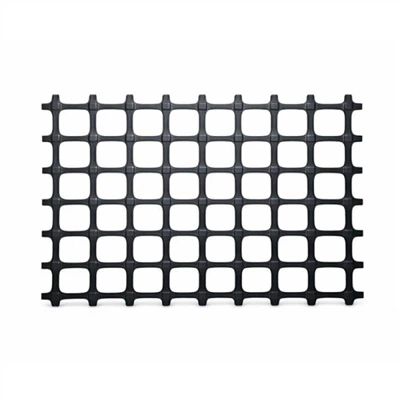
Triaxial geogrids are three - dimensional, polymeric structures with a unique triangular aperture shape. Unlike traditional biaxial geogrids, the triangular geometry of triaxial geogrids provides enhanced in - plane stiffness and load - distribution capabilities. Triaxial Plastic Geogrid offers excellent tensile strength in multiple directions, making it highly effective in various soil - related applications.
2. The Interface Friction Mechanism
One of the primary mechanisms of soil - triaxial geogrid interaction is interface friction. When a triaxial geogrid is placed in soil, the soil particles come into contact with the surface of the geogrid ribs. The roughness of the geogrid surface plays a significant role in developing friction. The triangular shape of the triaxial geogrid creates multiple contact points with the soil, increasing the frictional resistance.
As the soil experiences stress, the relative movement between the soil and the geogrid is restricted by this frictional force. For example, in a soil slope reinforcement project, when the soil tends to move downslope due to gravity, the friction at the soil - geogrid interface resists this movement. The higher the frictional coefficient between the soil and the geogrid, the more effectively the geogrid can prevent soil displacement. Laboratory tests have shown that the interface friction between triaxial geogrids and different types of soils can vary depending on factors such as soil particle size, moisture content, and geogrid surface texture.
3. The Interlocking Mechanism
The unique triangular aperture design of triaxial geogrids enables a strong interlocking mechanism with soil. Soil particles can penetrate into the apertures of the geogrid, creating a mechanical interlock. When the soil is subjected to load, the interlocked soil - geogrid system acts as a composite structure.
The interlocking effect is particularly important in applications such as Triaxial Geogrid For Soil Stabilization. In a road construction project, for instance, the triaxial geogrid is placed within the subgrade soil. As traffic loads are applied on the road surface, the interlocked soil - geogrid system distributes the load more evenly over a larger area. The soil particles within the geogrid apertures are confined, which increases their shear resistance and prevents excessive settlement.
4. The Role of Tensile Reinforcement
Triaxial geogrids possess high tensile strength. When embedded in soil, they can withstand tensile forces induced by soil movement. In a soil reinforcement scenario, such as reinforcing a retaining wall backfill, the geogrid is stretched as the soil behind the wall exerts lateral pressure.
The tensile strength of the triaxial geogrid helps to counteract this pressure. The geogrid transfers the tensile forces to a larger volume of soil, reducing the stress concentration in the soil mass. This is especially beneficial in soft soil conditions, where the soil's natural strength is low. By providing additional tensile reinforcement, the triaxial geogrid improves the overall stability of the soil structure.
5. Influence of Soil Properties on the Interaction
The properties of the soil greatly influence the soil - triaxial geogrid interaction. Granular soils, such as sand and gravel, have relatively large particle sizes and good drainage properties. In granular soils, the interlocking mechanism between the soil and the triaxial geogrid is more pronounced. The large soil particles can easily penetrate the geogrid apertures, creating a strong mechanical bond.
On the other hand, cohesive soils, like clay, have smaller particle sizes and higher plasticity. The interaction with triaxial geogrids in cohesive soils is more complex. The interface friction may be affected by factors such as moisture content. High moisture content in clayey soil can reduce the frictional resistance between the soil and the geogrid. However, proper compaction can enhance the interaction by improving the contact between the soil and the geogrid.
6. Applications and the Interaction Mechanism
6.1 Road Construction
Triaxial Geogrid For Ground Reinforcement is widely used in road construction. In the subgrade layer, the geogrid interacts with the soil to improve its load - bearing capacity. The frictional and interlocking mechanisms prevent the lateral spreading of the soil under traffic loads, reducing rutting and improving the overall ride quality of the road.
6.2 Railway Engineering
In railway applications, Triaxial Geogrid for Railway Sub - Ballast Stabilisation is essential. The geogrid strengthens the sub - ballast layer by interlocking with the ballast particles and soil beneath. This helps to distribute the dynamic loads from train passages more evenly, minimizing settlement and enhancing the longevity of the railway track.


6.3 Slope Stabilization
For slope stabilization projects, Triaxial Geogrid For Soil Reinforcement plays a vital role. The geogrid resists the down - slope movement of the soil through interface friction and tensile reinforcement. By creating a more stable soil - geogrid composite, the risk of slope failure is significantly reduced.
7. Conclusion and Call to Action
Understanding the mechanism of soil - triaxial geogrid interaction is crucial for optimizing the performance of triaxial geogrids in various geotechnical applications. The frictional, interlocking, and tensile reinforcement mechanisms work together to provide effective soil stabilization and ground reinforcement.
As an experienced triaxial geogrid supplier, we are committed to providing high - quality products that can meet the diverse needs of our customers. Our triaxial geogrids are designed to maximize the interaction with soil, ensuring superior performance and long - term durability.
If you are involved in a soil stabilization or ground reinforcement project and are interested in learning more about our triaxial geogrids, feel free to contact us to discuss your specific requirements and explore potential solutions. We look forward to the opportunity to work with you on your next project.
References
- [1] Palmeira, E. M., & Milligan, G. W. A. (1989). Pull - out tests on geogrids. Geotextiles and Geomembranes, 8(1 - 2), 77 - 102.
- [2] Allen, T. M., & Bathurst, R. J. (1995). Analysis of geogrid - soil interaction using a large - scale direct shear test apparatus. Geotextiles and Geomembranes, 14(3 - 4), 355 - 377.
- [3] Huang, X. H., Han, J., & Ye, S. S. (2009). Working mechanism of geosynthetic - reinforced soil retaining walls. Journal of Geotechnical and Geoenvironmental Engineering, 135(1), 35 - 45.