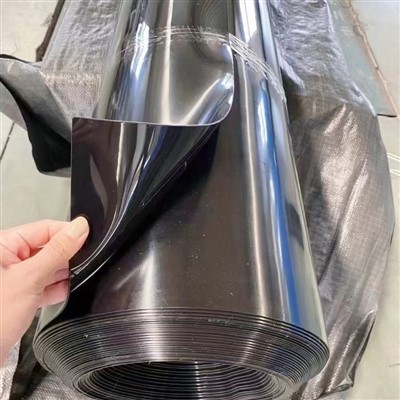

Geomembrane for Road Construction
A subgrade engineering separation and moisture control system designed to improve pavement structural stability, reduce soil intermixing, and control long-term moisture migration in road foundations.
Engineering Definition
In road construction engineering, geomembrane is not only a waterproof layer, but a structural interface control system that manages moisture transfer, particle migration, and stress redistribution between pavement layers and subgrade soils.
It is widely used in highway, railway, airport runway, and heavy-load industrial road systems where subgrade instability directly affects pavement lifespan and maintenance cost.
It is widely used in highway, railway, airport runway, and heavy-load industrial road systems where subgrade instability directly affects pavement lifespan and maintenance cost.
1. Engineering Failure Mechanisms in Road Structures
In real road construction environments, pavement failure is rarely caused by surface asphalt quality alone. The dominant failure originates from subgrade instability and moisture-induced structural degradation.
The most frequently observed engineering problems include:
① Subgrade pumping and fines migration
Repeated traffic loading creates pore pressure fluctuations, forcing fine soil particles to move upward into the base layer, weakening aggregate interlock.
② Loss of load distribution efficiency
Without a separation interface, base aggregates penetrate into soft subgrade, reducing structural stiffness and increasing rutting risk.
③ Seasonal moisture variation damage
Freeze–thaw or wet–dry cycles cause repeated expansion and contraction of subgrade soils, leading to differential settlement.
④ Base course contamination
Mixing of clay subgrade and crushed stone leads to permanent reduction in bearing capacity.
⑤ Long-term pavement deformation accumulation
Small structural inconsistencies accumulate under repeated traffic loading, forming cracks and surface failure.
The most frequently observed engineering problems include:
① Subgrade pumping and fines migration
Repeated traffic loading creates pore pressure fluctuations, forcing fine soil particles to move upward into the base layer, weakening aggregate interlock.
② Loss of load distribution efficiency
Without a separation interface, base aggregates penetrate into soft subgrade, reducing structural stiffness and increasing rutting risk.
③ Seasonal moisture variation damage
Freeze–thaw or wet–dry cycles cause repeated expansion and contraction of subgrade soils, leading to differential settlement.
④ Base course contamination
Mixing of clay subgrade and crushed stone leads to permanent reduction in bearing capacity.
⑤ Long-term pavement deformation accumulation
Small structural inconsistencies accumulate under repeated traffic loading, forming cracks and surface failure.
2. Functional Role of Geomembrane in Road Engineering
The application of geomembrane for road construction is based on three structural engineering principles:
• Moisture migration control – reduces upward and lateral water movement into pavement layers
• Soil–aggregate separation – prevents intermixing of subgrade soil and base materials
• Load distribution stabilization – improves stress dispersion and reduces localized deformation
From an engineering perspective, this transforms the pavement system from a moisture-sensitive structure into a controlled mechanical system with predictable deformation behavior.
• Moisture migration control – reduces upward and lateral water movement into pavement layers
• Soil–aggregate separation – prevents intermixing of subgrade soil and base materials
• Load distribution stabilization – improves stress dispersion and reduces localized deformation
From an engineering perspective, this transforms the pavement system from a moisture-sensitive structure into a controlled mechanical system with predictable deformation behavior.


3. Engineering Application Scenarios
Geomembrane for road construction is widely applied in infrastructure systems where subgrade quality directly affects lifecycle cost and maintenance frequency:
• Highways with weak or clay-rich subgrade conditions
• Airport runway base stabilization systems
• Railway embankment separation layers
• Industrial heavy-load logistics roads
• Soft soil coastal road projects
These applications require long-term stability rather than short-term surface performance.
• Highways with weak or clay-rich subgrade conditions
• Airport runway base stabilization systems
• Railway embankment separation layers
• Industrial heavy-load logistics roads
• Soft soil coastal road projects
These applications require long-term stability rather than short-term surface performance.
4. Engineering Performance Benefits
• Improved pavement structural stability under traffic load
• Reduced moisture-induced deformation risk
• Enhanced subgrade bearing efficiency
• Lower long-term maintenance cost
• Extended service life of pavement systems
The system is particularly effective in environments with high groundwater levels, seasonal rainfall variation, or weak soil foundations.
• Reduced moisture-induced deformation risk
• Enhanced subgrade bearing efficiency
• Lower long-term maintenance cost
• Extended service life of pavement systems
The system is particularly effective in environments with high groundwater levels, seasonal rainfall variation, or weak soil foundations.
Engineering RFQ Intelligence System
To provide an accurate geomembrane solution for road construction, please submit your engineering parameters below. Our technical team will evaluate subgrade conditions and provide a system-level recommendation.
PROJECT TYPE
Highway / Railway / Airport / Industrial Road
SOIL CONDITION
Clay / Sand / Mixed / Weak Subgrade
GROUNDWATER LEVEL
High / Medium / Low / Seasonal Variation
DESIGN LIFE
5 / 10 / 20+ Years Requirement
Hot Tags: geomembrane for road construction, China geomembrane for road construction manufacturers, suppliers, factory, composite geomembrane, geomembrane, geomembrane and geotextile, geomembrane fabric, hdpe geomembrane, supplier geomembrane