HDPE Smooth Geomembrane | High-Strength Waterproof Liner
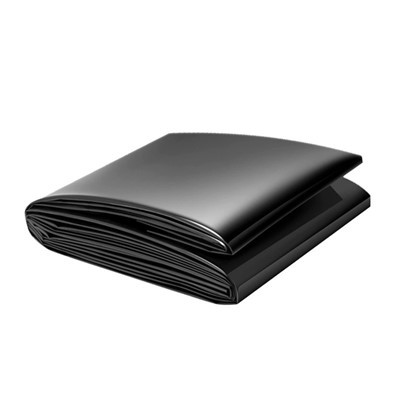
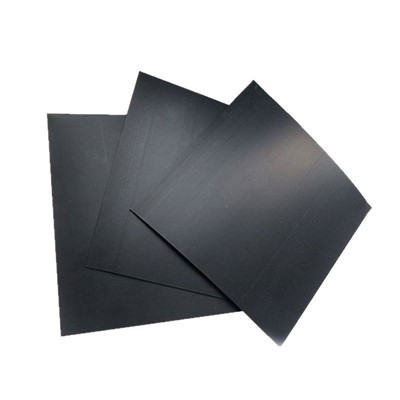
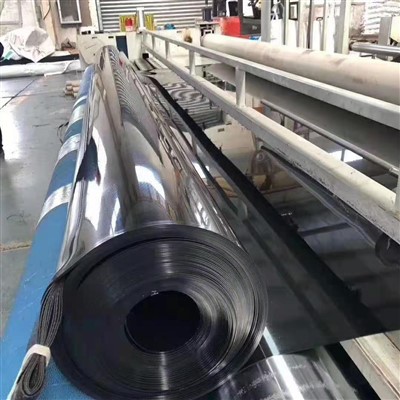
HDPE smooth geomembrane is an impermeable lining material that acts as a continuous barrier to seal liquids, isolate soil systems, and control seepage in civil engineering containment structures.
Material Structure and Functional Principle
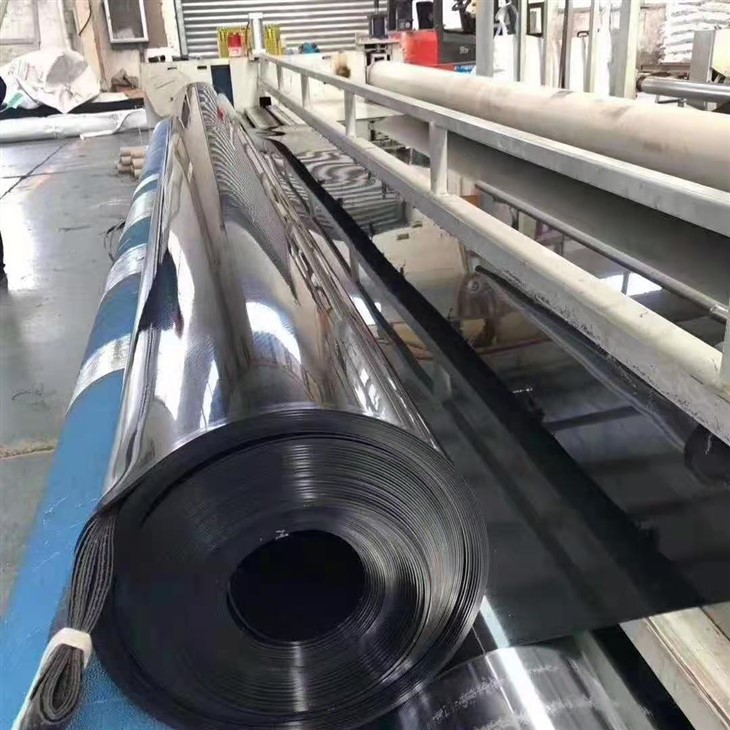
The geomembrane is produced by extrusion of virgin HDPE resin, forming a dense polymer matrix that transfers tensile stress across the sheet and maintains dimensional stability under mechanical load.
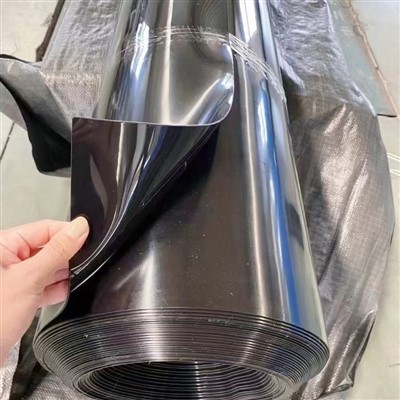
Carbon black is dispersed in the polymer to block UV radiation and slow molecular chain degradation during outdoor exposure.


Application Scenarios
Landfill Base Liner
Blocks leachate penetration and isolates waste from groundwater systems.
Mining Heap Leach Pad
Resists acidic solution exposure and supports ore stacking load distribution.
Water Reservoir
Seals soil surfaces and prevents seepage loss in storage basins.
Aquaculture Pond
Controls water exchange and maintains stable pond hydraulic balance.
Installation Workflow (Engineering Execution Process)
The installation system is executed in controlled engineering steps to ensure the geomembrane can seal and maintain integrity under hydraulic load, soil movement, and long-term exposure.
1. Subgrade Preparation and Compaction
Soil surface is graded and compacted to control settlement. Sharp particles are removed to prevent puncture stress concentration on the membrane.
Compaction target is typically controlled to ≥90–95% Proctor density depending on project design.
2. Geotextile Separation Layer Placement
Nonwoven geotextile is installed to distribute contact pressure and isolate HDPE geomembrane from subgrade abrasion.
Typical mass range: 200–800 g/m² depending on foundation roughness.
3. Geomembrane Deployment and Alignment
Rolls are deployed along slope direction to reduce tensile stress accumulation. Panels are positioned with controlled overlap (100–150 mm).
Expansion allowance is left to accommodate thermal elongation under site temperature variation.
4. Thermal Welding of Seams
Hot wedge or hot air welding is applied to fuse polymer chains across overlap zones and form continuous seam bonding.
Welding parameters (temperature, speed, pressure) are adjusted according to ambient conditions and material thickness.
5. Non-Destructive Seam Testing
Air pressure testing or vacuum box testing is conducted along welded seams to verify leakage absence and bonding continuity.
Test pressure is controlled based on ASTM or project specification requirements.
6. Covering or Service Filling
After verification, the membrane is either covered with protective soil layers or filled with water/waste depending on application.
Load distribution is monitored to prevent localized stress deformation.
Technical Specifications
| Thickness (mm) | 0.30 | 0.50 | 0.75 | 1.00 | 1.25 | 1.50 | 2.00 | 2.50 | 3.00 |
|---|---|---|---|---|---|---|---|---|---|
| Tensile Yield Strength (MD/TD) (N/mm) ≥ | 4 | 7 | 10 | 13 | 16 | 20 | 26 | 33 | 40 |
| Tensile Break Strength (MD/TD) (N/mm) ≥ | 6 | 10 | 15 | 20 | 25 | 30 | 40 | 50 | 60 |
| Yield Elongation (MD/TD) (%) ≥ | - | - | - | 11 | 11 | 11 | 11 | 11 | 11 |
| Elongation at Break (MD/TD) (%) ≥ | 600 | ||||||||
| Tear Resistance (MD/TD) (N) ≥ | 34 | 56 | 84 | 115 | 140 | 170 | 225 | 280 | 340 |
| Puncture Resistance (N) ≥ | 72 | 120 | 180 | 240 | 300 | 360 | 480 | 600 | 720 |
| Carbon Black Content (%) | 2.0~3.0 | ||||||||
Engineering Case Study
Chile Mining Heap Leach Pad Project
HDPE smooth geomembrane was installed as a base liner to seal cyanide solution containment in a copper mining heap leach system. The membrane was selected for chemical resistance and load transfer under ore stacking.
Specification: 1.5 mm HDPE. Function: chemical containment and seepage control. Installation area: 180,000 m².
Send us your project details (application, thickness, and area) to get a tailored HDPE geomembrane solution and quotation within 24 hours.
Hot Tags: hdpe smooth geomembrane, China hdpe smooth geomembrane manufacturers, suppliers, factory