


Hey there! As a supplier of biaxial geogrids, I often get asked if these nifty products can be used for slope reinforcement. Well, let's dive right into it and explore the ins and outs of using biaxial geogrids in slope reinforcement.
What is Biaxial Geogrid?
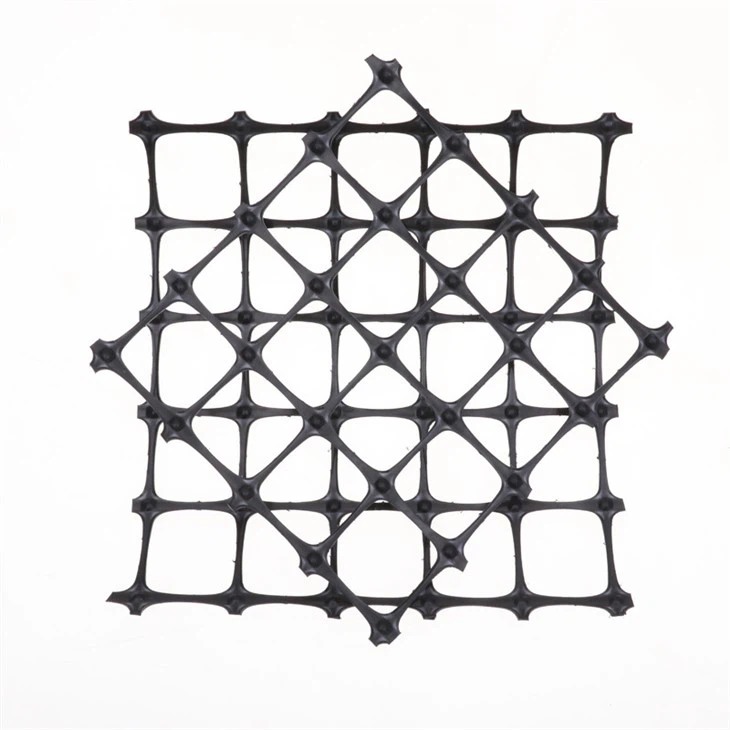
First off, let's quickly cover what biaxial geogrids are. Biaxial geogrids are a type of geosynthetic material. They're made up of a grid - like structure with strong tensile strength in two directions (that's where the "biaxial" part comes from). There are different types, such as PP Biaxial Geogrid, Biaxial Polypropylene Geogrid, and Steel - plastic Composite Geogrid. Each type has its own unique properties and advantages.
How Can Biaxial Geogrid Reinforce Slopes?
Now, let's talk about how biaxial geogrids work for slope reinforcement. When you install a biaxial geogrid on a slope, it acts like a sort of "skeleton" for the soil. The grid's structure interlocks with the soil particles, increasing the soil's overall stability.
- Increasing Shear Strength
- The biaxial geogrid helps to distribute the forces acting on the slope more evenly. When the soil on the slope starts to move due to gravity or other factors, the geogrid resists the shear forces. This is because the grid has high tensile strength, and it holds the soil particles together. For example, in a landslide - prone area, the geogrid can prevent the soil from sliding down by providing that extra resistance.
- Reducing Soil Erosion
- Another important aspect is soil erosion. On slopes, water runoff can carry away the top - soil, which can lead to further instability. The biaxial geogrid acts as a barrier. It slows down the water flow and allows the soil to stay in place. The grid also provides a surface for vegetation to grow on. Vegetation helps to hold the soil together with its roots, and the geogrid gives the plants a better chance to establish themselves on the slope.
Case Studies
Let's look at some real - world examples of biaxial geogrids being used for slope reinforcement.
- Highway Embankment Slopes
- In many highway construction projects, biaxial geogrids are used to reinforce the slopes of embankments. These slopes are often subject to heavy traffic loads and weather conditions. By installing biaxial geogrids, the stability of the slopes is significantly improved. This reduces the risk of slope failure, which can cause traffic disruptions and safety hazards. For instance, a highway project in a mountainous region used biaxial polypropylene geogrids. After installation, the slopes remained stable even during heavy rain and snowfall, and there were no signs of soil movement or erosion.
- Mine Tailings Dams
- Mine tailings dams are large structures that store the waste materials from mining operations. The slopes of these dams need to be stable to prevent environmental disasters. Biaxial geogrids are used to reinforce the slopes of these dams. They help to increase the shear strength of the tailings material and prevent the dam from collapsing. A case study from a copper mine showed that the use of steel - plastic composite geogrids in the slope reinforcement of the tailings dam improved the overall stability of the structure, reducing the risk of seepage and failure.
Factors to Consider
Before using biaxial geogrids for slope reinforcement, there are several factors that you need to take into account.
- Soil Type
- Different soil types have different properties. For example, clayey soils have high plasticity, while sandy soils have low cohesion. The type of biaxial geogrid you choose should be compatible with the soil type. In clayey soils, a geogrid with high adhesion properties might be more suitable, while in sandy soils, a geogrid with good interlocking capabilities is preferred.
- Slope Angle
- The steeper the slope, the more stress it is under. For very steep slopes, you may need a stronger biaxial geogrid or a combination of geogrids with other reinforcement methods. A slope with a gentle angle may require a less - robust geogrid.
- Environmental Conditions
- Factors like temperature, humidity, and exposure to chemicals can affect the performance of the biaxial geogrid. For example, in areas with high temperatures, a geogrid that can withstand heat without losing its strength is necessary. In areas with high levels of chemical pollution, a corrosion - resistant geogrid should be used.
Installation of Biaxial Geogrid for Slope Reinforcement
The installation process of biaxial geogrids for slope reinforcement is crucial.

- Site Preparation
- First, the slope needs to be properly prepared. This includes removing any loose soil, rocks, or vegetation. The surface should be smooth and level as much as possible.
- Geogrid Placement
- The biaxial geogrid is then laid out on the slope. It should be unrolled carefully and stretched to ensure a tight fit. The geogrid should be overlapped at the joints to ensure continuity.
- Anchoring
- After the geogrid is placed, it needs to be anchored to the slope. This can be done using stakes or other anchoring devices. The anchoring points should be spaced evenly to provide uniform support.
- Backfilling
- Once the geogrid is anchored, soil is backfilled on top of it. The backfill should be compacted in layers to ensure good contact between the soil and the geogrid.
Advantages of Using Biaxial Geogrid for Slope Reinforcement
There are many advantages to using biaxial geogrids for slope reinforcement.
- Cost - Effective
- Compared to traditional slope reinforcement methods like concrete retaining walls, biaxial geogrids are much more cost - effective. They require less material and labor, which can save a significant amount of money in construction projects.
- Easy to Install
- The installation process of biaxial geogrids is relatively simple. It doesn't require heavy machinery or specialized skills, which makes it a convenient option for many projects.
- Environmentally Friendly
- Biaxial geogrids are made from materials that are often recyclable. They also promote vegetation growth, which helps to improve the environmental quality of the slope area.
Conclusion
So, can biaxial geogrid be used in slope reinforcement? Absolutely! Biaxial geogrids offer a practical and effective solution for slope reinforcement. They increase the shear strength of the soil, reduce erosion, and are cost - effective and easy to install. Whether you're working on a highway project, a mine tailings dam, or any other slope - related construction, biaxial geogrids can be a great choice.
If you're interested in purchasing biaxial geogrids for your slope reinforcement project, don't hesitate to reach out. We can provide you with detailed information about our products and help you choose the right type of biaxial geogrid for your specific needs.
References
- Koerner, R. M. (2012). Designing with Geosynthetics. Pearson.
- Bonaparte, R., & Christopher, B. R. (1993). Geosynthetics in Geotechnical Engineering. ASCE Press.


