


In the realm of high - speed railway subgrade engineering, the performance of materials plays a crucial role in ensuring the long - term stability and safety of the railway infrastructure. As a supplier of Biaxial Plastic Geogrid, I am well - aware of its significance and the remarkable performance it offers in this field.
1. Introduction to Biaxial Plastic Geogrid
Biaxial Plastic Geogrid is a geosynthetic material made from high - density polyethylene (HDPE) or polypropylene (PP). It is characterized by a grid - like structure with high tensile strength in both the longitudinal and transverse directions. This unique structure allows it to distribute loads effectively and enhance the stability of soil masses.

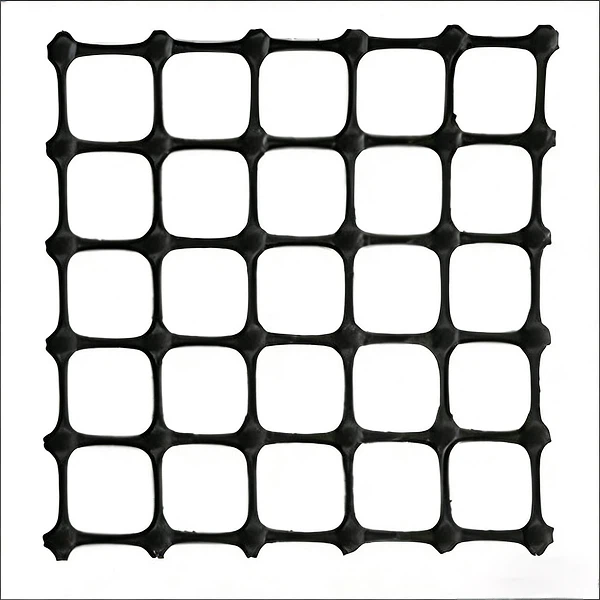
The manufacturing process of Biaxial Plastic Geogrid involves extrusion, punching, and stretching. Through these processes, the material gains excellent mechanical properties, such as high tensile strength, low creep, and good chemical resistance. These properties make it an ideal choice for various geotechnical engineering applications, especially in high - speed railway subgrade engineering.
2. Performance in High - Speed Railway Subgrade Engineering
2.1 Reinforcement of Subgrade Soil
One of the primary functions of Biaxial Plastic Geogrid in high - speed railway subgrade engineering is to reinforce the subgrade soil. High - speed trains generate large dynamic loads during operation. These loads can cause soil settlement, lateral displacement, and even soil failure if the subgrade soil is not properly reinforced.
The Biaxial Plastic Geogrid is placed within the subgrade soil, creating a composite structure. The grid interlocks with the soil particles, increasing the frictional resistance between the soil and the grid. This frictional force helps to distribute the loads more evenly over a larger area, reducing the stress concentration in the soil. As a result, the subgrade soil can better withstand the dynamic loads generated by high - speed trains, minimizing settlement and lateral deformation.
For example, in some high - speed railway projects in mountainous areas, the subgrade soil is often weak and prone to instability. By using Biaxial Plastic Geogrid, the overall strength and stability of the subgrade can be significantly improved, ensuring the safe operation of high - speed trains.
2.2 Control of Differential Settlement
Differential settlement is a common problem in high - speed railway subgrade engineering. It occurs when different parts of the subgrade settle at different rates, which can lead to track irregularities and affect the safety and comfort of train operation.
Biaxial Plastic Geogrid can effectively control differential settlement. The grid's high tensile strength allows it to bridge over weak soil areas and transfer the loads to more stable soil regions. This helps to balance the settlement of different parts of the subgrade, reducing the differential settlement.
In addition, the grid can also prevent the lateral movement of soil, which is another factor contributing to differential settlement. By confining the soil particles, the Biaxial Plastic Geogrid keeps the soil in place and maintains the integrity of the subgrade structure.
2.3 Erosion Protection
High - speed railway subgrades are often exposed to various environmental factors, such as rainfall and wind. These factors can cause soil erosion, which can undermine the stability of the subgrade.
Biaxial Plastic Geogrid provides an effective erosion protection solution. The grid structure acts as a barrier, preventing the soil from being washed away by water or blown away by wind. It also helps to retain moisture in the soil, promoting the growth of vegetation on the subgrade surface. Vegetation can further enhance the erosion resistance of the subgrade by stabilizing the soil with its roots.
2.4 Cost - effectiveness
In high - speed railway subgrade engineering, cost is an important consideration. Biaxial Plastic Geogrid offers a cost - effective solution compared to traditional subgrade reinforcement methods.
The installation of Biaxial Plastic Geogrid is relatively simple and requires less labor and equipment compared to other reinforcement methods. This reduces the construction cost and shortens the construction period. Moreover, the long - term performance of Biaxial Plastic Geogrid can reduce the maintenance cost of the subgrade, making it a cost - effective choice for high - speed railway projects.
3. Comparison with Other Geogrid Products
3.3.1 Comparison with Steel Plastic Geogrids
Steel Plastic Geogrids For Retaining Wall And Slope are another type of geogrid commonly used in geotechnical engineering. While steel plastic geogrids have high tensile strength, they are relatively heavy and more expensive than Biaxial Plastic Geogrids.
Biaxial Plastic Geogrid is lighter in weight, which makes it easier to handle and install. It also has good corrosion resistance, which is an advantage in some corrosive soil environments. In addition, the cost of Biaxial Plastic Geogrid is generally lower than that of steel plastic geogrids, making it a more cost - effective option for high - speed railway subgrade engineering.
3.2 Comparison with BX Geogrids
BX Geogrids For Ground Stabilisation are designed for ground stabilization. They have a different structure and performance characteristics compared to Biaxial Plastic Geogrids.
Biaxial Plastic Geogrid has a more balanced tensile strength in both the longitudinal and transverse directions, which is more suitable for high - speed railway subgrade engineering where loads are applied in multiple directions. BX Geogrids may be more focused on unidirectional load - bearing capacity.
4. Case Studies
In recent years, Biaxial Plastic Geogrid has been widely used in high - speed railway subgrade engineering around the world. For example, in a high - speed railway project in a coastal area, the subgrade soil was soft and had a high water content. By using Biaxial Plastic Geogrid, the stability of the subgrade was significantly improved. The differential settlement was effectively controlled, and the track irregularities were reduced, ensuring the safe and smooth operation of high - speed trains.
In another project in a mountainous region, the Biaxial Plastic Geogrid was used to reinforce the subgrade on a steep slope. The grid helped to prevent soil erosion and landslides, providing a stable foundation for the high - speed railway.
5. Conclusion and Call to Action
In conclusion, Biaxial Plastic Geogrid performs excellently in high - speed railway subgrade engineering. It provides effective reinforcement, controls differential settlement, protects against erosion, and offers cost - effectiveness. As a reliable supplier of Biaxial Plastic Geogrid, we are committed to providing high - quality products and professional technical support for high - speed railway projects.
If you are involved in high - speed railway subgrade engineering or other geotechnical projects and are interested in our Biaxial Plastic Geogrid products, please feel free to contact us for more information and to discuss your specific requirements. We look forward to working with you to ensure the success of your projects.
References
- Koerner, R. M. (2012). Designing with Geosynthetics. Pearson Prentice Hall.
- Bonaparte, R., & Christopher, B. R. (1991). Geosynthetics in geotechnical engineering. Journal of Geotechnical Engineering, 117(10), 1441 - 1463.
- Allen, T. M., & Bathurst, R. J. (2002). Geosynthetic reinforced soil walls and slopes: Design and construction guidelines. FHWA - IF - 02 - 035.


