


Earthquakes are among the most destructive natural phenomena, posing significant threats to soil - based structures such as buildings, bridges, and embankments. The dynamic forces generated during an earthquake can cause soil liquefaction, settlement, and lateral spreading, which can lead to the failure of these structures. Triaxial geogrid, a product we supply, has emerged as an effective solution to mitigate the effects of earthquakes on soil - based structures.
Understanding the Mechanisms of Earthquake - Induced Damage to Soil - Based Structures
Before delving into how triaxial geogrid mitigates earthquake effects, it is essential to understand the mechanisms by which earthquakes damage soil - based structures. During an earthquake, the ground experiences rapid and intense shaking. This shaking can cause loose, saturated soils to lose their strength and behave like a liquid, a phenomenon known as soil liquefaction. When soil liquefies, it can no longer support the weight of the structures built on it, leading to settlement and collapse.
In addition to liquefaction, earthquakes can also cause lateral spreading. Lateral spreading occurs when the ground moves horizontally due to the seismic forces. This movement can cause the foundation of a structure to shift, leading to structural damage. Moreover, the cyclic loading during an earthquake can cause the soil to compact unevenly, resulting in differential settlement, which can also compromise the integrity of the structure.
How Triaxial Geogrid Works to Mitigate Earthquake Effects
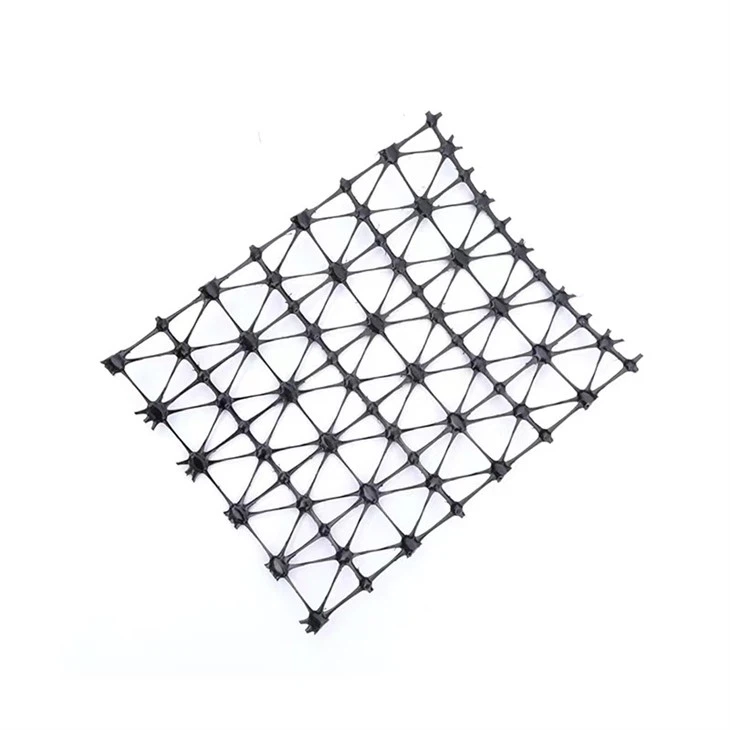
Triaxial geogrid is a three - dimensional, high - strength polymer grid. Its unique triangular aperture design provides several advantages in earthquake mitigation.
Reinforcement and Soil - Geogrid Interaction
One of the primary ways triaxial geogrid mitigates earthquake effects is through soil - geogrid interaction. When the geogrid is installed in the soil, the triangular apertures interlock with the soil particles. This interlocking creates a composite material that has higher strength and stiffness than the soil alone. During an earthquake, the geogrid helps to distribute the seismic forces more evenly throughout the soil mass. It restrains the movement of soil particles, reducing the likelihood of soil liquefaction and lateral spreading.
The high tensile strength of the triaxial geogrid allows it to resist the pulling forces generated during an earthquake. As the ground shakes, the geogrid acts as a reinforcement, preventing the soil from being displaced. This reinforcement effect is particularly important in areas with loose or soft soils, where the risk of soil failure is higher.

Energy Dissipation
Another important function of triaxial geogrid is energy dissipation. When an earthquake occurs, the seismic waves carry a large amount of energy. The geogrid can help to dissipate this energy by deforming and stretching. As the geogrid deforms, it absorbs some of the seismic energy, reducing the amount of energy transmitted to the soil - based structure. This energy dissipation mechanism helps to protect the structure from the full impact of the earthquake.
Improved Bearing Capacity
Triaxial geogrid can also improve the bearing capacity of the soil. By reinforcing the soil, the geogrid increases the ability of the soil to support the weight of the structure. This is crucial during an earthquake, as the additional load due to the seismic forces can cause the soil to fail if its bearing capacity is insufficient. With the use of triaxial geogrid, the soil can withstand higher loads, reducing the risk of settlement and collapse of the structure.
Case Studies and Real - World Applications
Numerous case studies have demonstrated the effectiveness of triaxial geogrid in mitigating earthquake effects on soil - based structures. For example, in some regions prone to earthquakes, triaxial geogrid has been used to reinforce the embankments of highways and railways. These embankments are often at risk of failure during an earthquake due to soil liquefaction and lateral spreading. By installing triaxial geogrid in the embankment soil, the stability of the embankment is significantly improved.
In the construction of buildings, triaxial geogrid can be used in the foundation to enhance the soil's ability to resist seismic forces. A building built on a foundation reinforced with triaxial geogrid is more likely to withstand an earthquake without significant damage.
If you are interested in the application of triaxial geogrid in railway sub - ballast stabilisation, you can visit Triaxial Geogrid for Railway Sub - Ballast Stabilisation. For more information about using triaxial geogrid for ground reinforcement, please refer to Triaxial Geogrid For Ground Reinforcement. And for a general introduction to triaxial grid, you can check Triaxial Grid.
Advantages of Our Triaxial Geogrid
As a triaxial geogrid supplier, we take pride in offering high - quality products. Our triaxial geogrid is made from high - performance polymers, which ensure excellent durability and long - term performance. The unique triangular aperture design of our geogrid provides superior soil - geogrid interaction, making it more effective in earthquake mitigation.
We also offer customized solutions to meet the specific needs of different projects. Whether you are building a small residential structure or a large - scale infrastructure project, our team of experts can provide you with the right triaxial geogrid product and installation guidance.
Contact Us for Purchase and Consultation
If you are involved in a project that requires earthquake - resistant soil reinforcement, we encourage you to contact us. Our triaxial geogrid can provide reliable protection for your soil - based structures against earthquake damage. We are ready to discuss your project requirements and offer the best solutions. Please feel free to reach out to us for more information about our products and services.


