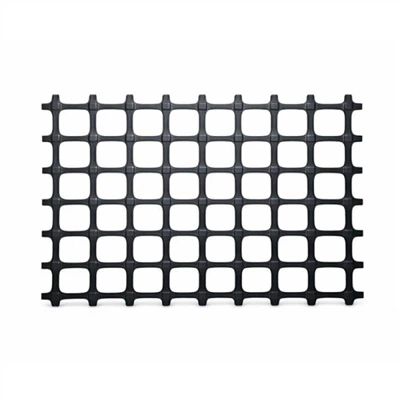

Hey there! As a supplier of uniaxial geogrids, I've seen firsthand how these nifty products can work wonders for retaining walls. In this blog, I'm gonna break down how uniaxial geogrid supports retaining walls and why it's a game - changer in the world of civil engineering.
What is Uniaxial Geogrid?
First off, let's get a basic understanding of what uniaxial geogrid is. It's a type of geosynthetic material made from high - strength polymers like polyester or polypropylene. Unlike biaxial geogrids, which have strength in two directions, uniaxial geogrids are designed to provide high tensile strength in one direction. This makes them super effective for applications where you need to reinforce soil in a specific orientation, like in retaining walls.
You can check out our Uniaxial Geogrid for Retaining Wall page to learn more about the specific products we offer for this purpose.
How Uniaxial Geogrid Supports Retaining Walls
1. Reinforcement of Soil
Retaining walls are built to hold back soil and prevent it from sliding or collapsing. When soil is left on its own, it can exert a lot of pressure on the retaining wall, especially when it's wet or there's a slope. Uniaxial geogrid steps in to reinforce the soil.
The geogrid is placed within the soil mass behind the retaining wall. The soil particles interlock with the openings in the geogrid. This creates a composite structure where the geogrid takes on a significant portion of the tensile forces that the soil would otherwise generate. In simple terms, it's like giving the soil an extra backbone.
Let's say you have a retaining wall in a hilly area. Without the geogrid, the soil on the slope could start to creep downwards over time, putting stress on the wall. But when you install uniaxial geogrid, it holds the soil in place, reducing the pressure on the wall and making it more stable.
2. Distribution of Load
Another key way uniaxial geogrid supports retaining walls is by distributing the load. The weight of the soil and any additional loads (like vehicles or buildings) on top of the soil need to be evenly spread out. If the load is concentrated in one area, it can cause the retaining wall to fail.
The geogrid acts as a load - distributing layer. It spreads the load over a larger area of the soil, reducing the stress on the retaining wall. This is especially important in areas with poor soil conditions, where the soil may not be able to handle concentrated loads very well.
For example, if you're building a retaining wall for a parking lot, the weight of the cars needs to be distributed properly. Uniaxial geogrid helps to ensure that the load from the cars is spread across the soil behind the wall, preventing the wall from being overloaded in one spot.
3. Prevention of Soil Erosion
Soil erosion can be a big problem for retaining walls. When water runs over the soil, it can wash away the soil particles, weakening the structure behind the wall. Uniaxial geogrid helps to prevent soil erosion.
The geogrid holds the soil in place, reducing the chances of soil being washed away by water. It also allows water to drain through the soil, which helps to keep the soil stable. By preventing soil erosion, the geogrid ensures that the retaining wall remains strong and functional over time.
Types of Uniaxial Geogrid for Retaining Walls
Polyester Uniaxial Geogrid
One of the popular types of uniaxial geogrid for retaining walls is Polyester Uniaxial Geogrid. Polyester geogrids are known for their high tensile strength and excellent creep resistance.
Creep is the gradual deformation of a material under a constant load over time. In the case of a retaining wall, the soil exerts a constant pressure on the geogrid. A polyester uniaxial geogrid can withstand this pressure without deforming significantly, ensuring long - term stability of the retaining wall.
Polyester geogrids are also resistant to environmental factors like UV radiation and chemicals. This makes them suitable for outdoor applications, where they may be exposed to sunlight, rain, and other elements.
Other Materials
There are also uniaxial geogrids made from polypropylene. Polypropylene geogrids are lightweight and cost - effective. They are a good option for smaller retaining wall projects where the load requirements are not as high.
Applications in Civil Engineering
Uniaxial geogrids are not just useful for retaining walls. They have a wide range of applications in civil engineering. You can find out more about these applications on our Uniaxial Geogrids For Civil Engineering page.
For example, they can be used in road construction to reinforce the subgrade. By placing uniaxial geogrid in the soil beneath the road surface, it can improve the load - bearing capacity of the road and reduce the risk of pavement cracking.
In landfill projects, uniaxial geogrid can be used to reinforce the slopes and prevent soil movement. This helps to ensure the stability of the landfill and prevent environmental hazards.
Why Choose Our Uniaxial Geogrid?
As a supplier, we take pride in offering high - quality uniaxial geogrids. Our products are tested to meet strict industry standards. We have a team of experts who can help you choose the right geogrid for your specific project.
Whether you're building a small residential retaining wall or a large commercial project, we have the right solution for you. Our geogrids are easy to install, which can save you time and money on labor costs.


Let's Talk!
If you're interested in using uniaxial geogrid for your retaining wall or any other civil engineering project, we'd love to hear from you. We can provide you with detailed product information, technical support, and a competitive quote.
Get in touch with us to start the conversation about how our uniaxial geogrid can support your next project. We're here to help you make your project a success!
References
- Koerner, R. M. (2012). Designing with Geosynthetics. Pearson.
- ASTM International. (2021). Standard Test Methods for Determining Tensile Properties of Geosynthetics. ASTM D4595 - 19.