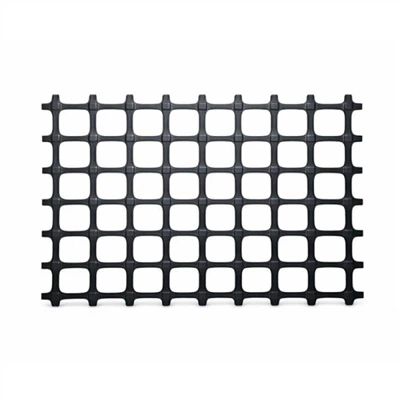

Hey there! As a supplier of Biaxial Plastic Geogrid, I often get asked whether it's compatible with other geosynthetics. Today, I'm gonna dive deep into this topic and share some insights based on my experience in the industry.
First off, let's understand what Biaxial Plastic Geogrid is. It's a type of geosynthetic material made from high - density polyethylene (HDPE) or polypropylene (PP). The biaxial structure means it has strength in both the machine direction and the cross - machine direction. This gives it excellent load - bearing capacity and is widely used for soil reinforcement, slope stabilization, and road construction.
Now, when it comes to compatibility with other geosynthetics, we need to look at different types of geosynthetics one by one.
Geotextiles
Geotextiles are another common type of geosynthetic. They can be woven or non - woven and are mainly used for filtration, separation, and drainage. When used with Biaxial Plastic Geogrid, they can work together really well.
For example, in road construction, a geotextile can be placed beneath the Biaxial Plastic Geogrid. The geotextile acts as a separator, preventing the mixing of different soil layers. At the same time, it allows water to pass through, providing drainage. The Biaxial Plastic Geogrid, on the other hand, reinforces the soil, increasing its load - bearing capacity. This combination can significantly improve the performance and lifespan of the road.
Geomembranes
Geomembranes are impermeable geosynthetics used for lining applications, such as landfill liners and pond liners. Biaxial Plastic Geogrid can be used in conjunction with geomembranes in some cases. For instance, in a landfill project, the Biaxial Plastic Geogrid can be used to reinforce the soil around the geomembrane. This helps to prevent the geomembrane from being damaged by soil movement or external loads. However, it's important to ensure that the installation is done correctly. The edges of the Biaxial Plastic Geogrid and the geomembrane need to be properly secured to avoid any potential issues.
Geocells
Geocells are three - dimensional honeycomb - like structures made from polymers. They are often used for slope protection and soil stabilization. Biaxial Plastic Geogrid and geocells can be combined to provide enhanced reinforcement. The geocells can confine the soil within their cells, while the Biaxial Plastic Geogrid provides additional strength in the horizontal plane. This combination is particularly effective for steep slopes, where the risk of soil erosion and landslides is high.
Carbon Fiber Geogrid
Carbon Fiber Geogrid is a high - strength geosynthetic material. You can check out more about it Carbon Fiber Geogrid. When used with Biaxial Plastic Geogrid, they can complement each other. The Carbon Fiber Geogrid has extremely high tensile strength, which can be used in areas where high - strength reinforcement is required. The Biaxial Plastic Geogrid, with its cost - effectiveness and wide availability, can be used in the surrounding areas to provide a more comprehensive reinforcement solution.
Geogrid For Slopes
Geogrid For Slopes is specifically designed for slope stabilization. Biaxial Plastic Geogrid can be used in combination with this type of geogrid. The Biaxial Plastic Geogrid can be installed at different depths within the slope, while the Geogrid For Slopes can be placed on the surface to prevent surface erosion. This two - layer approach can provide better slope stability and reduce the risk of slope failure.
Biaxial Geogrids For Soil Reinforcement
If you're interested in Biaxial Geogrids For Soil Reinforcement, you'll know that Biaxial Plastic Geogrid is a key player in this field. It can be used in conjunction with other biaxial geogrids to increase the overall strength of the soil. Different biaxial geogrids may have different properties, such as different mesh sizes and tensile strengths. By combining them, we can customize the reinforcement solution according to the specific requirements of the project.
However, there are also some factors to consider when using Biaxial Plastic Geogrid with other geosynthetics.
Chemical Compatibility
Different geosynthetics are made from different materials, and they may react with each other chemically. For example, some chemicals in the soil or the environment may cause degradation of the materials. It's important to ensure that the Biaxial Plastic Geogrid and the other geosynthetics are chemically compatible. This can be determined through laboratory tests or by referring to the manufacturer's guidelines.
Installation Compatibility
The installation process of different geosynthetics may vary. When using them together, we need to ensure that the installation methods are compatible. For example, the Biaxial Plastic Geogrid may require a certain tension during installation, while the geotextile may need to be laid flat without excessive stretching. The installation sequence also needs to be carefully planned to ensure that the geosynthetics work together effectively.
Long - Term Performance
We need to consider the long - term performance of the combined geosynthetics. Different materials may have different aging characteristics. For example, the Biaxial Plastic Geogrid may be more resistant to UV radiation than some geotextiles. We need to ensure that the overall system can maintain its performance over a long period of time.
In conclusion, Biaxial Plastic Geogrid is generally compatible with other geosynthetics. When used together, they can provide enhanced performance in various geotechnical applications, such as soil reinforcement, slope stabilization, and road construction. However, we need to carefully consider factors like chemical compatibility, installation compatibility, and long - term performance.


If you're involved in a geotechnical project and are considering using Biaxial Plastic Geogrid or other geosynthetics, feel free to reach out. We can discuss your specific requirements and provide you with the best solutions. Whether you need a single type of geosynthetic or a combination of them, we've got you covered.
References
- Koerner, R. M. (2012). Designing with Geosynthetics. Pearson Prentice Hall.
- Giroud, J. P., & Bonaparte, R. (1989). Design and construction of geosynthetic - reinforced soil structures. Journal of Geotechnical Engineering.