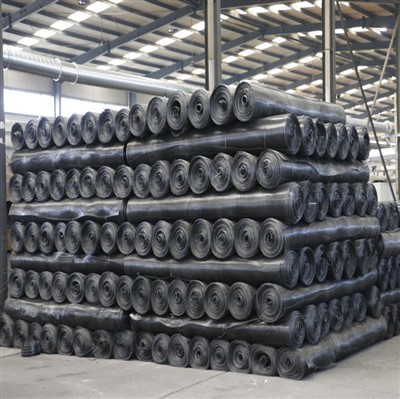

As a leading uniaxial geogrid supplier, I've witnessed firsthand the critical role these geogrids play in civil engineering projects. Among the many factors that can influence the performance of uniaxial geogrids, water is one of the most significant. In this blog, I will delve into how water affects the performance of uniaxial geogrids and why understanding this relationship is crucial for successful project implementation.
1. Basic Understanding of Uniaxial Geogrids
Uniaxial geogrids are high - strength geosynthetics primarily used for soil reinforcement. They are designed to provide long - term reinforcement in one predominant direction, making them ideal for applications such as retaining walls, slopes, and roadways. You can find more information about uniaxial geogrids on our website: Uniaxial Geogrids For Soil Reinforcement.
These geogrids are typically made from high - density polyethylene (HDPE) or polypropylene (PP) polymers. Their open - grid structure allows soil particles to interlock with the geogrid, creating a composite material with enhanced strength and stability. However, when water comes into play, this seemingly straightforward interaction can be significantly altered.
2. Effects of Water on the Physical Properties of Uniaxial Geogrids
2.1 Swelling and Shrinkage
Some polymers used to manufacture uniaxial geogrids have the potential to absorb water. When a geogrid absorbs water, it may swell. This swelling can change the dimensions of the geogrid, which in turn can affect its interaction with the surrounding soil. For example, if the geogrid swells, it may create additional stress on the soil - geogrid interface, potentially leading to a change in the overall stability of the reinforced soil structure. On the other hand, when the water dries up, the geogrid may shrink, causing it to lose some of its interlock with the soil particles.
2.2 Moisture - Induced Degradation
Prolonged exposure to water can also lead to the degradation of the polymer material. Water can act as a medium for chemical reactions that break down the polymer chains. Hydrolysis is one such reaction that can occur, especially in polymers that are sensitive to water. Over time, this degradation can reduce the tensile strength and stiffness of the uniaxial geogrid, thereby compromising its ability to reinforce the soil effectively.
3. Impact of Water on the Interaction between Uniaxial Geogrids and Soil
3.1 Change in Soil Properties
Water can have a profound impact on the properties of the soil itself. When soil becomes saturated with water, its shear strength decreases, and it becomes more prone to deformation. This change in soil behavior can affect the way the uniaxial geogrid interacts with the soil. For example, if the soil loses its shear strength, the frictional forces between the soil and the geogrid may be reduced. As a result, the geogrid may not be able to transfer the loads effectively, leading to potential failure of the reinforced soil structure.
3.2 Pore Water Pressure
In saturated soil conditions, pore water pressure builds up. High pore water pressure can reduce the effective stress in the soil, which is crucial for the stability of the soil - geogrid composite. If the pore water pressure is not properly managed, it can cause the soil to expand and potentially push the geogrid out of place. This can be particularly problematic in applications such as retaining walls, where the stability of the structure depends on the proper functioning of the geogrid. You can learn more about using uniaxial geogrids in retaining walls on our website: Uniaxial Geogrid for Retaining Wall.
4. Case Studies: Real - World Examples of Water - Related Challenges
Let's take a look at a few real - world examples to better understand the impact of water on uniaxial geogrid performance.
In a slope reinforcement project in a coastal area, the uniaxial geogrids were installed to stabilize a sandy slope. However, due to frequent heavy rainfall and high groundwater levels, the soil became saturated. The increased water content in the soil reduced its shear strength, and the geogrids were no longer able to provide sufficient reinforcement. As a result, the slope experienced significant deformation, and in some areas, small landslides occurred.


In another case, a roadway construction project used uniaxial geogrids for subgrade reinforcement. During the rainy season, the road was flooded, and the geogrids were exposed to water for an extended period. The water absorption and subsequent swelling of the geogrids led to a change in the soil - geogrid interface properties. This caused uneven settlement of the road surface, resulting in a bumpy and unsafe driving experience.
5. Mitigation Strategies
To address the challenges posed by water, several mitigation strategies can be employed.
5.1 Proper Drainage Design
One of the most effective ways to reduce the impact of water on uniaxial geogrids is to design proper drainage systems. This can include installing drains, weep holes, or using permeable backfill materials. By removing excess water from the soil, the pore water pressure can be reduced, and the shear strength of the soil can be maintained. This helps to ensure that the uniaxial geogrid can function as intended.
5.2 Selection of Water - Resistant Geogrids
When choosing uniaxial geogrids, it is important to select products that are resistant to water degradation. Some manufacturers offer geogrids with special coatings or additives that can enhance their water resistance. For example, our UX Rigid Uniaxial Geogrid is designed to have excellent water - resistant properties, making it suitable for use in wet environments.
5.3 Regular Monitoring
Regular monitoring of the reinforced soil structure is essential. This can include measuring the water content in the soil, pore water pressure, and the deformation of the structure. By detecting any changes early, appropriate measures can be taken to prevent potential failures.
6. Conclusion and Call to Action
In conclusion, water can have a significant impact on the performance of uniaxial geogrids. From altering the physical properties of the geogrid to changing the soil - geogrid interaction, water - related challenges need to be carefully considered in any civil engineering project.
As a professional uniaxial geogrid supplier, we are committed to providing high - quality products and technical support to help you overcome these challenges. Whether you are working on a small - scale slope reinforcement project or a large - scale roadway construction, we have the expertise and products to meet your needs.
If you are interested in learning more about our uniaxial geogrids, or if you have a project in mind and would like to discuss the best solutions, please feel free to contact us. We look forward to working with you to ensure the success of your projects.
References
- Kolbuszewski, S. (1951). The influence of water in soil engineering. McGraw - Hill Book Company.
- Bonaparte, R., & Koerner, R. M. (1985). Geotextiles and geogrids in geotechnical engineering: State - of - the - art. ASTM Special Technical Publication.
- Koerner, R. M. (2012). Designing with geosynthetics. Pearson Prentice Hall.