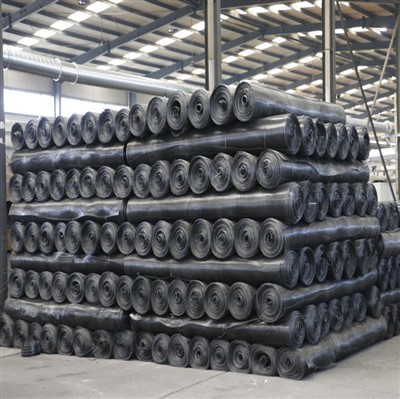

When it comes to civil engineering projects, the combined use of uniaxial geogrid and geotextiles can significantly enhance the stability and performance of structures. As a supplier of high - quality uniaxial geogrids, I have witnessed firsthand the importance of the correct installation sequence for these two materials. In this blog, I will delve into the details of the installation sequence when using uniaxial geogrid and geotextiles together.
Understanding Uniaxial Geogrid and Geotextiles
Before discussing the installation sequence, it's essential to understand what uniaxial geogrid and geotextiles are. Uniaxial geogrids are made from high - density polyethylene (HDPE) or polypropylene and are designed to provide high strength in one direction. They are commonly used for soil reinforcement, retaining wall construction, and pavement applications. For example, Uniaxial Geogrid For Retaining Wall Construction is specifically engineered to withstand the lateral forces exerted on retaining walls, while Uniaxial Geogrids For Soil Reinforcement helps to improve the load - bearing capacity of soil.
Geotextiles, on the other hand, are permeable fabrics made from synthetic materials such as polyester or polypropylene. They serve multiple functions, including separation, filtration, drainage, and protection. Geotextiles can prevent the mixing of different soil layers, filter out fine particles while allowing water to pass through, and protect other geosynthetic materials from damage.
General Principles of Installation
The installation sequence of uniaxial geogrid and geotextiles depends on the specific project requirements and the functions they are intended to perform. However, there are some general principles that should be followed:
- Site Preparation: The first step in any installation process is to prepare the site. This involves clearing the area of debris, rocks, and vegetation, and ensuring that the ground is level and compacted to the required specifications. A smooth and stable base is crucial for the proper performance of both uniaxial geogrid and geotextiles.
- Layering Considerations: The order in which the uniaxial geogrid and geotextiles are laid depends on their functions. In most cases, the geotextile is laid first as a separation or filtration layer, followed by the uniaxial geogrid for reinforcement. However, in some situations, such as when the geotextile is used for protection, it may be laid on top of the uniaxial geogrid.
Installation Sequence for Different Applications
Retaining Wall Construction
In retaining wall construction, the installation sequence typically follows these steps:
- Foundation Preparation: Build a stable foundation for the retaining wall. This may involve excavating the area, installing a gravel base, and compacting it to ensure proper support.
- Geotextile Installation: Lay the geotextile along the back of the retaining wall. The geotextile acts as a filter, preventing soil particles from clogging the drainage system behind the wall. It should be extended beyond the base of the wall to provide a continuous filtration layer.
- Uniaxial Geogrid Placement: After the geotextile is in place, install the uniaxial geogrid. The uniaxial geogrid is placed horizontally, with the strong axis oriented in the direction of the lateral forces. The geogrid should be attached to the retaining wall using appropriate connectors, such as straps or pins. Each layer of the geogrid should be overlapped according to the manufacturer's recommendations to ensure continuity of reinforcement.
- Backfilling: Once the uniaxial geogrid is installed, start backfilling the area behind the wall with soil. The soil should be placed in layers and compacted to the required density. As each layer of soil is added, another layer of uniaxial geogrid can be installed if necessary.
- Top Layer: Finally, place a top layer of soil or other surface material on top of the backfill. The geotextile may be extended over the top of the backfill to protect it from erosion.
Soil Reinforcement
For soil reinforcement projects, the installation sequence is as follows:


- Ground Leveling: Level the ground and remove any irregularities. This ensures that the uniaxial geogrid and geotextile can be laid evenly.
- Geotextile Installation: Lay the geotextile on the ground surface. The geotextile serves as a separation layer, preventing the mixing of different soil layers and providing a stable base for the uniaxial geogrid.
- Uniaxial Geogrid Placement: Place the uniaxial geogrid on top of the geotextile. The geogrid should be oriented in the direction of the expected load, such as the direction of traffic in a road project. Overlap the geogrid panels as required to ensure continuous reinforcement.
- Soil Placement and Compaction: Spread a layer of soil over the uniaxial geogrid and compact it. The soil should be of the appropriate type and gradation for the project. Additional layers of uniaxial geogrid and soil can be added if needed to achieve the desired level of reinforcement.
Pavement Construction
In pavement construction, the installation sequence is slightly different:
- Subgrade Preparation: Prepare the subgrade by compacting it to the required density. This provides a stable base for the pavement layers.
- Geotextile Installation: Lay the geotextile on the subgrade. The geotextile helps to prevent the intrusion of fine particles from the subgrade into the pavement layers and improves the drainage of water.
- Uniaxial Geogrid Placement: Install the One - way Stretch Uniaxial Geogrid For Pavement on top of the geotextile. The geogrid is oriented in the direction of traffic to provide reinforcement and reduce the formation of cracks in the pavement.
- Asphalt or Concrete Placement: Pour the asphalt or concrete over the uniaxial geogrid and geotextile. The geogrid and geotextile help to distribute the load more evenly, increasing the durability of the pavement.
Quality Control and Inspection
During the installation process, it is crucial to conduct quality control and inspection to ensure that the uniaxial geogrid and geotextiles are installed correctly. This includes checking the alignment, overlap, and attachment of the geogrid and geotextile, as well as the compaction of the soil layers. Any deviations from the installation specifications should be corrected immediately to avoid potential problems in the future.
Conclusion
The correct installation sequence of uniaxial geogrid and geotextiles is essential for the success of civil engineering projects. By following the general principles and specific installation sequences for different applications, you can ensure that these materials work together effectively to enhance the stability and performance of structures.
As a supplier of high - quality uniaxial geogrids, including HDPE Unaixial Geogrid and UX Uniaxial Geogrid, I am committed to providing the best products and technical support for your projects. If you are interested in purchasing uniaxial geogrids or have any questions about their installation, please feel free to contact us for a detailed discussion. We look forward to working with you to achieve your project goals.
References
- Koerner, R. M. (2012). Designing with Geosynthetics. Pearson.
- Bonaparte, R., & Christopher, B. R. (1991). Geosynthetics in geotechnical engineering. John Wiley & Sons.