If you’ve ever worked in mining, you know that water management, waste containment, and site stability are non-negotiable. Whether it’s managing runoff to prevent soil contamination, storing process water, or lining tailings ponds to stop toxic leachate from seeping into groundwater, the right geomembrane is make-or-break. As someone who’s been a PVC geomembrane supplier for over a decade, I’ve seen firsthand how a poorly installed liner can derail a project, lead to costly environmental fines, and even put worker safety at risk. Today, I’m breaking down the step-by-step installation process for PVC geomembranes in mine settings—including key checks, common pitfalls to avoid, and how our products fit into each stage.
1. Pre-Installation Site Preparation: The Foundation of a Successful Liner
I can’t stress this enough: rushing site prep is the number one cause of geomembrane failure. PVC geomembranes are flexible, but they’re not indestructible—rocks, sharp roots, uneven soil, or leftover construction debris can puncture the liner before it even gets installed, turning a $10,000 material purchase into a $100,000 remediation bill.
First, you need to clear the entire worksite of all organic matter, including tree stumps, roots, vegetation, and topsoil that could settle and create gaps later. Then, grade the site to eliminate sharp slopes (aim for a maximum slope of 3:1 to prevent liner slippage) and low-lying areas where water could pool. Next, compact the subgrade to a minimum of 95% Proctor density to prevent differential settling—this is critical in mines, where excavation can leave uneven ground that shifts over time.
After grading and compacting, you’ll need to cover the subgrade with a protective underlayment. Geotextile fabric is the go-to here, as it acts as a buffer between the soil and the PVC liner, absorbing small debris and preventing punctures. Some miners skip this step to cut costs, but I’ve seen it backfire over and over. In fact, our team often advises clients to factor in underlayment costs upfront, because patching a puncture in a mine’s tailings liner mid-operation is far more expensive than adding the fabric before installation.
Once the underlayment is down, you’ll need to do a thorough site inspection. Walk the entire perimeter and surface, checking for any leftover rocks, exposed roots, or uneven spots. If you find a rock larger than 2 inches, remove it or cover it with extra geotextile. For mine sites, we also recommend checking for chemical residues from previous operations—small amounts of acid or heavy metals can break down PVC over time, so you may need to treat the subgrade with a neutralizing agent if contamination is present.
2. Material Handling and Inventory: Avoiding Damage Before Installation
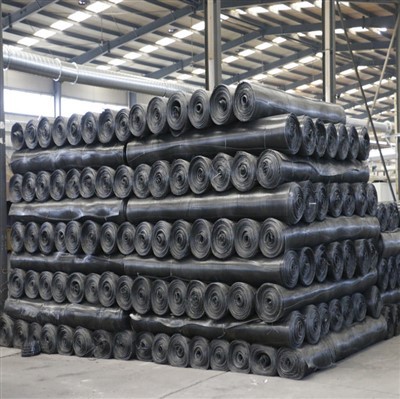
PVC geomembranes are delivered in large rolls, sometimes 100 feet wide and 500 feet long, depending on the project. Handling these rolls incorrectly is another common mistake I see. If you drag a roll across a rough surface, or leave it exposed to direct sunlight for too long, the material can stretch, warp, or degrade.
First, confirm your inventory matches your project plans. Make sure you have enough rolls to cover the entire site, with extra material (about 5-10% of the total area) for overlaps, trimming, and repairs. If you’re working on multiple sections, arrange rolls so they’re easy to access—storing them flat on a smooth, shaded surface (not on the ground where rocks can puncture them) is best. Never leave rolls exposed to UV light for more than 48 hours; PVC can start to break down in as little as a week of constant sun, especially in arid mining regions.
When you’re ready to unroll the liner, use gentle equipment—cranes with soft slings, not steel hooks, to avoid tearing. Roll the liner out in the direction of the slope to allow water to drain properly; for tailings ponds, this means unrolling from the highest point to the lowest, so any pooling during installation doesn’t create strain on the seams. Our team also recommends staggering the seams (we’ll talk more about that next) to minimize weak points—this is a design tip we’ve refined over years of working with mining clients, and it’s made a huge difference in long-term liner performance.
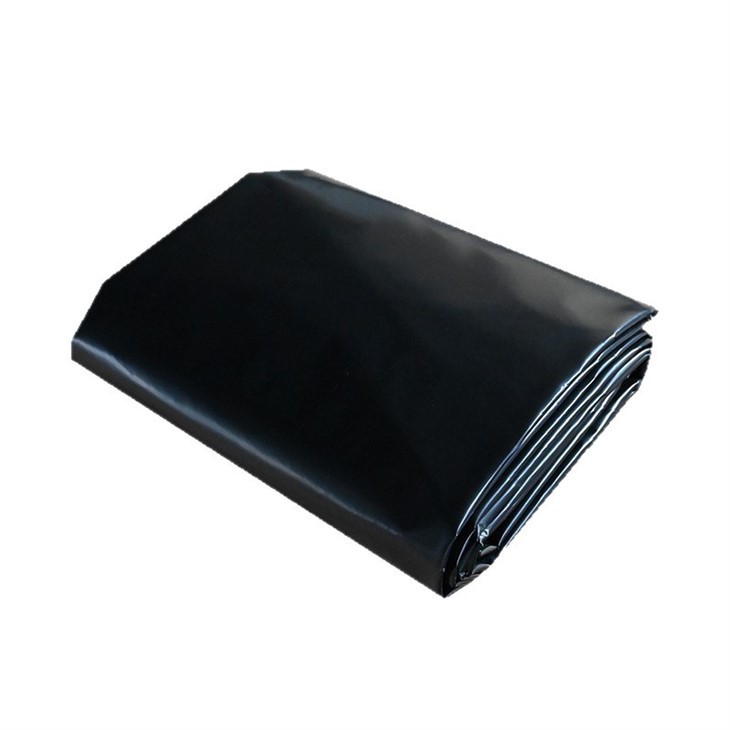
If you’re still deciding which PVC geomembrane is right for your specific mine needs, take a look at our range: from the PVC Pond Liner Geomembrane for tailings and water storage ponds, to the PVC Geomembranes For Landfill if your mine’s waste is routed to a lined landfill site. We also offer specialized options like the Flexible PVC Geomembrane For Artificial Lake Project for water retention basins used in mining operations, and the versatile PVC Geomembrane Liner for everything from process water tanks to containment areas. For underground mining, we even have the Waterproof PVC Membrane For Tunnel & Roofing to protect tunnels from water intrusion.

3. Seaming the Liner: The Most Critical Step for Mine Site Durability
Seams are the weak point of any geomembrane—poorly welded seams are the number one cause of leaks in mining liners, which can lead to environmental violations and costly cleanups. There are two main methods for seaming PVC geomembranes: hot air welding and extrusion welding, and both require specialized equipment and trained technicians.
For most mine applications, hot air welding is the standard. This method uses a handheld welding machine that blows hot air onto the overlapping edges of two liner panels, melting the PVC so they fuse together. The overlap should be a minimum of 6 inches, and you’ll need to test the weld strength before moving on. We always recommend doing a pre-test weld on a scrap piece of PVC to adjust the temperature and speed of the machine—too hot, and you’ll burn the liner; too cool, and the weld won’t bond properly.
After welding, you need to check every seam for defects. Do a visual inspection first, looking for gaps, bubbles, or gaps in the weld. Then, use a vacuum test or a water pressure test to check the strength. For vacuum testing, place a small tool over the seam, create a vacuum, and if the pressure holds, the weld is good. If not, you’ll need to re-weld the faulty section. For mine sites, where leaks can be catastrophic, we require all seams to pass a 100% pressure test before backfilling.
A common mistake I see is rushing the weld. Technicians sometimes move too fast to meet deadlines, leading to weak seams. On mine sites, where weather can be unpredictable—wind can blow dust onto the seam, rain can cool the hot air before it bonds—you have to adjust your process accordingly. If it’s windy, use wind screens to keep dust off the liner edges; if it’s too cold, let the welded seam cool slowly, rather than spraying water on it to speed up the process.
4. Liner Installation and Securing: Preparing for Final Use
Once all seams are tested and approved, it’s time to place the liner in its final position, and secure it to prevent shifting during backfilling or operation. For sloped areas, like tailings pond walls, you’ll need to anchor the liner at the top perimeter, using concrete blocks, metal stakes, or a bentonite seal to keep the liner from sliding down. This is especially important in mines, where heavy equipment can pass nearby and create vibration that shifts unanchored liners.
When backfilling, you have to use material that won’t puncture the liner. Gravel or sand is the best choice—never use large rocks, construction debris, or even gravel larger than 2 inches. Start backfilling from the lowest point of the site, working your way up, to distribute the weight evenly and prevent the liner from being pulled taut or punctured. For the first layer of backfill, use fine sand or silt, and pour it slowly from a height of no more than 2 feet to avoid impact with the liner.
Once the backfill is in place, do a final inspection. Walk the entire worksite, checking for any punctures, tears, or shifts. If you find a defect, repair it immediately: cut out the damaged area, cut a patch of PVC liner 6 inches larger than the damaged spot, weld it in place, and test the weld again. It’s far easier to fix a small defect now than to deal with a major leak later.
5. Post-Installation Monitoring: Ensuring Long-Term Performance
Installation doesn’t end when the backfill is done—mining sites have harsh conditions, and PVC liners need regular monitoring to stay intact. We recommend setting up a monitoring schedule: once a month for the first six months, then every quarter after that, to check for leaks, shifts, or UV degradation. You can use leak detection systems, like conductivity probes, to detect small leaks before they become a problem.
Also, be aware of the mine’s operations: if you’re adding chemicals, like flotation agents, to the water, test the water for compatibility with PVC. Most PVC liners are resistant to standard mining chemicals, but over time, prolonged exposure to high concentrations of certain acids or solvents can break down the material. Our team can help you test your specific process water to make sure our PVC geomembrane is the right fit for your operation.
Final Thoughts
Installing a PVC geomembrane in a mine isn’t just a construction task—it’s a long-term investment in environmental compliance, site safety, and operational efficiency. Every step, from site preparation to post-installation monitoring, requires attention to detail and experience with the unique challenges of mining environments. As a supplier, we’re not just here to sell you PVC geomembranes—we’re here to help you through every step, from choosing the right liner for your needs, to training your installation team, to providing technical support when issues arise.
If you’re planning a mine liner project and want to discuss your specific needs, including product recommendations, installation guidance, or pricing, don’t hesitate to reach out. We’re ready to help you find the right solution to meet your project’s requirements.
References
- Geosynthetic Institute. (2021). Best Practices for PVC Geomembrane Installation in Containment Applications.
- International Council on Metals and Mining. (2020). Water Management and Containment Guidelines for Mining Operations.
- ASTM International. (2019). Standard Practice for Installation of Thermoplastic Geomembranes.
- PVC Geomembrane Manufacturers Association. (2022). Durability Testing and Maintenance Protocols for Mining Liners.