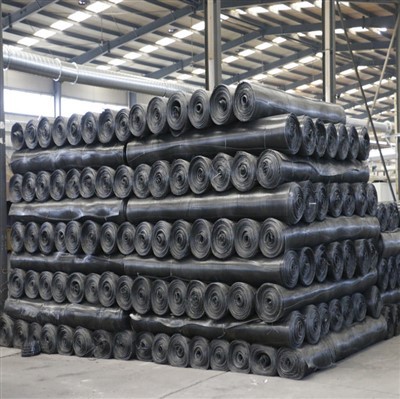
If you’ve ever worked on a civil construction project—whether building a retaining wall, reinforcing a road pavement, or stabilizing a slope—chances are you’ve crossed paths with uniaxial geogrids. These synthetic materials are workhorses of ground engineering, designed to distribute tension across a single axis to reinforce soil, reduce settlement, and extend the life of infrastructure. But if you’ve ever wondered how these geogrids hold up under extreme temperatures, you’re not alone. Heat resistance is one of the most critical, yet often misunderstood, properties of uniaxial geogrids, and it can make or break a project’s long-term performance. As a supplier specializing in high-quality uniaxial geogrids, I’ve spent years answering questions about this property, testing products in real-world conditions, and helping engineers make choices that stand the test of time. Let’s break down what heat resistance actually means for uniaxial geogrids, what factors affect it, and how it matters for your next project.
First, let’s ground ourselves in what uniaxial geogrids are, because their structure directly shapes their heat resistance. Unlike biaxial geogrids, which have apertures (the spaces between their ribs) aligned in two directions, uniaxial geogrids are manufactured with ribs oriented along one primary axis. This design lets them deliver exceptional tensile strength in that single direction, making them ideal for applications like retaining walls, where tension is focused along the length of the wall, or pavement reinforcement, where geogrids must resist the stress of repeated traffic loads. There are several common material types for uniaxial geogrids, and each has its own heat profile: high-density polyethylene (HDPE), polypropylene (PP), polyester (PET), and even fiberglass, though HDPE and PP are the most widely used for standard projects. You can learn more about how these material differences apply to specific use cases by checking our page for Uniaxial Geogrid For Retaining Wall Construction and Hdpe Uniaxial Geogrid, which details our HDPE formulations engineered for high heat environments.
Heat resistance, in simple terms, refers to a material’s ability to maintain its mechanical properties—tensile strength, dimension stability, and aperture integrity—when exposed to elevated temperatures. For geogrids, this isn’t just about avoiding melting; it’s about preserving the performance that makes them useful. If a geogrid weakens under heat, it can lose its ability to distribute tension, leading to premature soil settlement, retaining wall failure, or pavement cracking. So how is this measured, and what do the numbers actually mean? Most standardized tests for geogrid heat resistance fall into two main categories: short-term heat exposure (like during installation in warm climates) and long-term heat aging (like years of exposure to ambient temperatures in the ground).
Short-term heat exposure is often the first hurdle a geogrid faces. During installation, especially in regions with peak summer temperatures, geogrids can be left exposed to direct sunlight for hours, or even days, before being covered with backfill. Polypropylene geogrids, for example, have a lower melting point—typically around 160°C (320°F)—but their mechanical properties start to degrade at much lower temperatures. At 60°C (140°F), PP geogrids can lose up to 20% of their tensile strength within a few days of continuous exposure to UV and heat, even before being buried. HDPE, on the other hand, has a higher melting point (around 130°C–137°C, or 266°F–279°F, though some specialty formulations are higher) and retains more strength at mid-range temperatures. But that doesn’t mean HDPE is invulnerable. Even HDPE can suffer from oxidative degradation when exposed to prolonged high temperatures and UV radiation, a process where the polymer breaks down, becomes brittle, and loses its elasticity. That’s why many uniaxial geogrids, including our HDPE Unaixial Geogrid, are formulated with stabilizers to resist UV and heat oxidation, a key feature for projects in hot, sunny climates.
Long-term heat resistance is even more critical, because geogrids are designed to last 50 to 100 years underground. Soil temperatures vary by location, depth, and season: in tropical regions, topsoil can reach 45°C (113°F) in the summer, while at 1 meter depth, temperatures stay around 25°C–30°C (77°F–86°F) year-round. Even in temperate regions, underground temperatures can reach 35°C (95°F) for months at a time. To test long-term performance, engineers use accelerated aging tests, where geogrids are heated to a controlled temperature for extended periods, and their strength is measured over time. The key metric here is the “retention strength” after aging: for a geogrid to meet industry standards, it must retain at least 80% of its original tensile strength after 10,000 hours (about 14 months) of aging at a temperature matching the project’s expected ground temperature. For example, a project in a 40°C (104°F) climate would require a geogrid that retains 80% of its strength after 10,000 hours at 40°C. Our UX Rigid Uniaxial Geogrid is engineered to exceed these standards, with specialized stabilizers that extend its long-term strength even at sustained high temperatures.
What factors affect a uniaxial geogrid’s heat resistance? It’s not just the base polymer; it’s how the geogrid is manufactured and formulated. Let’s break down the key variables:
-
Polymer Type: As I mentioned earlier, HDPE and PP are the most common, but HDPE generally has better long-term heat resistance than PP, especially when formulated with stabilizers. Polyester (PET) geogrids, while stronger, can degrade at lower temperatures than HDPE if not coated, making them less ideal for extreme heat. Fiberglass geogrids have excellent heat resistance, but they’re brittle, so they’re only used in specific applications like pavement reinforcement. For projects where high heat is a concern, HDPE is almost always the go-to material.
-
Additives and Stabilizers: This is where quality separates good geogrids from great ones. Raw HDPE or PP will degrade quickly under heat and UV, so manufacturers add carbon black, antioxidants, and UV stabilizers to slow oxidation. Carbon black not only protects against UV radiation but also improves the polymer’s heat stability. Antioxidants prevent the polymer molecules from breaking down when exposed to heat over time. Low-quality geogrids often use cheap, minimal stabilizers, which means their heat resistance is far lower than advertised. That’s why it’s important to source geogrids from suppliers that test their products for long-term aging, not just raw material properties.


-
Manufacturing Process: Uniaxial geogrids are made by extruding a flat sheet of polymer, then stretching it uniaxially (along one axis) to create the rib and aperture structure. The stretching process aligns the polymer molecules along the load axis, increasing tensile strength, but it also affects heat resistance. If the stretching temperature is too low, the molecules don’t align properly, leading to weaker heat resistance; if it’s too high, the polymer can overheat, causing premature degradation. Properly manufactured uniaxial geogrids have a consistent stretching temperature that balances strength and heat stability.
-
Service Temperature vs. Short-Term Peak Temperature: It’s important to distinguish between the temperature the geogrid will experience over its design life (service temperature) and short-term peak temperatures during installation. For example, a geogrid installed in Arizona might see a peak surface temperature of 60°C (140°F) during a summer installation, but its service temperature underground is 30°C (86°F). The short-term peak is stressful, but the long-term service temperature is what determines its lifespan. Choosing a geogrid that can handle both peak installation temperatures and service temperatures is key.
Now, why does this matter for your project? Let’s use two common applications to illustrate: retaining walls and pavement reinforcement. For retaining walls, which rely on uniaxial geogrids to reinforce the soil behind the wall, heat resistance directly impacts the wall’s stability. If the geogrid behind a retaining wall weakens due to high temperatures, it can no longer resist the lateral pressure of the soil, leading to wall bulging, cracking, or even collapse. A project in a hot desert climate, for example, needs a geogrid that can handle long-term ground temperatures above 35°C, so a standard PP geogrid would be a poor choice. Our Uniaxial Geogrid For Retaining Wall Construction line includes HDPE geogrids specifically formulated for these harsh conditions, with proven heat resistance of up to 40°C (104°F) over 100 years of service.
For pavement, uniaxial geogrids are used to reduce reflective cracking, extend pavement life, and minimize the need for frequent repairs. Pavement surfaces can reach temperatures of 50°C (122°F) or higher in summer, and geogrids installed at the base of the pavement must resist both that surface heat and the mechanical stress of repeated traffic loads. If a geogrid loses strength under heat, it can’t distribute the traffic load evenly, leading to premature pavement failure. Our One-way Stretch Uniaxial Geogrid For Pavement is engineered to withstand these high pavement temperatures, with a heat resistance profile that maintains 90% of its tensile strength even at 55°C (131°F) for short periods, and 85% after 10,000 hours of aging at 35°C.
A common mistake I see engineers make is assuming that all uniaxial geogrids have the same heat resistance. That’s simply not true. I’ve worked on projects where a customer saved a few cents per square meter by buying a low-grade uniaxial geogrid, only to have it fail three years later due to heat degradation in a hot climate. The cost of replacing the geogrid and repairing the infrastructure ended up being 100 times higher than the initial savings. That’s why it’s important to work with a supplier that provides full test data for heat resistance, not just generic product specifications. Look for data on long-term aging, short-term peak temperature performance, and UV resistance—these are the numbers that will protect your project.
Another point to consider is installation practices, which can impact heat resistance even if you choose the right geogrid. If geogrids are left exposed to direct sunlight for more than 72 hours before being covered, even high-quality HDPE geogrids will start to degrade. UV radiation is a major driver of polymer degradation, so proper installation—covering geogrids with backfill as soon as possible after laying them— is critical for preserving their heat and UV resistance. For projects in extremely hot climates, some engineers also choose to use geotextiles to cover the geogrids temporarily during installation, adding an extra layer of protection against sun and heat.
So, what should you look for when specifying uniaxial geogrid heat resistance? First, match the geogrid’s service temperature rating to your project’s expected ground temperature. If you’re in a temperate region, a standard HDPE geogrid (rated for 25°C–30°C service temperature) will work fine. If you’re in a tropical or desert climate, look for a geogrid rated for 35°C–45°C service temperature, with UV stabilizers that protect against short-term sun exposure. Second, check the retention strength after aging: aim for a geogrid that retains at least 80% of its original tensile strength after 10,000 hours of aging at your project’s service temperature. Third, ask for test data from independent laboratories—don’t rely on manufacturer claims alone. Reliable suppliers will have third-party test reports that confirm heat resistance, not just generic marketing materials.
At the end of the day, choosing the right uniaxial geogrid for your project’s heat conditions is one of the most important decisions you can make to ensure long-term performance. Whether you’re building a retaining wall in Arizona, reinforcing a road in Florida, or stabilizing a slope in a tropical region, heat resistance isn’t a “nice-to-have” — it’s a non-negotiable for infrastructure that lasts. If you’re unsure which uniaxial geogrid is right for your project, from our standard HDPE geogrids to our specialized UX Rigid Uniaxial Geogrid, our team is here to help you review your project’s conditions, test requirements, and budget to find the perfect solution. We don’t just sell geogrids; we work with engineers and contractors to ensure their projects stand strong, even in the hottest climates. Don’t hesitate to reach out to us for a consultation on your next geogrid project.
References
- ASTM D6996, Standard Test Method for Determining the Tensile Properties of Geogrids
- AASHTO M281, Standard Specification for Plastic Geogrids
- Geosynthetic Institute (GSI), “Heat Resistance of Polymer Geosynthetics”
- ASTM D4355, Standard Test Method for Deterioration of Geotextiles by Exposure to Heat, Moisture, and Ultraviolet Light