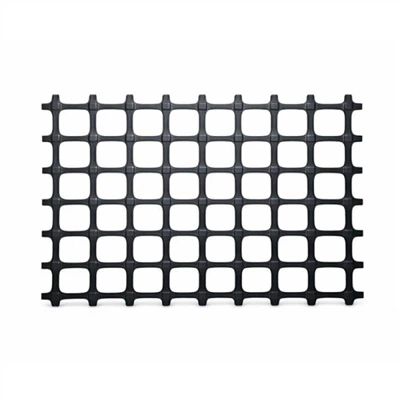

Hey there! As a supplier of Biaxial Plastic Geogrid, I'm super excited to share with you the different installation methods for this amazing product in a high - fill embankment.
First off, let's talk a bit about why Biaxial Plastic Geogrid is so crucial in high - fill embankments. High - fill embankments are often used in road construction, railway projects, and other large - scale infrastructure. They need to be stable and durable to withstand the weight and traffic loads over time. Biaxial Plastic Geogrid provides excellent reinforcement, which helps to distribute the load more evenly, reduce soil settlement, and enhance the overall stability of the embankment.
1. The Trench Installation Method
One of the common installation methods is the trench installation. This method is great when you need to ensure a strong connection between the geogrid and the soil.
Step 1: Prepare the Site
Before you start the installation, you need to prepare the site properly. Clear the area of any debris, rocks, or vegetation. Make sure the ground is level and compacted. You can use a compactor to achieve the right level of compaction. This step is crucial because a well - prepared site will ensure that the geogrid is installed evenly and can perform its function effectively.
Step 2: Dig the Trench
Once the site is ready, it's time to dig the trench. The depth and width of the trench depend on the design requirements of the embankment. Usually, the trench should be deep enough to accommodate the geogrid and provide sufficient cover. A typical trench depth might be around 15 - 30 cm, and the width should be wide enough to lay the geogrid without any folding or wrinkling.
Step 3: Lay the Geogrid
Carefully unroll the Biaxial Plastic Geogrid into the trench. Make sure it is laid flat and straight. You can use stakes or pins to secure the geogrid at the edges of the trench. This will prevent it from moving during the backfilling process.
Step 4: Backfill the Trench
After the geogrid is laid, start backfilling the trench with soil. The soil should be free of large rocks or debris. Compact the soil in layers to ensure good contact between the geogrid and the soil. This will help the geogrid to work effectively in reinforcing the embankment.
2. The Surface Installation Method
The surface installation method is a bit simpler and is often used when the embankment has a relatively flat surface.
Step 1: Surface Preparation
Just like in the trench installation method, the first step is to prepare the surface. Clear the area of any obstacles and make sure the surface is smooth. You can use a grader to level the surface if necessary.
Step 2: Unroll the Geogrid
Unroll the Biaxial Geogrid Rolls For Soil Stabilisation on the prepared surface. Try to unroll it as straight as possible to avoid any wrinkles or folds. You can overlap the geogrid rolls by a certain amount, usually around 15 - 30 cm, to ensure a continuous reinforcement layer.
Step 3: Secure the Geogrid
Use stakes or anchors to secure the geogrid to the surface. Place the stakes at regular intervals, typically every 1 - 2 meters along the edges and at the intersections of the geogrid. This will prevent the geogrid from moving or shifting during the construction process.


Step 4: Cover the Geogrid
After the geogrid is secured, cover it with a layer of soil. The thickness of the soil layer depends on the design requirements, but it is usually around 15 - 30 cm. Compact the soil layer to ensure good bonding between the geogrid and the soil.
3. The Integrated Installation Method
The integrated installation method combines the features of both the trench and surface installation methods. This method is suitable for more complex embankment designs where a higher level of reinforcement is required.
Step 1: Site Preparation
As always, start by preparing the site. Clear the area and make sure the ground is level and compacted.
Step 2: Create Trenches and Platforms
Dig trenches at regular intervals across the embankment. At the same time, create platforms between the trenches. The trenches will be used to install the geogrid in a more secure way, while the platforms will provide a surface for the geogrid to be laid on.
Step 3: Lay the Geogrid
Lay the Biaxial Polypropylene Geogrid in the trenches and on the platforms. Make sure the geogrid is continuous and well - connected. You can use special connectors or overlaps to ensure a strong connection between different sections of the geogrid.
Step 4: Backfill and Compact
Backfill the trenches and cover the geogrid on the platforms with soil. Compact the soil in layers to ensure a good bond between the geogrid and the soil. This will help to create a strong and stable reinforcement structure for the high - fill embankment.
Choosing the Right Installation Method
When choosing the installation method for Biaxial Plastic Geogrid in a high - fill embankment, there are several factors to consider.
- Soil Conditions: If the soil is loose or has a high water content, the trench installation method might be more suitable as it provides better anchorage for the geogrid.
- Embankment Design: The shape and size of the embankment, as well as the design requirements for reinforcement, will also influence the choice of installation method. For example, a complex embankment design might require the integrated installation method.
- Construction Time and Cost: The surface installation method is usually faster and less expensive, while the trench and integrated methods might take more time and resources but provide better reinforcement.
Conclusion
In conclusion, Biaxial Plastic Geogrid is an essential component in high - fill embankment construction. By choosing the right installation method, you can ensure that the geogrid performs its function effectively and provides long - term stability for the embankment.
If you're interested in purchasing Biaxial Plastic Geogrid for your high - fill embankment project, feel free to reach out to us. We have a wide range of high - quality geogrid products that can meet your specific needs. Don't hesitate to contact us for more information and to start a procurement discussion.
References
- ASTM D6637/D6637M - 18, Standard Specification for Geogrids for Reinforcement of Soil and Other Granular Materials.
- FHWA (Federal Highway Administration), Geosynthetics in Highway Construction: Design and Construction Guidelines.