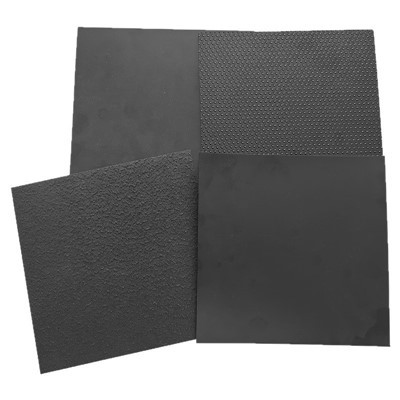
If you’re in the business of lining ponds, landfills, mining operations, or even wastewater storage, you know how big of a headache geomembrane performance can be. I’ve been selling these products for over a decade, and let me tell you—even the best sheet won’t hold up if you skip over a few key factors. I’ve seen too many clients cut corners on specs, installation, or even upfront material checks, only to end up with leaks, costly repairs, or full-on replacements within a year. Today, I’m breaking down the real, actionable factors that impact geomembrane performance, no corporate jargon—just the stuff I’ve learned from field calls and client flubs.
First off, let’s start with the material itself. Not all geomembranes are created equal, plain and simple. The type of polymer you pick is the foundation of how well it will perform long-term. For example, HDPE is the workhorse of the industry—super durable, flexible, and resistant to most chemicals, which is why it’s used for everything from agricultural ponds to secondary containment for industrial chemicals. But not all HDPE is the same; there’s standard-grade, high-density cross-linked, and even reinforced options that handle different stresses way better. If you’re dealing with heavy loads (like the waste in a landfill) or sharp debris, you’ll want to step up to something like a Reinforced Polypropylene Geomembrane. That extra ribbing or woven core makes it way less likely to puncture during installation or when the site settles. Then there’s PVC, which is more flexible than HDPE and good for shorter-term projects, though it’s less resistant to harsh chemicals. If you’re lining a landfill, you’ll almost always need something that stands up to leachate for decades, so PVC Geomembranes For Landfill are often a specific blend designed for that exact use case. I always tell clients: don’t just go with the cheapest material—match the polymer to your project’s needs, or you’ll be fixing leaks before you know it.
Another big one is thickness. This is a number that’s easy to glance over, but it makes a huge difference. Thickness is measured in mils (1 mil is 1/1000 of an inch), and the rule is: thicker isn’t always better, but too thin is a recipe for disaster. For small backyard ponds, 20-30 mil might work, but for a mining heap leach pad or a large landfill cell, you’re looking at 60 mil or more. Why? Thicker material can resist punctures from rocks, tree roots, or equipment movement, and it also handles UV exposure better. Thin geomembranes will degrade faster if they’re exposed to sunlight for even a few months without protection (more on that later). I once had a client who used a 20-mil HDPE sheet for a farm pond—within a year, a beaver had chewed a hole right through it, and then the pond leaked so bad they had to drain half the water. If he’d gone with a 45-mil HDPE Geomembrane Sheet, that probably wouldn’t have happened. Thickness also affects seam strength—thicker material is easier to weld properly, which brings me to my next point: seams.
Seams are the weak link of any geomembrane installation, hands down. Even the best sheet in the world is useless if your seams fail. Bad seams are the number one reason I get calls from clients saying their liner is leaking. How do seams go wrong? Usually it’s from bad welding technique, dirty material, or cutting corners on seam testing. For heat-welded seams (the most common for HDPE), the two edges of the geomembrane have to be perfectly cleaned—no dust, dirt, or oil—before you run the welder. If there’s even a small piece of debris between the sheets, the weld will be weak and likely split. Also, you can’t rush the weld; if the temperature is too low, the material won’t melt together, and if it’s too high, you’ll burn the edges and create gaps. A lot of smaller installation teams skip seam testing to save time, but that’s a huge mistake. We always recommend doing a pressure test on every seam—you attach a air hose and check if the pressure holds for 10 minutes. If it drops, you’ve got a leak right there. For projects where leaks would be a disaster (like a landfill or a drinking water reservoir), we also use non-destructive testing, like spark testing, to find tiny pinholes you can’t see. I’ve seen clients cut corners on seams to save a few bucks, and end up paying thousands in remediation. Seams aren’t something to mess around with.
Environmental exposure is another factor that kills geomembrane performance, especially if you’re working outdoors. UV radiation from the sun is a huge enemy of most plastics, including HDPE and PVC. If you leave a geomembrane exposed to sunlight for more than a few weeks before covering it with soil, rock, or whatever your project requires, it will start to degrade—fading, cracking, and losing its flexibility. That’s called UV degradation, and it happens because the sun breaks down the polymer chains in the material. To fight this, all good geomembranes have UV stabilizers added during manufacturing, but those stabilizers only last so long. For example, standard HDPE has about 6-12 months of outdoor UV resistance, depending on the climate (it’s shorter in hot, sunny places like Arizona, longer in cloudy places like the Pacific Northwest). If your project will take longer than that to cover, you need to either get a geomembrane with extra UV stabilizers or protect it with a temporary covering—like a tarp or even a layer of soil. Other environmental factors: chemical exposure, extreme temperatures, and biological stuff like roots or animals. For example, if you’re lining a pond where trees grow around the edge, you’ll need to use a geomembrane that’s resistant to root penetration, or install a root barrier on top of the liner. And if you’re dealing with acidic or alkaline wastewater, you need to pick a polymer that’s chemically resistant to that specific pH level—something that works for acid might get eaten through by a strong base.
Installation site preparation is often overlooked, but it’s make-or-break. You can have the best material, perfect seams, and it will still leak if you don’t prep the site right. What goes into good site prep? First, you have to remove all sharp debris—rocks, sticks, roots, even old concrete chunks—from the area where the geomembrane will lay. Even a small, 1-inch rock under a thin liner can puncture it once you put weight on top (like soil, equipment, or waste). I’ve seen this so many times: a contractor shows up, pulls the liner over a site with a few hidden rocks, and two weeks later, there’s a leak right where that rock was. Next, you need a smooth base, and sometimes a geotextile cushion. A geotextile is a porous fabric that goes between the geomembrane and the base, adding an extra layer of protection against punctures and also preventing the liner from rubbing against rough spots. For areas with very uneven ground, you might also need to level the site before laying the liner. And don’t forget about the edges—you have to anchor the liner properly around the perimeter. If you don’t, water pressure or settling can shift the liner over time, leading to gaps or tears. Anchoring usually means digging a trench along the edge, folding the liner over, and covering it with soil or concrete to hold it in place. Skimping on site prep is like building a house on sand—it’s gonna fall.
Post-installation care and maintenance also play a role in long-term performance. A lot of people think once the liner is down, they can forget about it, but that’s not true. Even the best geomembrane can get damaged during backfilling, construction of other structures, or even from the materials you’re storing on top. For example, if you’re filling a landfill with heavy waste, dropping in large chunks of construction debris can puncture the liner, so you need to use a cushion layer or spread waste evenly to distribute the weight. Regular inspections are key—do a walkthrough every few months, check for tears, seams that might be splitting, or areas where the liner is shifting. If you catch a small tear early, you can fix it with a patch before it turns into a big, expensive leak. I once had a client who noticed a tiny pinhole in his pond liner during a routine check; we patched it with a HDPE patch and extra heat weld, and he never had a problem again. If he’d ignored it, the leak would have gotten worse, and he would have lost thousands of gallons of water.
Wait, let’s circle back to product specs just to make sure I didn’t skip anything. When we talk about geomembrane performance, the type of resin matters more than people realize. For example, some HDPE liners are made from “recycled” resin that’s been reprocessed multiple times. That might sound good for the environment, but it can have lower molecular weight, weaker bonds, and worse resistance to chemicals and UV. We always recommend virgin or prime-grade resin for most projects—especially industrial or long-term ones. There’s also things like tear strength, elongation at break, and puncture resistance, all of which get better with higher-quality material. If you’re not sure which spec you need, don’t guess—talk to a supplier who knows the space, like me. We’ve got tons of resources on our site, from Hdpe Geomembrane Sheet options to Hdpe Liner specific to ponds, and even PVC Geomembranes For Landfill that meet EPA standards.
At the end of the day, geomembrane performance isn’t about one single factor—it’s the combination of material choice, thickness, seam quality, site prep, environmental conditions, and maintenance. I’ve seen every mistake in the book: wrong material for the job, too thin, bad welds, rocky sites, no maintenance. But I’ve also seen projects that last 20, 30, even 50 years because all those factors lined up right. If you’re planning a project and want to make sure your geomembrane holds up, don’t risk it with random online picks or cheap no-name products. We’ve been supplying quality geomembranes and supporting installations for years, and we can help you pick the right product for your specific needs. Whether you need a Hdpe Geomembrane Liner for your agricultural pond, a Reinforced Polypropylene Geomembrane for a high-stress mining operation, or durable PVC liners for a landfill, we’ve got you covered. Reach out to our team to talk through your project, get specs, and make sure you don’t end up with a leaky headache down the line.
References:


- ASTM International. (2021). Standard Specification for Geomembrane Materials.
- Subramanian, A. (2019). Geomembrane Engineering: Principles and Practice.
- U.S. Environmental Protection Agency. (2018). Geomembrane Liner Design for Municipal Solid Waste Landfills.
- Koerner, R. M. (2012). Designing with Geosynthetics (6th ed.). Pearson Education.
- International Organization for Standardization. (2020). Geosynthetics - Test Methods for Tensile Properties of Geomembranes.