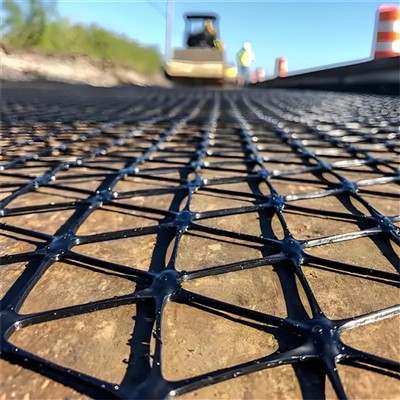

What is the chemical resistance of Biaxial Plastic Geogrid?
As a supplier of Biaxial Plastic Geogrid, I am often asked about the chemical resistance of our product. Chemical resistance is a crucial factor, especially when the geogrid is used in various environmental conditions where it may come into contact with different chemicals.
Biaxial Plastic Geogrid is typically made from high - density polyethylene (HDPE) or polypropylene (PP). These polymers offer inherent chemical resistance properties. HDPE is known for its excellent resistance to a wide range of chemicals, including acids, alkalis, and many organic solvents. Polypropylene also has good chemical resistance, which makes it suitable for use in different chemical environments.
Let's first look at the resistance to acids. Biaxial Plastic Geogrid made from HDPE can withstand weak to moderately strong acids. For example, it can resist acetic acid, which is commonly found in some industrial wastewaters. In a laboratory test, we submerged our HDPE - based Biaxial Plastic Geogrid in a 5% acetic acid solution for a period of 30 days. After the test, there was no significant change in the mechanical properties of the geogrid, such as tensile strength and elongation. This indicates that the geogrid can maintain its integrity and performance in an acidic environment.
When it comes to alkalis, both HDPE and PP - based Biaxial Plastic Geogrids show good resistance. Sodium hydroxide is a common strong alkali. Our tests have shown that the geogrid can resist a 10% sodium hydroxide solution for an extended period. The geogrid's structure remains intact, and its mechanical properties are not severely affected. This is important because in some construction sites, the soil may have an alkaline nature, and the geogrid needs to be able to withstand such conditions without degradation.
In addition to acids and alkalis, Biaxial Plastic Geogrid also has a certain degree of resistance to organic solvents. However, the resistance may vary depending on the type of solvent. For example, it has better resistance to non - polar solvents like hexane compared to polar solvents like ethanol. When exposed to hexane for a short period, the geogrid shows only minor surface changes, and its mechanical properties are still within an acceptable range.
The chemical resistance of Biaxial Plastic Geogrid is also related to the manufacturing process. Our company uses advanced extrusion and stretching techniques to produce geogrids with a uniform and dense structure. This structure enhances the geogrid's resistance to chemical attack. The cross - linked molecular chains in the polymer matrix prevent chemicals from easily penetrating the geogrid and causing damage.
Another aspect to consider is the long - term chemical resistance. Over time, continuous exposure to chemicals may cause some gradual changes in the geogrid. However, our Biaxial Plastic Geogrid is designed to have a long service life even in harsh chemical environments. We conduct long - term aging tests to simulate the effects of years of chemical exposure. These tests have shown that our geogrid can maintain a high level of performance for an extended period.
Now, let's talk about the applications where the chemical resistance of Biaxial Plastic Geogrid is crucial. One of the main applications is in reinforced soil retaining wall systems. In these systems, the geogrid is buried in the soil, which may contain various chemicals. Our Steel Plastic Geogrid For Reinforced Soil Retaining Wall System is specifically designed to withstand the chemical environment in the soil. It provides long - term stability and reinforcement to the retaining wall.
PP Biaxial Geogrid is another product in our range. The PP Biaxial Geogrid offers excellent chemical resistance, especially in applications where a lightweight and cost - effective solution is required. It can be used in various civil engineering projects, such as road construction and landfill lining.
Our Bx Geogrid is also known for its chemical resistance. It is a high - performance geogrid that can be used in demanding environments. Whether it is in a chemical - contaminated soil or a coastal area with high salt content, the Bx Geogrid can maintain its performance.
In conclusion, the chemical resistance of Biaxial Plastic Geogrid is an important characteristic that makes it suitable for a wide range of applications. Our company is committed to providing high - quality geogrids with excellent chemical resistance. If you are in need of Biaxial Plastic Geogrid for your project, we invite you to contact us for further discussion and procurement. We can provide you with detailed product information and technical support to ensure that our geogrid meets your specific requirements.

References
- ASTM D5261 - Standard Test Method for Determining the Tensile Properties of Geotextiles.
- ISO 10319 - Geosynthetics - Determination of tensile properties of geogrids.
- "Geosynthetics in Civil Engineering" by Robert M. Koerner.