

Introduction
In modern geotechnical engineering, geogrids are essential materials for soil reinforcement, load distribution, and long-term infrastructure stability. Among the most widely used types are biaxial plastic geogrids, welded geogrids, and biaxial polyester (PET) geogrids.
Although all three serve similar purposes-improving bearing capacity and reducing deformation-their manufacturing processes, material properties, and engineering performance differ significantly.
This article provides a comprehensive comparison to help engineers, contractors, and international buyers choose the most suitable geogrid for their projects.
What Is a Biaxial Plastic Geogrid?
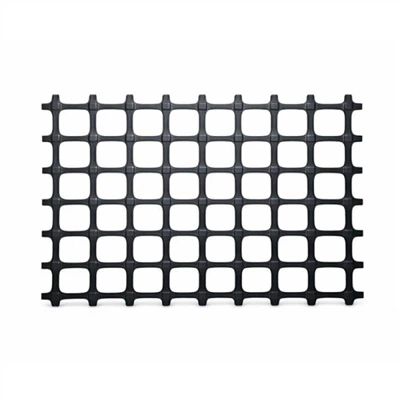
Biaxial plastic geogrid is manufactured from polymer materials (typically polypropylene or HDPE) through extrusion, sheet forming, punching, and biaxial stretching.
This process creates a grid structure with high tensile strength in both longitudinal and transverse directions, forming an effective load distribution network in soil.
Key Features:
Balanced strength in two directions
Improves subgrade bearing capacity
Reduces cracking and settlement
Lightweight and easy to install
Cost-effective for large-area applications
Typical Applications:
Road and railway subgrade reinforcement
Airport runways and parking areas
Slope protection and embankments
Mining and tunnel reinforcement
Biaxial plastic geogrids are ideal for general ground improvement and long-term load-bearing structures.


What Is a Welded Geogrid?
Welded geogrid is a planar structure formed by welding multiple strips (usually polyester-based) at regular intervals. The strips are often coated with a protective PE layer to enhance durability.
A notable subtype is the steel-plastic composite geogrid, which integrates steel reinforcement with polymer coating.
Key Features:
High structural stiffness
Strong friction with fill materials due to textured surface
Excellent load distribution capability
Good seismic energy absorption (especially steel-plastic type)
Can be combined with geotextile layers for waterproofing
Engineering Advantages:
Improves shear resistance of soil
Limits lateral displacement and uplift
Enhances load transfer to deeper soil layers
Provides better crack control in asphalt layers (when combined with geotextiles)
Applications:
Soft soil foundation treatment
Reinforced soil cushion layers
High-load infrastructure (ports, highways)
Asphalt pavement reinforcement systems
Welded geogrids are preferred for projects requiring high stiffness and strong soil interaction.
What Is Biaxial Polyester (PET) Geogrid?
Biaxial polyester geogrid is produced using high-strength polyester yarns that are warp-knitted into a grid structure and then coated with polymer (such as PVC).
This manufacturing process results in a flexible yet high-performance reinforcement material.
Key Features:
Very high tensile strength
Low elongation under load
Excellent resistance to creep and aging
Strong bonding with soil and aggregates
Lightweight with drainage capability
Applications:
Soft soil subgrade reinforcement
Highway and railway construction
Embankments and retaining walls
Hydraulic engineering (dams, riverbanks)
Special Uses:
Railway ballast stabilization
Retaining wall reinforcement
Bridge abutment stabilization to reduce settlement
Polyester geogrids are ideal for long-term, high-performance reinforcement in demanding environments.
Key Differences Between the Three Geogrids
| Parameter | Biaxial Plastic Geogrid | Welded Geogrid | Polyester (PET) Geogrid |
|---|---|---|---|
| Material | PP / HDPE | PET strips / steel-plastic composite | High-strength polyester yarn |
| Manufacturing | Extrusion + stretching | Strip welding | Warp knitting + coating |
| Tensile Strength | Medium | High | Very high |
| Elongation | Moderate | Low | Low |
| Stiffness | Moderate | High | High |
| Soil Interaction | Good | Excellent | Excellent |
| Durability | Good | Very good | Excellent |
| Cost | Low | Medium–High | Medium |
How to Choose the Right Geogrid
Selecting the appropriate geogrid depends on project requirements:
Load Conditions
Medium loads → Biaxial plastic geogrid
Heavy loads → Welded or polyester geogrid
Soil Conditions
General soils → Plastic geogrid
Soft or unstable soils → Polyester or welded geogrid
Project Lifespan
Short to medium term → Plastic geogrid
Long-term infrastructure → Polyester geogrid
Budget Considerations
Cost-sensitive projects → Plastic geogrid
Performance-driven projects → Welded or PET geogrid
Engineering Benefits of Geogrids
All three types of geogrids contribute to:
Increased bearing capacity of subgrades
Reduced settlement and deformation
Improved load distribution efficiency
Enhanced slope stability and erosion resistance
Lower maintenance and lifecycle costs
They are widely used in:
- Highways and railways
- Airports and ports
- Mining and tunnels
- Hydraulic and environmental engineering
Recommended Geogrid Manufacturer for Global Buyers
For international buyers sourcing biaxial plastic geogrids, welded geogrids, and polyester (PET) geogrids, selecting a manufacturer with multi-product capability and engineering expertise is essential to ensure the right material is matched to each project condition.
Hangzhou Weiwo Geosynthetic is a specialized manufacturer offering a full range of geogrid solutions tailored for different soil conditions and load requirements.
Product Capabilities
1. Biaxial Plastic Geogrids
Weiwo supplies high-quality biaxial plastic geogrids made from PP or HDPE, manufactured through advanced extrusion and stretching processes.
These products are ideal for:
Road and railway subgrade reinforcement
Large-area ground stabilization (parking lots, logistics yards)
Cost-sensitive infrastructure projects
They offer:
Balanced tensile strength in both directions
Stable performance and long service life
Competitive pricing for bulk procurement
2. Welded Geogrids (Including Steel-Plastic Composite Types)
Their welded geogrids are produced using high-strength strips with protective coatings, ensuring excellent structural stability and soil interaction.
Suitable for:
Soft soil foundation treatment
Reinforced soil cushion layers
Heavy-load applications such as ports and highways
Key advantages include:
High stiffness and load distribution capability
Strong friction with aggregates
Improved resistance to deformation and shear failure
3. Polyester (PET) Geogrids
Weiwo also manufactures high-performance polyester geogrids using warp-knitted high-tenacity yarns with polymer coating.
These are widely used in:
Soft soil reinforcement
Retaining walls and embankments
Long-term infrastructure projects
They provide:
Very high tensile strength with low elongation
Excellent creep resistance
Strong bonding with soil and aggregates
Why Choose Weiwo Geosynthetic?
Full geogrid product range (Plastic, Welded, PET) for different applications
Strict quality control ensuring consistent mechanical performance
Customizable specifications based on project requirements
Extensive export experience serving global infrastructure projects
Technical support for design and material selection
By offering multiple geogrid types under one roof, Weiwo helps buyers simplify sourcing while ensuring optimal engineering performance.
Learn more about their company and manufacturing capabilities:
https://www.geosynthetictech.com
Conclusion
Biaxial plastic geogrids, welded geogrids, and polyester geogrids each offer unique advantages in geotechnical engineering.
Plastic geogrids provide cost-effective solutions for general applications
Welded geogrids deliver high stiffness and strong load distribution
Polyester geogrids offer superior strength and long-term durability
Understanding these differences allows engineers and buyers to select the most suitable material, ensuring both project efficiency and long-term performance.


