

Geogrids are one of the most important geosynthetic materials used in modern civil engineering. They are widely applied in highways, railways, airport runways, retaining walls, embankments, and slope stabilization systems. By improving soil reinforcement and load distribution, geogrids significantly enhance the long-term performance and durability of infrastructure projects.
For engineers, contractors, and procurement professionals, understanding the key performance parameters of geogrids is essential to ensure proper material selection, optimize structural design, and reduce overall project costs.

Types of Geogrids and Their Engineering Roles
Geogrids are generally classified into two primary categories based on their structural behavior:
Uniaxial Geogrid
Uniaxial geogrids are designed with high tensile strength in one direction. They are mainly used in applications such as retaining walls, steep slopes, and reinforced embankments, where stress is predominantly applied in a single direction.


Biaxial Geogrid
Biaxial geogrids provide tensile strength in both longitudinal and transverse directions. They are commonly used in road base reinforcement, subgrade stabilization, and pavement systems where multidirectional loads occur.
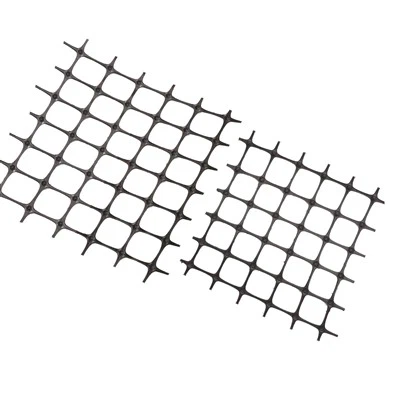


Triaxial Geogrid
Triaxial geogrids are engineered with a triangular aperture structure that provides multi-directional load distribution. They are particularly suitable for applications where loads are applied from multiple directions and require enhanced stability.


Uniaxial Geogrid vs Biaxial Geogrid vs Triaxial Geogrid
| Parameter | Uniaxial Geogrid | Biaxial Geogrid | Triaxial Geogrid |
|---|---|---|---|
| Structure | Linear ribs in one direction | Square/rectangular grid | Triangular aperture structure |
| Load Direction | Single direction (longitudinal) | Two directions (MD & TD) | Multi-directional (360° load distribution) |
| Tensile Strength | Very high in one direction | Moderate in both directions | Balanced strength in multiple directions |
| Load Distribution | Directional reinforcement | Bidirectional distribution | Radial load distribution |
| Soil Interlock | Good | Good | Excellent (enhanced confinement) |
| Deformation Control | Strong in one direction | Moderate | Superior rutting resistance |
| Best Applications | Retaining walls, slopes, embankments | Road base, subgrade stabilization | Heavy-duty roads, industrial yards, airports |
| Cost Efficiency | High for wall systems | Cost-effective for general roads | Higher upfront cost, better long-term ROI |
| Installation Complexity | Moderate | Easy | Easy to moderate |
Why Geogrid Performance Parameters Are Critical
In geotechnical engineering, the effectiveness of a geogrid depends directly on its mechanical and physical properties. Proper evaluation of these parameters helps to:
- Improve bearing capacity of weak soils
- Reduce differential settlement and deformation
- Enhance load transfer efficiency
- Extend service life of infrastructure
- Minimize construction and maintenance costs
Failure to consider these parameters may lead to structural instability or premature failure.
Detailed Analysis of Key Geogrid Performance Parameters
Tensile strength is the most critical parameter of geogrids. It defines the maximum load the material can withstand before failure.
Typical values range from:
25 kN/m to 110 kN/m (or higher depending on product grade)
Higher tensile strength is required in heavy-duty applications such as highways, airports, and retaining structures.
Geogrids are designed with low elongation characteristics, ensuring minimal deformation under load.
- Low elongation improves soil confinement
- Reduces long-term settlement
- Enhances structural stability
Creep resistance is equally important, especially for long-term applications where constant loads are applied.
Junction strength refers to the strength at the intersections of the ribs.
- Ensures efficient load transfer
- Maintains structural integrity
- Prevents grid failure under stress
High junction strength is essential for maintaining overall performance, especially in reinforced soil systems.
The aperture size determines how well aggregate particles interlock with the geogrid.
- Proper aperture size improves mechanical interlocking
- Enhances friction between soil and grid
- Increases overall reinforcement efficiency
This parameter must be selected based on the type of fill material used, such as gravel or crushed stone.
The reinforcement mechanism of geogrids relies heavily on mechanical interlocking and friction.
- High interlock improves load distribution
- Prevents lateral movement of aggregates
- Enhances pavement performance
This is particularly important in road construction and base stabilization.
Geogrids must perform under various environmental conditions, including:
- UV exposure
- Chemical corrosion
- Moisture and temperature variations
High-quality geogrids are manufactured with stabilizers and additives to ensure long-term durability, often exceeding decades of service life.
Typical geogrid roll widths range from 4 to 6 meters, which offers several advantages:
Faster installation
Reduced overlap requirements
Lower labor costs
Improved construction efficiency
Engineering Design and Installation Considerations
Proper installation is crucial to ensure that geogrids perform as designed.
The foundation must be leveled and compacted to provide uniform support.
The main tensile direction should align with the principal stress direction.
In multi-layer applications, proper overlap and alignment are necessary to maintain continuity.
Effective drainage is essential to prevent water accumulation, which can reduce soil strength.
Use geotextiles for filtration
Install drainage pipes or channels
Avoid clogging to maintain long-term performance
Material Selection and Project Optimization
When selecting a geogrid, the following factors should be considered:
Weak or soft soils require higher tensile strength and better reinforcement performance.
Heavy traffic or high loads demand stronger geogrids with low deformation characteristics.
Road construction → Biaxial geogrid
Retaining walls → Uniaxial geogrid
Optimizing geogrid selection can reduce base thickness and overall material usage, lowering project costs.
Recommended Geogrid Supplier for Global Buyers
For international contractors, distributors, and engineering companies, sourcing high-quality geogrids from a reliable manufacturer is essential.
Weiwo Geosynthetic is a professional supplier specializing in geosynthetic materials for infrastructure and environmental engineering.
Why Choose Weiwo Geosynthetic?
- Full range of geogrid products (uniaxial and biaxial)
- Stable production capacity for large-scale projects
- Strict quality control and compliance with international standards
- Professional technical support and engineering solutions
Main Products
Drainage geocomposites
Their products are widely used in:
- Highway and railway construction
- Retaining wall systems
- Slope stabilization projects
- Airport and infrastructure engineering
For overseas buyers seeking reliable geogrid manufacturers, Weiwo Geosynthetic offers high-performance products and cost-effective solutions.
https://www.geosynthetictech.com
Conclusion
Geogrids play a critical role in modern geotechnical engineering by enhancing soil stability and improving structural performance. Understanding key parameters such as tensile strength, elongation, junction strength, and interlocking performance is essential for successful project implementation.
By selecting the right geogrid and ensuring proper installation, engineers can significantly improve infrastructure durability while reducing costs.
For global buyers and contractors, partnering with experienced manufacturers like Weiwo Geosynthetic ensures consistent quality, reliable supply, and long-term project success.


