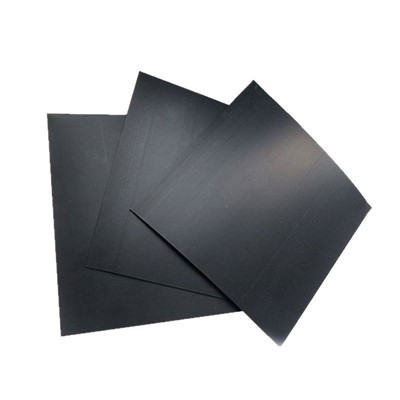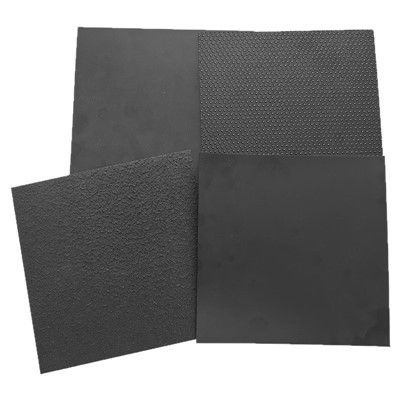
On construction sites-whether highways, railways, embankments, or even parking lots-you may notice a layer of polymer grid laid over the soil before compaction. It looks simple, almost unremarkable. Yet this material, known as a geogrid, plays a critical role in stabilizing soil and extending the service life of infrastructure.
Choosing the right geogrid is not about picking the strongest product available. It's about understanding the parameters that matter-and matching them to the engineering demand.
Tensile Properties: The Core Performance Indicator
At its essence, a geogrid functions as a reinforcement element. It improves soil performance by mobilizing tensile resistance. Unsurprisingly, tensile properties are the most important technical parameters.
Key indicators include:
● Ultimate tensile strength (kN/m): The maximum load per unit width the grid can withstand before failure.
● Tensile strength at 2% or 5% strain: Often more relevant than ultimate strength, this reflects stiffness at small deformations-critical for controlling settlement and rutting.
● Elongation at break: Indicates ductility and deformation capacity before rupture.
For pavement reinforcement, low-strain stiffness is typically more important than ultimate strength. In soft soil applications, balancing strength and ductility helps prevent brittle failure. In short, higher strength does not automatically mean better performance-the parameter must align with the anticipated load and deformation profile.

Structural Configuration: Uniaxial vs. Biaxial
Geogrids are classified based on load directionality:
● Uniaxial geogrids: High strength primarily in one direction. Ideal for retaining walls and reinforced soil structures where principal stress is directional.
● Biaxial geogrids: Comparable strength in two perpendicular directions. Commonly used in pavement base reinforcement where loads distribute more evenly.
● Triaxial or multi-axial geogrids: Designed for enhanced confinement and load distribution in high-performance road bases.
Selecting the wrong structural type can result in insufficient stiffness along the critical load path, potentially leading to differential settlement or cracking.

Material Types: Matching Polymer to Performance
Geogrids are manufactured from different materials, each with distinct performance characteristics:
● Fiberglass geogrids
High tensile strength and excellent temperature resistance. Frequently used in asphalt overlays for crack mitigation. However, they tend to be more brittle.
● Polypropylene (PP) or polyethylene (PE) geogrids
Good ductility and chemical resistance. Widely applied in subgrade stabilization and soft soil reinforcement.
● Steel-plastic composite geogrids
Combine steel wire strength with polymer protection. Suitable for high embankments and heavy-load applications.
Material selection depends on environmental exposure, design life, soil chemistry, and cost considerations.

Junction Strength and Durability: Often Overlooked
Beyond tensile capacity, two parameters deserve attention:
● Junction (node) strength: The integrity of intersections between ribs. Weak junctions can compromise performance even if individual ribs are strong.
● Durability characteristics: Resistance to UV radiation, oxidation, and chemical degradation.
In aggressive environments-such as areas with fluctuating groundwater or prolonged sunlight exposure-long-term durability can determine whether the reinforcement performs as intended over decades.

Typical Application Scenarios
● Highway and railway subgrades
Geogrids limit lateral soil movement, increase bearing capacity, and reduce differential settlement.
● Soft soil improvement
When combined with granular fill, geogrids create reinforced platforms that distribute loads more effectively.
● Slope stabilization
Integrated with vegetation systems, they enhance slope integrity and erosion resistance.
● Reinforced soil retaining walls
Uniaxial geogrids act as tensile members, forming a composite mass with compacted backfill to resist lateral earth pressure.
Each scenario prioritizes different parameters-roadways emphasize stiffness and confinement, while retaining structures demand high directional tensile strength and adequate anchorage length.

Common Selection Pitfalls
Several recurring mistakes appear in practice:
● Focusing solely on nominal ultimate strength while ignoring strength at service strain.
● Over-specifying strength, resulting in unnecessary cost.
● Underestimating installation quality-insufficient overlap, improper tensioning, or uneven placement can reduce effectiveness.
● The value of a geogrid lies in engineering compatibility, not in the highest number on a datasheet.