
Soft soil foundations pose significant challenges in civil engineering projects due to their low bearing capacity and high compressibility, which often lead to excessive settlement. This settlement can cause structural damage, uneven surfaces, and even endanger the safety of infrastructure. Biaxial Plastic Geogrid has emerged as an effective solution to mitigate settlement in soft soil foundations. As a supplier of Biaxial Plastic Geogrid, I am excited to share how this innovative product can address the settlement issues in soft soil.
Mechanisms of Biaxial Plastic Geogrid in Reducing Settlement
Reinforcement and Load Distribution
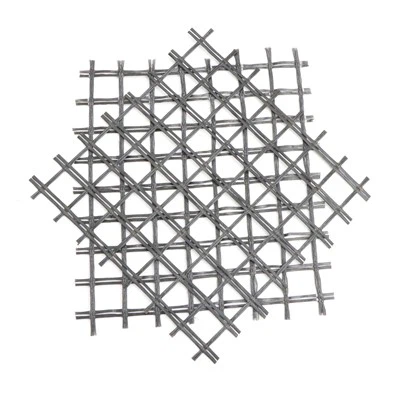
Biaxial Plastic Geogrid is a high - strength geosynthetic material with a biaxial structure. When placed in a soft soil foundation, it acts as a reinforcement layer. The grid's structure distributes the load over a larger area, reducing the stress concentration on the soft soil. According to the theory of soil - structure interaction, the geogrid restricts the lateral movement of soil particles. As the load is applied on the surface, the geogrid helps to transfer the load to a wider area of the soil, preventing the soil from being compressed locally. This is similar to how a net distributes the weight of an object placed on it.
For example, in a road construction project on a soft soil site, the Biaxial Plastic Geogrid is placed between the sub - base and the soft soil. When vehicles pass over the road, the geogrid spreads the load of the vehicles across a larger area of the soft soil. This reduces the pressure on the soil particles, minimizing the amount of settlement that would occur without the geogrid.
Soil - Geogrid Interaction
The interaction between the Biaxial Plastic Geogrid and the soil is crucial for reducing settlement. The geogrid's open - mesh structure allows soil particles to interlock with the grid. This interlocking creates a composite system where the geogrid and the soil work together to resist deformation. The frictional forces between the soil and the geogrid prevent the soil from sliding and moving under load.
In laboratory tests, it has been observed that the shear strength of the soil - geogrid composite is significantly higher than that of the pure soil. This increase in shear strength helps the soil to better withstand the applied loads, reducing the settlement. When the soil tries to deform due to the load, the geogrid provides a restraint, keeping the soil in place and maintaining the stability of the foundation.
Improvement of Soil Properties
Biaxial Plastic Geogrid can also improve the overall properties of the soft soil. By confining the soil particles, it increases the soil's stiffness and bearing capacity. The geogrid reduces the compressibility of the soil, which is one of the main causes of settlement. When the soil is confined by the geogrid, its volume change under load is reduced.
In some cases, the use of Biaxial Plastic Geogrid can also improve the drainage properties of the soft soil. The open - mesh structure of the geogrid allows water to flow through more easily, reducing the pore water pressure in the soil. High pore water pressure can cause the soil to become more compressible, and by reducing it, the settlement of the soil can be effectively controlled.
Case Studies
Road Construction
In a highway expansion project in a coastal area with soft soil conditions, Biaxial Plastic Geogrid was used to reinforce the foundation. The original soil had a low bearing capacity, and without proper treatment, significant settlement was expected. After installing the Biaxial Plastic Geogrid at the appropriate depth, the settlement of the road was monitored over a period of two years. The results showed that the settlement was reduced by more than 50% compared to the sections without the geogrid. This not only saved the cost of future maintenance but also ensured the long - term stability of the road.
Embankment Construction
An embankment project for a railway was built on soft clay soil. The use of Bx Geogrid in the foundation significantly reduced the settlement of the embankment. The geogrid was placed in multiple layers, and the interlocking between the geogrid and the soil helped to distribute the load of the embankment evenly. As a result, the embankment remained stable, and the settlement was within the acceptable range, ensuring the safe operation of the railway.

Advantages of Biaxial Plastic Geogrid
Cost - Effectiveness
Compared to traditional methods of treating soft soil foundations, such as soil replacement or deep foundation techniques, the use of Biaxial Plastic Geogrid is more cost - effective. It requires less material and labor, and the installation process is relatively simple. The reduction in settlement also reduces the long - term maintenance cost of the infrastructure.
Durability
Biaxial Plastic Geogrid is made of high - quality plastic materials, which have excellent durability. It can resist corrosion, chemical attack, and environmental factors. This ensures that the geogrid can maintain its performance over a long period, providing long - term protection against settlement in soft soil foundations.
Ease of Installation
The installation of Biaxial Plastic Geogrid is straightforward. It can be easily unrolled and placed on the soft soil surface, and then covered with soil or other fill materials. This reduces the construction time and labor intensity, making it a practical solution for various projects.
Different Types of Biaxial Plastic Geogrid
PP Biaxial Geogrid
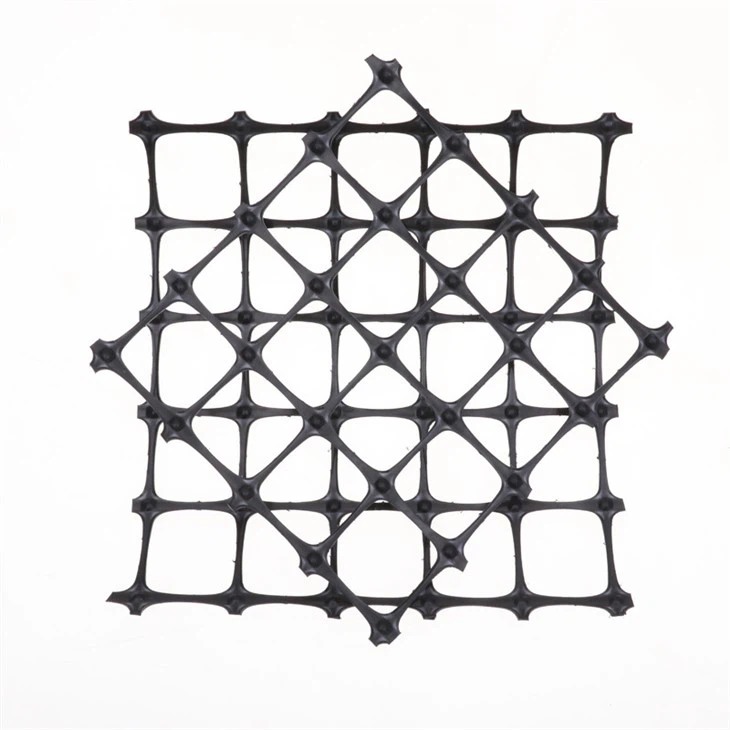
PP (Polypropylene) Biaxial Geogrid is one of the most commonly used types. It has high tensile strength and is resistant to environmental degradation. PP Biaxial Geogrid is suitable for a wide range of applications, including road construction, embankment reinforcement, and slope stabilization. Its lightweight nature makes it easy to handle during installation.
Conclusion
Biaxial Plastic Geogrid is an effective and efficient solution for reducing settlement in soft soil foundations. Through its mechanisms of reinforcement, load distribution, soil - geogrid interaction, and improvement of soil properties, it can significantly enhance the stability and performance of soft soil foundations. The case studies have demonstrated its effectiveness in real - world projects.
As a supplier of Biaxial Plastic Geogrid, we are committed to providing high - quality products and professional technical support. If you are involved in a project that requires soft soil foundation treatment, we invite you to contact us for more information and to discuss your specific needs. We are confident that our Biaxial Plastic Geogrid can meet your requirements and help you achieve a successful project.
References
- Koerner, R. M. (2012). Designing with Geosynthetics. Pearson.
- Berg, R. R., & Bathurst, R. J. (2010). Geosynthetic Reinforced Soil Structures. CRC Press.
- Schlosser, F. (1990). Soil - Geosynthetic Interaction. Elsevier.