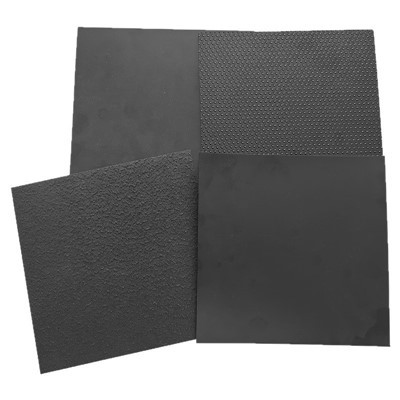
The thickness of plastic geogrid is a critical factor that significantly influences its performance in various geotechnical applications. As a plastic geogrid supplier deeply involved in the industry, I've witnessed firsthand how different thicknesses of plastic geogrids can meet diverse project requirements. In this blog, I'll explore in detail how the thickness of plastic geogrid affects its performance.
Tensile Strength and Load - Bearing Capacity
One of the most direct impacts of the thickness of plastic geogrid on its performance is the tensile strength. Tensile strength is the ability of the geogrid to resist being pulled apart. Generally, a thicker plastic geogrid has a higher tensile strength. This is because a thicker structure contains more material, which can distribute and withstand greater forces.
For instance, in soil reinforcement applications like Geogrid For Mechanically Stabilized Earth (MSE) Wall, the geogrid is subjected to significant pulling forces from the retained soil mass. A thicker geogrid can provide sufficient tensile strength to prevent the soil from sliding or collapsing. The additional material in the thicker geogrid allows it to transfer the load more effectively, enhancing the overall stability of the MSE wall.
In ground stabilization projects, such as those using Plastic Geogrid For Ground Stabilization, the load - bearing capacity is crucial. A thicker plastic geogrid can better support heavy loads, such as those from vehicles or buildings. When placed in weak soil, the geogrid spreads the load over a larger area, reducing the pressure on the soil. Thicker geogrids can resist deformation under high loads, ensuring the long - term stability of the ground.
Durability and Resistance to Environmental Factors
The thickness of plastic geogrid also affects its durability and resistance to environmental factors. A thicker geogrid is generally more resistant to abrasion and puncture. During installation and use, the geogrid may come into contact with sharp objects in the soil or construction materials. Thicker geogrids can better withstand these mechanical damages, maintaining their structural integrity.


In addition, thicker plastic geogrids tend to have better resistance to chemical degradation. They are less likely to be affected by chemicals in the soil, such as acids or alkalis, which can gradually break down the geogrid material over time. This is particularly important in long - term projects where the geogrid needs to maintain its performance for many years. For example, in landscape projects using Landscape Geogrid, the geogrid may be exposed to various soil conditions and fertilizers. A thicker geogrid can resist these chemical influences, ensuring the long - term stability of the landscape structure.
Interaction with Soil and Aggregate
The thickness of plastic geogrid influences its interaction with soil and aggregate materials. A thicker geogrid typically has a larger cross - sectional area, which provides more surface area for the soil or aggregate to interlock. This enhanced interlocking effect improves the composite behavior of the geogrid - soil or geogrid - aggregate system.
In road construction, when using Biaxial Geogrid & Geogrid Fabric, the geogrid is placed between layers of soil or aggregate. The thicker geogrid can better grip the surrounding materials, reducing the lateral movement of the soil or aggregate under traffic loads. This results in a more stable road structure, reducing rutting and cracking, and extending the service life of the road.
Cost - Effectiveness
While thicker plastic geogrids generally offer better performance in terms of strength, durability, and interaction with soil, cost - effectiveness is also a consideration. Thicker geogrids are more expensive to produce as they require more raw materials. Therefore, in some projects, a balance needs to be struck between the required performance and the budget.
For small - scale projects or those with relatively low load requirements, a thinner plastic geogrid may be sufficient. For example, in some simple landscape projects where the load is mainly from light foot traffic, a thinner Landscape Geogrid can provide adequate reinforcement at a lower cost. However, for large - scale infrastructure projects such as major highways or high - rise buildings, the investment in a thicker geogrid is often worthwhile due to the long - term performance and stability it offers.
Installation and Handling
The thickness of plastic geogrid can also affect its installation and handling. Thicker geogrids are generally stiffer and heavier, which can make them more difficult to roll, unroll, and position during installation. Special equipment may be required for handling thicker geogrids, which can add to the installation cost and complexity.
On the other hand, the stiffness of thicker geogrids can also be an advantage in some cases. For example, in projects where the geogrid needs to be placed over a large area with uneven terrain, the stiffness of a thicker geogrid can help it maintain its shape and position, reducing the need for frequent adjustments during installation.
Selecting the Appropriate Thickness
Selecting the appropriate thickness of plastic geogrid depends on several factors, including the specific application, load requirements, soil conditions, and budget constraints. For high - load applications such as MSE walls and large - scale ground stabilization, a thicker PP Plastic Biaxial Geogrid is usually recommended. In contrast, for low - load applications like minor landscape projects, a thinner geogrid may be sufficient.
As a plastic geogrid supplier, we offer a wide range of geogrid products with different thicknesses to meet the diverse needs of our customers. Our team of experts can provide technical advice and assistance to help you select the most suitable geogrid thickness for your project. Whether you are involved in a small - scale landscaping project or a large - scale infrastructure development, we can ensure that you have the right plastic geogrid for the job.
If you have any questions about plastic geogrid thickness and its performance, or if you are interested in purchasing our plastic geogrid products, please don't hesitate to contact us. We are ready to engage in in - depth discussions with you to understand your specific requirements and provide the best solutions.
References
- Koerner, R. M. (2012). Designing with geosynthetics (5th ed.). Pearson Prentice Hall.
- Bonaparte, R., & Huang, X. H. (2002). Geosynthetics in waste containment. Taylor & Francis.