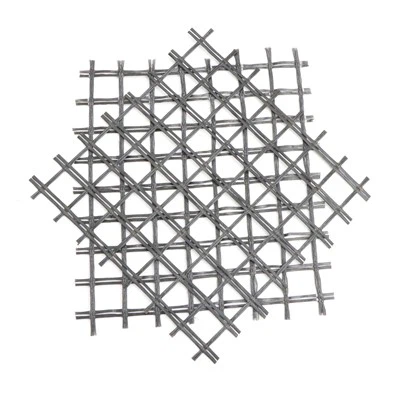

Hey there! As a geogrids supplier, I've seen firsthand how these nifty products interact with other geosynthetics. Geosynthetics are a group of synthetic materials used in geotechnical engineering to solve various problems, and geogrids are a key player in this game. So, let's dive into how geogrids interact with other geosynthetics.
Geogrids and Geotextiles
Geotextiles are permeable fabrics that can be used for separation, filtration, drainage, and reinforcement. When combined with geogrids, they create a powerful duo.
Separation: Geotextiles are great at separating different soil layers. For example, in a road construction project, a geotextile can be placed between a soft subgrade and a granular base layer. This prevents the mixing of the two materials, which could lead to a weak foundation. When we add a geogrid on top of the geotextile, it further enhances the stability of the structure. The geogrid provides additional reinforcement, distributing the load more evenly across the soil layers. Our Bx Geogrid is a great option for this kind of application. It has a high tensile strength and can effectively work with geotextiles to improve the performance of the road.
Filtration and Drainage: Geotextiles allow water to pass through while retaining soil particles, which is essential for proper drainage. Geogrids can be used in conjunction with geotextiles to support the filtration system. In a landfill liner system, a geotextile acts as a filter to prevent soil from clogging the drainage layer. A geogrid can be placed beneath the geotextile to provide structural support. This combination ensures that the landfill has a reliable drainage system, reducing the risk of water buildup and potential environmental hazards.
Geogrids and Geomembranes
Geomembranes are impermeable sheets used to prevent the seepage of liquids or gases. They are commonly used in landfill liners, pond liners, and other containment applications.
Reinforcement: Geomembranes can be relatively thin and may be susceptible to damage from punctures or excessive stress. Geogrids can be used to reinforce geomembranes. For instance, in a pond liner project, a geogrid can be placed beneath the geomembrane. The geogrid distributes the load evenly, reducing the stress on the geomembrane and preventing it from being punctured by sharp objects in the soil. Our Biaxial Plastic Geogrid is suitable for this type of reinforcement. It has a flexible structure that can conform to the shape of the geomembrane and provide effective support.
Stability: In some cases, geogrids can also improve the stability of geomembranes on slopes. When a geomembrane is installed on a slope, there is a risk of it sliding down. A geogrid can be placed on the slope surface before installing the geomembrane. The geogrid's interlocking structure provides friction, which helps to hold the geomembrane in place. This combination is crucial for ensuring the long - term stability of containment systems on slopes.
Geogrids and Geocells
Geocells are three - dimensional honeycomb - like structures made from high - density polyethylene (HDPE) or other polymers. They are used for soil stabilization, erosion control, and load support.
Combined Reinforcement: Geogrids and geocells can be used together to provide enhanced reinforcement. In a retaining wall project, a geogrid can be placed horizontally behind the wall to reinforce the soil mass. Geocells can be used at the base of the wall to provide additional support and prevent soil erosion. The geocells confine the soil, increasing its shear strength, while the geogrid distributes the lateral loads. Our Hdpe Uniaxial Geogrid can be an excellent choice for this application. Its high - strength uniaxial structure is ideal for withstanding the tensile forces in a retaining wall system.
Erosion Control: In coastal or riverbank erosion control projects, geocells can be filled with soil and vegetation to create a stable surface. Geogrids can be placed beneath the geocells to provide additional reinforcement and prevent the geocells from shifting. This combination helps to protect the shoreline from the erosive forces of water.
Factors Affecting the Interaction
Several factors can affect how geogrids interact with other geosynthetics.
Material Properties: The properties of the geogrid, such as its tensile strength, aperture size, and stiffness, play a significant role. For example, a geogrid with a larger aperture size may allow better interlocking with the soil or other geosynthetics. The material of the other geosynthetics also matters. A geotextile with high permeability will interact differently with a geogrid compared to a less permeable one.
Installation Method: Proper installation is crucial for the effective interaction of geosynthetics. If a geogrid and a geotextile are not installed in the correct order or are not properly overlapped, their performance will be compromised. For example, in a road construction project, the geotextile should be laid flat and smooth before installing the geogrid on top.
Environmental Conditions: Factors like temperature, moisture, and soil type can also impact the interaction. In cold climates, the stiffness of geosynthetics may change, affecting their ability to work together. Moist soil can have different shear strength properties compared to dry soil, which can influence how the geogrid and other geosynthetics interact with the soil.


Benefits of the Interaction
The interaction between geogrids and other geosynthetics offers several benefits.
Cost - Effectiveness: Combining geogrids with other geosynthetics can reduce the overall cost of a project. For example, by using a geotextile and a geogrid together in a road construction project, we can use less granular material in the base layer, which saves money on materials and transportation costs.
Improved Performance: The combination of different geosynthetics can improve the performance of the overall structure. In a landfill liner system, the interaction between a geomembrane and a geogrid can enhance the impermeability and stability of the liner, reducing the risk of leaks and failures.
Long - Term Durability: The use of multiple geosynthetics can increase the long - term durability of a project. The geogrid can protect the other geosynthetics from damage, and the other geosynthetics can provide additional functions, such as filtration or drainage, which help to preserve the integrity of the entire system.
Contact Us for Your Geogrids Needs
If you're working on a project that requires geogrids or other geosynthetics, we're here to help. As a reliable geogrids supplier, we offer a wide range of high - quality geogrids, including the Bx Geogrid, Biaxial Plastic Geogrid, and Hdpe Uniaxial Geogrid. Our products are designed to work effectively with other geosynthetics to meet your project requirements. Feel free to reach out to us for more information or to discuss your purchasing needs. We're ready to assist you in finding the best solutions for your geotechnical engineering challenges.
References
- Koerner, R. M. (2012). Designing with Geosynthetics. Pearson.
- Bonaparte, R., & Daniel, D. E. (1987). Geomembranes for waste containment. Van Nostrand Reinhold.
- Giroud, J. P. (1996). Geosynthetics in soil reinforcement applications. Geosynthetics International.