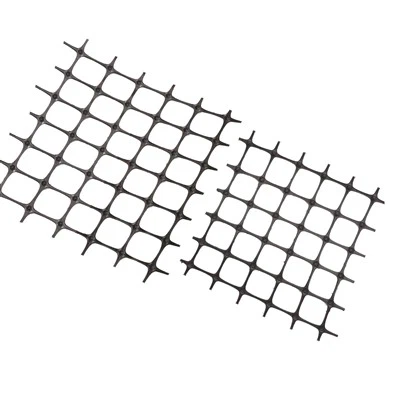

As a supplier of triaxial geogrids, I understand the critical importance of ensuring the quality of our products. Triaxial geogrids are widely used in civil engineering projects for soil reinforcement, stabilization, and erosion control. Testing the quality of triaxial geogrids is a comprehensive process that involves multiple aspects, from material properties to mechanical performance. In this blog, I will share some key methods and considerations for testing the quality of triaxial geogrids.
Material Property Testing
The first step in testing the quality of triaxial geogrids is to evaluate the material properties. The most common material for triaxial geogrids is high - density polyethylene (HDPE) or polypropylene (PP).
Polymer Composition
Analysis of the polymer composition is crucial. We can use Fourier - transform infrared spectroscopy (FTIR) to identify the type of polymer and detect any impurities or additives. For example, an abnormal presence of impurities in the polymer may indicate a lower - quality raw material, which can affect the long - term performance of the geogrid.
Density
The density of the material is another important parameter. A higher density often indicates better - quality material, as it implies a more compact and strong molecular structure. We typically measure the density of the geogrid material using a pycnometer, following the standard test methods.

Carbon Black Content (for UV Resistance)
If the triaxial geogrid is intended for outdoor use, the carbon black content is a significant factor for its ultraviolet (UV) resistance. We can use a thermogravimetric analyzer (TGA) to measure the carbon black content. A sufficient carbon black content (usually around 2 - 3%) helps protect the geogrid from UV degradation over time.
Physical Dimension Testing
Accurate physical dimensions of the triaxial geogrid are essential for its proper functioning.
Aperture Size
The aperture size of the geogrid affects its interaction with the soil. We use a caliper or a specialized aperture - measuring device to determine the aperture size at multiple points across the geogrid. Deviations from the specified aperture size can impact the geogrid's ability to interlock with the soil particles, reducing its reinforcement effectiveness.
Thickness
The thickness of the geogrid ribs is measured using a micrometer. Consistent thickness is important for uniform strength distribution. Variations in thickness may lead to weak points in the geogrid, which can cause premature failure under load.
Roll Width and Length
We also measure the roll width and length to ensure that they meet the customer's requirements. Accurate roll dimensions are crucial for ease of installation and proper coverage in the field.
Mechanical Performance Testing
Tensile Strength Test
The tensile strength of a triaxial geogrid is one of the most critical performance indicators. We conduct tensile strength tests using a universal testing machine (UTM). A geogrid sample of a specified size is clamped in the UTM, and a gradually increasing load is applied until the sample breaks. The maximum load at failure is recorded as the tensile strength. Different orientations (e.g., longitudinal and transverse) of the geogrid are tested to obtain a comprehensive understanding of its strength properties.
Secant Modulus
The secant modulus represents the stiffness of the geogrid under load. It is calculated as the ratio of the stress at a specific strain level (e.g., 2% or 5% strain) to the corresponding strain. High secant modulus values indicate that the geogrid can resist deformation effectively, which is beneficial for soil reinforcement applications.
Creep Resistance Test
Creep is the time - dependent deformation of a material under a constant load. For triaxial geogrids, long - term creep resistance is important, especially in applications where the geogrid is subject to sustained loads. We conduct creep tests by applying a constant load to a geogrid sample for an extended period (usually several thousand hours) and measuring the deformation over time. A high - quality triaxial geogrid should have low creep deformation to ensure long - term stability of the reinforced soil structure.
Chemical Resistance Testing
Triaxial geogrids may be exposed to various chemicals in the soil or environment. Chloride ions, sulfates, and acids are common chemicals that can potentially damage the geogrid.
Immersion Testing
We conduct immersion tests by immersing geogrid samples in solutions containing specific chemicals for a certain period. After the immersion, the samples are removed, dried, and tested for changes in mechanical properties, such as tensile strength and elongation. If the geogrid shows significant degradation in mechanical properties after immersion, it may not be suitable for use in environments with high chemical exposure.
Installation - Related Testing
Junction Strength
The junction strength of the triaxial geogrid refers to the strength at the intersection points of the ribs. Strong junctions are necessary to ensure that the geogrid can maintain its structural integrity during installation and under load. We test the junction strength by applying a shear force to the junction using a specialized fixture in a testing machine.
Flexibility
The flexibility of the geogrid is important for ease of installation, especially in areas with complex terrain. We evaluate the flexibility by bending the geogrid sample to a certain radius and observing if there are any cracks or breaks. A flexible geogrid can conform to the shape of the ground more easily, reducing installation difficulties.
Quality Assurance and Control
In our company, we implement a strict quality assurance and control system. Every batch of triaxial geogrids undergoes a series of tests before leaving the factory. We also maintain detailed records of all test results, which can be provided to our customers upon request.
Moreover, we continuously monitor and improve our testing methods based on the latest industry standards and research findings. For example, we participate in inter - laboratory comparison programs to ensure the accuracy and reliability of our test results.
Conclusion
Testing the quality of triaxial geogrids is a multi - faceted process that involves material property testing, physical dimension testing, mechanical performance testing, chemical resistance testing, and installation - related testing. By conducting comprehensive and accurate tests, we can ensure that our triaxial geogrids meet the highest quality standards and provide reliable performance in various civil engineering applications.
If you are interested in our triaxial geogrids or need more information about their quality testing, please feel free to contact us for further discussions. We are committed to providing you with high - quality products and excellent service. For more information on related geogrid products, you can visit our Biaxial Plastic Geogrid page.
References
- ASTM International. (Year). Standard test methods for geosynthetics. ASTM publications.
- ISO (International Organization for Standardization). (Year). Geosynthetics - Test methods. ISO standards.
- Koerner, R. M. (Year). Designing with geosynthetics. Prentice - Hall.