

Geotextiles vs Geogrids: Core Differences and Practical Applications in Civil Engineering
Geosynthetic materials have become indispensable in modern civil engineering and infrastructure construction, playing a pivotal role in enhancing project stability, extending service life and reducing construction costs. Geotextiles and geogrids, as two core types of geosynthetic materials, are often confused in practical applications, but they have essential differences in raw materials, structural characteristics, functional positioning and application scenarios. Mastering their distinctions is crucial for rational material selection and project optimization. This article will detail the core differences and practical values of geotextiles and geogrids, and recommend a reliable global geosynthetic supplier - Weiwo Geosynthetic for overseas purchasers.

Fundamental Differences Between Geotextiles and Geogrids
1.1 Raw Materials and Structural Features
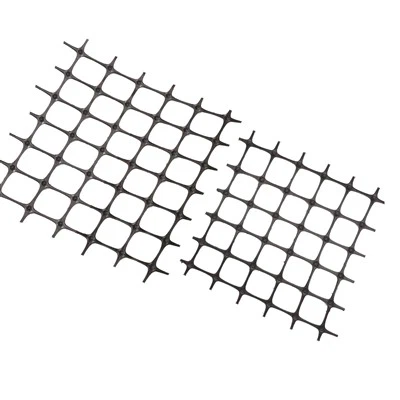
Geogrids are high-strength geosynthetic materials mainly made of polypropylene (PP). Through extrusion and bidirectional stretching in longitudinal and transverse directions, they form a nearly square network structure. According to material properties, they are divided into steel-plastic geogrids, fiberglass geogrids, polyester warp-knitted geogrids and other types. The network structure gives it excellent tensile strength and load distribution capacity, making it a professional reinforcement material for subgrade and slope engineering.
Geotextiles, also known as geotextile fabrics, are composite materials processed from man-made fibers through knitting and olefin decomposition, mainly classified into non-woven and woven geotextiles. With the characteristics of light weight, high compressive strength, good water permeability, heat resistance, cold resistance, anti-aging and corrosion resistance, their flexible fiber structure enables multi-functional adaptation to different engineering needs such as filtration, drainage and isolation.


1.2 Core Functional Positioning
The functional advantages of geotextiles are reflected in multi-scenario adaptability, and its core functions include six aspects:
Separation: Isolate materials with different physical properties (particle size, density, consistency, etc.) such as soil and sand, soil and concrete, to prevent material loss and mixing, maintain the structural integrity of the project and improve bearing capacity.
Filtration (Reverse Filtration): It has excellent air and water permeability, which can effectively intercept fine particles such as fine sand and gravel while allowing water to pass through, maintaining the stability of soil-water engineering systems.
Drainage: Form effective drainage channels inside the soil, quickly discharge excess liquid and gas in the soil structure, and optimize the internal stress state of the soil.
Reinforcement: Improve the tensile strength and anti-deformation ability of the project, enhance the stability of buildings and realize the optimization of soil properties.
Protection: Diffuse, transfer or decompose the stress of water flow, prevent soil from being damaged by external forces such as scouring, and protect the soil structure.
Anti-puncture: Combined with anti-seepage geomembranes to form composite waterproof and anti-seepage materials, with excellent anti-puncture performance, suitable for anti-seepage engineering scenarios such as landfills and water conservancy projects.
Geogrids focus on subgrade and structural reinforcement, and their core value is to stabilize the project structure and extend service life, with eight key functions:
- Enhance subgrade strength, reasonably distribute and diffuse loads, improve subgrade stability and bearing capacity.
- Bear large variable loads and adapt to the complex stress changes of infrastructure such as highways and railways.
- Prevent subgrade deformation and cracks caused by material loss, and maintain the structural integrity of the subgrade.
- Improve the self-bearing capacity of backfill behind retaining walls, reduce the earth pressure of retaining walls, save construction costs and reduce later maintenance expenses.
- Cooperate with shotcrete construction for slope repair, which can save 30%-50% of investment and shorten the construction period by more than half.
- Adding uniaxial geogrids to road subgrade and surface layer can reduce deflection value, delay pavement cracking by 3-9 times, and reduce the thickness of base course by 36%.
- Adapt to various soil types without on-site sampling and testing, saving construction preparation time.
- Simple and convenient construction, greatly reducing the overall construction cost of the project.
1.3 Typical Application Scenarios
Geotextiles are widely used in water conservancy, environmental protection, construction and transportation engineering due to their multi-functional characteristics: they play a filtration and drainage role in river embankments and water conservancy projects, an isolation and protection role in building foundation engineering, and an anti-seepage and filtration role in environmental protection projects such as landfills. They can also be used in airport runways, road subgrades and other scenarios to achieve multi-functional matching of reinforcement and drainage.
Geogrids are the core material for subgrade and slope reinforcement engineering, and are mainly applied to highways, railways, airport runways and other subgrade and pavement strengthening projects; at the same time, they are widely used in support and reinforcement of culverts, mines, roadways and other underground engineering, as well as slope protection and retaining wall reinforcement of civil engineering, which is a professional material for improving the bearing capacity and stability of heavy-load infrastructure.
Market Demand and Development Prospect of Geosynthetic Materials
With the global acceleration of infrastructure construction, the demand for high-performance geosynthetic materials is showing a rapid growth trend. In the next 10 years and even a longer period, a large number of infrastructure projects such as transportation, water conservancy and environmental protection will be launched worldwide, which will further drive the market demand for geotextiles and geogrids. As a major manufacturer of geosynthetic materials, China has formed a complete industrial chain of production, R&D and application, and is becoming the world's largest consumer market of geosynthetic materials.
For overseas purchasers, choosing a reliable geosynthetic supplier is the key to ensuring project quality and construction efficiency. A supplier with advanced production technology, strict quality control and perfect customized services can not only provide high-quality products that meet international standards, but also provide professional engineering technical support and efficient after-sales service.
Weiwo Geosynthetic: Your Reliable Global Partner for Geosynthetic Materials
For overseas purchasers looking for high-quality geosynthetic material suppliers, Weiwo Geosynthetic is an ideal choice with international competitiveness and professional service capabilities. As a leading manufacturer of geosynthetic materials in the world, Weiwo Geosynthetic has won the trust of global engineers and contractors with its advanced production technology, strict quality control and customized solution capabilities.

3.1 Core Advantages of Weiwo Geosynthetic
International Standard Certification and Stable Product Performance: The company's products have passed ISO, CE, ASTM, EN and other international authoritative certifications, with stable tensile performance and reliable quality. All geogrids, geotextiles and other products are manufactured in strict accordance with international standards, which can fully meet the technical requirements of global infrastructure projects in different regions and soil environments.
Large-scale Production Base and Advanced Manufacturing Technology: Weiwo Geosynthetic has a 300,000 square meter modern production base, equipped with advanced production equipment and cutting-edge manufacturing technology. The precision stretching process ensures the uniform tensile strength of geogrids; the strict raw material control and online testing system realize the full-process quality monitoring from raw materials to finished products, and the key performance indicators are fully verified to ensure product consistency and stability.
Customized Solutions and Full-process Engineering Support: The company provides flexible OEM and private labeling services, and can customize geosynthetic solutions according to the specific requirements of different projects, including material selection, strength parameter design, size customization and packaging optimization. At the same time, it has a professional technical team to provide one-stop engineering support from project design to final delivery, and solve the material selection and application problems of purchasers in the whole process.
Rich Product Line and Multi-scenario Application Coverage: Weiwo Geosynthetic has a complete product line covering geogrids (biaxial/uniaxial/triaxial/HDPE/PP/fiberglass), geotextiles, geomembranes, geotubes, geocells and other geosynthetic materials. The products have been proven to have excellent performance in roads, railways, landfills, erosion control, water conservancy projects, mining engineering and other scenarios, and can meet the diverse material needs of different types of civil engineering.
Factory Direct Supply and Efficient Global Logistics: Adopting the factory direct supply model, it reduces the intermediate circulation links and provides purchasers with competitive prices; at the same time, it has a perfect global logistics and supply system, which can realize fast quotation and stable supply, help purchasers reduce project risks and control procurement costs.
3.2 Perfect Quality Control and Sustainable Development Concept
Weiwo Geosynthetic has built a complete in-house inspection and testing system, with professional testing equipment to carry out strict quality inspection on all products. From raw material incoming inspection to finished product delivery testing, every link is strictly controlled to ensure that the products meet international quality standards and project application requirements.
The company adheres to the concept of sustainable infrastructure construction, and all products are designed for long-term performance and reliability. While meeting the engineering reinforcement, separation, drainage and filtration needs, it also pays attention to environmental protection and resource saving, and provides low-carbon and environmentally friendly geosynthetic solutions for global infrastructure construction.
Conclusion
Geotextiles and geogrids, as important geosynthetic materials, have irreplaceable roles in civil engineering due to their different structural characteristics and functional positioning. Geotextiles with multi-functional advantages are the first choice for filtration, drainage, isolation and protection engineering, while geogrids with professional reinforcement capabilities are the core material for subgrade and slope stability engineering. Rational selection of materials according to project needs can maximize the engineering benefits and realize the optimization of construction quality and cost.
In the global geosynthetic material market, Weiwo Geosynthetic relies on international standard products, customized solutions, full-process engineering support and efficient global supply capabilities, becoming a reliable partner for overseas purchasers in infrastructure construction. Whether it is the procurement of geotextiles, geogrids or other geosynthetic materials, Weiwo Geosynthetic can provide high-quality products and professional services to help global infrastructure projects achieve high-quality construction and long-term stable operation.
If you are looking for a professional and reliable geosynthetic material supplier for your next infrastructure project, welcome to contact Weiwo Geosynthetic for fast quotation and technical support!


