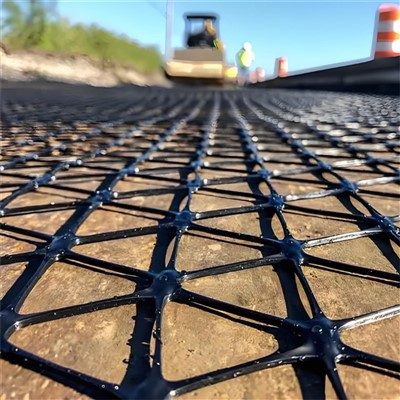

If you’ve ever worked on a civil engineering project—whether it’s a roadside expansion, a slope stabilization job, or a retaining wall build—chances are you’ve used biaxial plastic geogrid. As a supplier who’s been in this space for over a decade, I’ve seen firsthand how this lightweight, cost-effective material can make or break a project when defects pop up unexpectedly. Early in my career, I watched a client’s road base fail six months after installation because of a batch of geogrid with hidden flaws, and that experience stuck with me. It’s why I spend so much time educating contractors and project managers on the common defects we see with biaxial plastic geogrid, and how to avoid them before they turn into costly headaches.
Biaxial plastic geogrid works by distributing tensile loads evenly across two axes, reinforcing soil, asphalt, and concrete to reduce cracking, settling, and erosion. But like any engineered product, it’s not infallible. Defects can creep in during manufacturing, shipping, storage, or installation—and each one carries unique risks depending on where the geogrid is used. For example, a defect in a geogrid meant for road base reinforcement (you can learn more about that here: Biaxial Geogrid For Road Base Reinforcement) could lead to premature road failure, while a flaw in a slope stabilization geogrid might result in soil slippage that endangers nearby infrastructure. Let’s break down the most common defects we encounter, how to spot them, and how to keep them from derailing your project.
First on the list: improper polymer formulation. This is a manufacturing defect that starts at the very beginning of the production process. Biaxial plastic geogrid is typically made from polypropylene (PP) or high-density polyethylene (HDPE), and the ratio of these polymers, plus additives like UV stabilizers, antioxidants, and pigments, has to be precise. Too little UV stabilizer, and the geogrid will degrade in sunlight long before its design life is up. Too much filler, like calcium carbonate, and the grid becomes brittle, prone to tearing under even minor loads. I’ve had clients bring in geogrid samples that turned powdery within a year of installation—all because the manufacturer cut corners on polymer additives to save a few cents per roll. How to avoid this? Always request third-party testing for polymer composition before making a bulk purchase. Reputable suppliers will provide material safety data sheets (MSDS) and test results for tensile strength, elongation at break, and UV resistance. For projects in sunny climates, ask about geogrid formulated specifically for outdoor exposure, like the PP biaxial geogrid we supply (find details here: PP Biaxial Geogrid), which is engineered with extra UV inhibitors to last 10+ years in direct sunlight.
Next, manufacturing-related structural defects. These are flaws in the grid’s physical structure, like misaligned ribs, uneven pore sizes, or incomplete fusion at the junction points where ribs cross. At our facility, we use laser alignment tools during extrusion to ensure ribs are spaced exactly as specified, but even with modern equipment, small errors can slip through if quality control is lax. I once visited a jobsite where a contractor had laid geogrid for a retaining wall, only to find that 20% of the junction points were not fully fused. When the soil backfill pressed against the grid, those weak points snapped, leaving a gap in the reinforcement that required costly rework. How do you spot these defects before installation? Start by inspecting each roll upon delivery. Lay a sample section flat on the ground and check that ribs are straight and evenly spaced, with no gaps or overlaps. Pull gently on a junction point with a pair of pliers—if it separates easily from the ribs, that’s a red flag. For large projects, take random samples from multiple rolls to test tensile strength; geogrid should have equal tensile strength in both longitudinal and transverse directions, as that’s the whole point of being biaxial. If one direction is weaker, the grid won’t distribute loads evenly.
Storage and handling defects are another big one, and they’re often overlooked by contractors. Biaxial plastic geogrid is lightweight and flexible, which makes it easy to transport and lay, but it’s also prone to damage if not stored correctly. Common issues here include creases, cuts, and thermal distortion. I’ve seen geogrid stored in a pile near a jobsite’s temporary heater get warped, so when it was unrolled, it wouldn’t lay flat—meaning parts of the grid were not in contact with the soil, reducing its reinforcing effect. Cuts from sharp tools or construction debris are even more problematic; a single 2-inch cut in a rib can weaken the entire section, as that cut will become a stress concentrator when the grid is loaded. Storage tips from our team: keep geogrid rolls in a cool, dry area away from sharp objects, heavy equipment, and direct heat sources. If you have to store them outdoors, cover them with a tarp to protect from rain, snow, and UV exposure. When unrolling, do it on a smooth, level surface to avoid snags, and use plastic rollers instead of dragging rolls across the ground to prevent cuts.
Installation mistakes that cause defects are also surprisingly common, even among experienced crews. The biggest installation error we see is improper overlap between geogrid rolls. Most specifications require an overlap of 12 to 18 inches between adjacent rolls to ensure continuous reinforcement. If overlaps are too small, there’s a gap where two sections meet, allowing soil to slip between them and reducing the grid’s load-bearing capacity. Another mistake is installing geogrid on uneven soil, or failing to secure the edges of the grid. When backfill is compacted, the grid can shift, leading to misalignment and gaps. On slope projects, like those using geogrid for slopes (more details here: Geogrid For Slopes), installation can be extra tricky—crews often lay the grid horizontally but don’t anchor the top and bottom edges properly, so the grid pulls away from the slope when soil is added. For road base projects, installing geogrid directly on top of soft soil without pre-compaction can cause the grid to sink unevenly, leading to cracking in the asphalt later. To avoid these issues, train your installation crew on the manufacturer’s specifications for overlap, anchoring, and soil preparation. For slopes, use U-shaped stakes or anchors at every rib to secure the grid, and for road bases, make sure the subgrade is compacted to 95% Proctor density before laying geogrid.


Now, let’s talk about less common but still impactful defects that come from choosing the wrong type of geogrid for the job. Not all biaxial geogrid is the same, and using a geogrid designed for one application in another can lead to premature failure. For example, carbon fiber geogrid (details here: Carbon Fiber Geogrid) is super strong and resistant to high temperatures, but it’s more rigid than PP geogrid. If you use carbon fiber geogrid for a flexible slope, the rigidity can prevent it from conforming to the soil’s natural settling, leading to tension cracks in the grid over time. On the other hand, PP biaxial geogrid is great for general soil reinforcement, but it’s not ideal for heavy loads in retaining walls—for those applications, steel plastic geogrids for retaining wall and slope (check out the options here: Steel Plastic Geogrids For Retaining Wall And Slope) have a steel core that provides higher tensile strength and better durability under heavy loads. The key here is matching the geogrid’s specification to your project’s needs: check the required tensile strength, elongation, and environmental conditions before selecting a product. If you’re unsure, work with a supplier that can help you choose the right material based on your project plans.
Another defect that’s often hard to spot early is chemical degradation. Biaxial plastic geogrid is resistant to most chemicals, but certain substances—like strong acids, alkalis, or petroleum products—can break down the polymer over time. I once had a client who used geogrid near a industrial site where chemicals were stored in underground tanks. Leaks from the tanks seeped into the soil, and within two years, the geogrid became brittle and lost 50% of its tensile strength. To avoid this, test the soil for chemical content before installing geogrid in areas with potential contamination. If chemicals are present, choose a geogrid formulated with chemical-resistant polymers, or line the soil with a protective layer before installing the grid.
So, what’s the takeaway here? Defects in biaxial plastic geogrid don’t have to be inevitable. Most of the issues we see—from poor polymer formulation to installation mistakes—are preventable with careful planning, attention to detail, and working with a reputable supplier. As someone who’s been in this industry for years, I’ve learned that the best way to avoid costly project delays or failures is to be proactive: ask questions during the purchasing process, inspect materials on delivery, train your installation crew, and match your geogrid choice to your project’s specific needs.
At the end of the day, biaxial plastic geogrid is an incredibly valuable material, but only if it’s installed and used correctly. If you’re working on a project and have questions about which geogrid is right for you, or want to learn more about how to avoid defects, we’re here to help. Whether you need geogrid for road bases, slopes, retaining walls, or any other application, our team can provide the guidance and high-quality products you need to get the job done right. Don’t let hidden defects derail your project—reach out to us today to discuss your requirements.
References
- Elias, V., Christopher, B. R., & Wu, C. S. (2001). Geosynthetics: Design and Construction Guidelines. Federal Highway Administration.
- Koerner, R. M. (2012). Designing with Geosynthetics (6th ed.). Pearson Education.
- Perkins, S. W., & Ismeik, M. (1997). Tensile Strength and Creep Behavior of Geogrids. Journal of Geotechnical and Geoenvironmental Engineering, 123(10), 919-927.
- Palmeira, E. M. (2009). Soil-Structure Interaction in Reinforced Soil Systems: A Review. Geotextiles and Geomembranes, 27(3), 179-194.
- Zornberg, J. G. (2004). Geosynthetics in Road Construction: A State-of-the-Art Review. Transportation Research Record, 1870, 11-20.