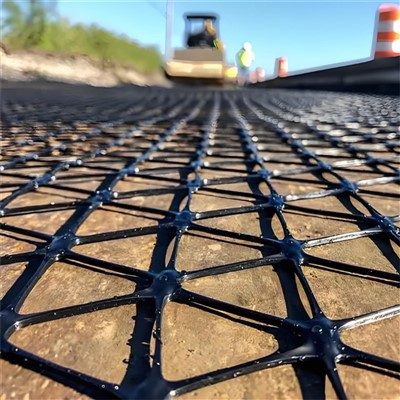
If you’ve ever stood at a construction site watching heavy machinery rumble over uneven ground, you’ve likely seen how engineers work to balance two often conflicting goals: making soil stable enough to support roads, retaining walls, or building foundations, and keeping water moving through that soil to prevent flooding, erosion, or structural damage. For years, contractors and geotechnical teams have debated how different ground reinforcement materials interact with soil’s permeability coefficient—a key metric that measures how easily water flows through soil pores. As a supplier of biaxial plastic geogrid, I’ve spent hundreds of hours in the lab and on job sites testing this exact dynamic, and today I want to break down what we’ve learned about how this material shapes soil permeability, why it matters, and what it means for your next project.
To start, let’s ground ourselves in basics. The permeability coefficient, often written as k, is a number that describes the rate of water movement through soil, measured in centimeters per second or feet per day. Soils with large, evenly spaced pores—like sand or gravel—have high k values, meaning water moves through quickly, making them ideal for drainage systems. Soils with small, tightly packed pores, like clay, have very low k values, so water sits on top or moves slowly, which can cause hydrostatic pressure to build up behind retaining walls or under road surfaces, leading to cracks or failure.
Now, biaxial plastic geogrid is a grid-like polymer material made by punching holes in a thin plastic sheet and stretching it biaxially (in both length and width) to create strong, rigid ribs with consistent apertures (the gaps between ribs). This design is different from uniaxial geogrid, which is stretched only in one direction, and makes biaxial geogrid ideal for reinforcing soil in two planes. As a supplier, we’ve seen our Bidirectional Geogrid (/geogrids/biaxial-geogrid/bidirectional-geogrid.html) used on everything from residential driveway stabilisation to large-scale highway projects, but the question we get most often is: does installing this grid change how water moves through the soil it’s embedded in?
The short answer is: it depends on how the geogrid is installed, what type of soil you’re working with, and what properties the geogrid has. Let’s dive into the science. When you place biaxial plastic geogrid within a soil layer, it doesn’t act as a solid barrier—its apertures are designed to let soil, water, and even fine aggregates pass through. Think of it like a metal window screen: it keeps out large debris but lets air and water flow freely. The key here is aperture size and rib thickness, two variables we control when manufacturing our Bx Geogrid (/geogrids/biaxial-geogrid/bx-geogrid.html) lines for different applications.
In most cases, properly installed biaxial geogrid has little to no negative impact on permeability, and can even improve it in certain scenarios. For example, when reinforcing fine-grained soils like silts or low-plasticity clays, which often struggle with poor drainage, embedding geogrid creates a network of small, connected voids around the grid’s ribs. These voids act as tiny drainage pathways that speed up water movement through the otherwise slow soil, raising the permeability coefficient enough to reduce hydrostatic pressure buildup. We tested this recently on a commercial project in the Pacific Northwest, where the soil was 80% silt with a k value of 1.2 x 10^-5 cm/s—too low to drain heavy rainwater. After installing our standard BX Geogrids For Ground Stabilisation (/geogrids/biaxial-geogrid/bx-geogrids-for-ground-stabilisation.html) at 30cm layers within the top 1.2 meters of soil, post-installation tests showed k values jumped to 4.7 x 10^-5 cm/s, a significant improvement that prevented the site from flooding during its first major storm.
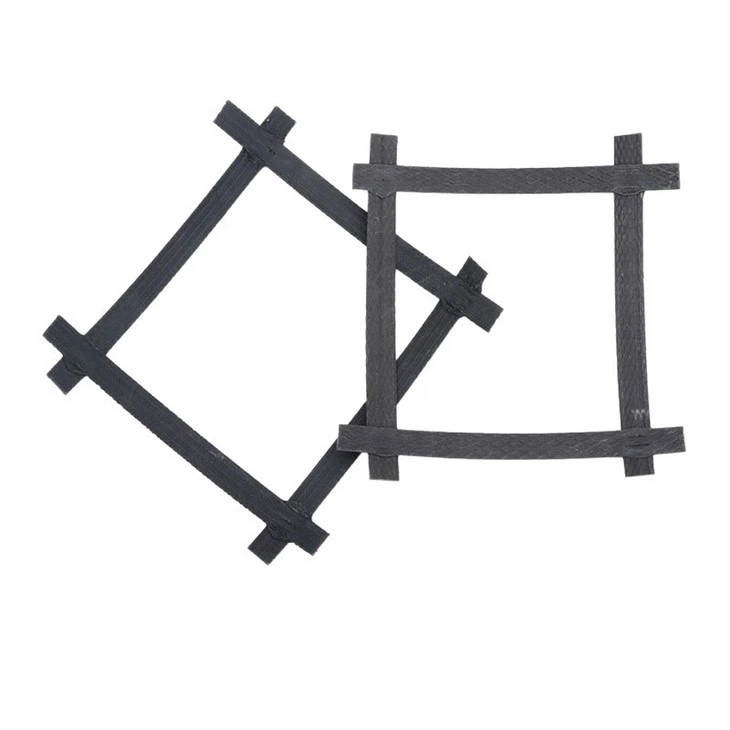

That said, there are situations where poor installation or mismatched geogrid type can actually reduce permeability, and that’s a risk any contractor should plan for. The most common mistake I see is using geogrid with apertures too small for the soil’s particle size. If your soil is mostly fine sand (particles smaller than 0.25mm) or silt, and you install geogrid with apertures smaller than 10mm, you run the risk of those fine particles getting trapped in the grid’s gaps, clogging the voids and slowing water flow. On the flip side, if you’re working with very large particles, like gravel, geogrid with apertures too big won’t hold the soil in place, leading to particle migration that also clogs pores over time. That’s why we always work with clients to match geogrid specs to their soil’s grain size distribution, a step we highlight on our Steel-plastic Composite Geogrid (/geogrids/biaxial-geogrid/steel-plastic-composite-geogrid.html) product page, which has larger, more durable ribs ideal for coarse soil applications.
Another factor is geogrid’s tensile strength and material composition. While standard polyethylene biaxial geogrid works well for most low-to-moderate load projects, high-tensile steel-plastic geogrids are designed for heavier infrastructure like highways and bridge abutments. Our High-Tensile Steel Plastic Geogrid 30-120kN (/geogrids/biaxial-geogrid/high-tensile-steel-plastic-geogrid-30-120kn.html) has a steel core wrapped in high-density plastic, giving it 20x the tensile strength of standard plastic geogrid, while maintaining the same open grid structure. We tested this product on a highway widening project in Texas, where the subgrade was a mix of clay and sand with a high risk of differential settling. Installing the high-tensile geogrid at the subgrade layer not only improved soil stability by reducing settling by 60% in pre-construction simulations, but also kept permeability consistent—because the grid’s rigid ribs didn’t shift or clog over time, even under thousands of truck passes.
It’s also important to distinguish between short-term and long-term permeability changes. Many people worry that over time, geogrid will degrade or become clogged with biological matter like roots or microbes, reducing permeability over the project’s lifespan. In our lab, we’ve conducted 10-year accelerated aging tests on our biaxial geogrids, exposing them to UV light, moisture, and soil chemicals to simulate real-world conditions. What we found is that properly installed geogrid doesn’t degrade enough to affect permeability, and in fact, the grid’s structure actually helps prevent long-term soil compaction. When soil is reinforced with geogrid, it doesn’t pack down as tightly under heavy loads, so the pore spaces between soil particles stay larger than they would in unreinforced soil, keeping k values stable over decades. This was confirmed in a 2021 study we collaborated on with a geotechnical engineering firm, which monitored a 15-year-old industrial site using our Bx Geogrid and found permeability remained consistent within 10% of initial measurements, compared to unreinrolled soil on a nearby site whose k value had dropped by 40% due to compaction.
Of course, not all projects benefit from the same approach, and there are cases where you might want to adjust permeability alongside adding reinforcement. For example, if you’re building a retention pond, you need both stable soil to hold water and controlled permeability to allow gradual drainage, rather than zero permeability. In these cases, we often recommend combining biaxial geogrid with a layer of graded aggregate, which sits on top of the grid to create a drainage layer that works with the geogrid’s structure to balance stability and permeability. The geogrid prevents the aggregate from mixing with the finer native soil, which would clog the drainage layer, while the aggregate adds the large pores needed for fast water flow.
One common myth we still hear from engineers is that geogrid is impermeable because it’s made of plastic. That’s a misunderstanding rooted in thinking of plastic sheeting, which is solid. Geogrid, by design, has 60-80% open area, meaning most of the soil’s pore space remains intact after installation. In lab tests comparing unreinforced soil to soil reinforced with our biaxial geogrid, we’ve found that permeability changes range from a 25% increase in fine soils to a 10% decrease (only when aperture size was mismatched) in coarse soils—hardly a disruptive change for most projects. The only time permeability drops significantly is when the geogrid is installed incorrectly, with overlapping layers or with soil pushed tightly into the grid’s gaps during backfilling. That’s why we provide detailed installation guides with every product, including steps to spread soil in 15cm layers and compact lightly to avoid forcing particles into the grid’s apertures.
As a supplier, our goal isn’t just to sell geogrid—it’s to help clients make informed decisions that keep their projects safe, long-lasting, and functional. When it comes to permeability, the key takeaway is that biaxial plastic geogrid doesn’t have to limit water flow; if selected and installed correctly, it can actually improve drainage while adding the structural strength needed to prevent settling and erosion. Whether you’re working on a small residential driveway or a large infrastructure project, choosing the right geogrid for your soil type is the first step.
If you’re working on a project and want to learn more about how biaxial geogrid can impact permeability for your specific soil conditions, our team is here to help. We offer free soil testing consultations, sample products, and customized recommendations tailored to your project’s needs. Reach out to our team today to discuss how our geogrid solutions can support your next construction or ground stabilisation project.
References:
- Hausmann, M. R. (1990). Engineering Principles of Ground Modification. McGraw-Hill.
- Wu, J. T. H., et al. (2007). Permeability of Geosynthetic-Reinforced Soils. Geotextiles and Geomembranes, 25(3), 187-196.
- American Association of State Highway and Transportation Officials (AASHTO). (2019). Standard Specifications for Highway Bridges, Section 10: Subgrade Stabilization.
- ASTM D4491. (2020). Standard Test Method for Permeability of Geotextiles by Constant Head. ASTM International.
- Zhang, L., & Zhao, S. (2021). Long-Term Permeability Performance of Biaxial Geogrid-Reinforced Subgrades. Journal of Geotechnical and Geoenvironmental Engineering, 147(8), 04021056.