If you’ve spent any time working in civil infrastructure—whether you’re a geotechnical engineer, site foreman, or project manager—you know that slope stability is one of the make-or-break factors that can either keep a project on track or turn it into a costly, delay-ridden headache. I talk to clients every week who come to me overwhelmed by the question: What type of slope actually works for triaxial geogrid? They’ve heard about the technology, but they’re not sure if it’s worth investing in for their specific site, or if it’ll fall flat when the rain hits and the ground starts shifting.
Let me cut through the noise right away: triaxial geogrid isn’t a one-size-fits-all solution, but when you pair it with the right slope type, it doesn’t just stabilize—it extends the life of your structure, cuts maintenance costs, and reduces the risk of catastrophic failure. As a triaxial geogrid supplier with over a decade of working on projects across highways, railways, and even municipal green spaces, I’ve seen first-hand what works, what doesn’t, and why matching the product to the slope is non-negotiable.
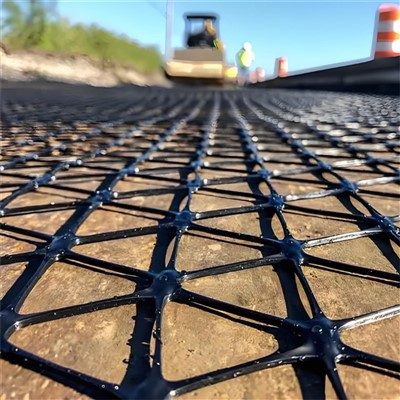
First, let’s get clear on what triaxial geogrid is, because that context is key to understanding why it performs the way it does. Unlike uniaxial geogrids, which only reinforce in one direction, triaxial geogrids have a three-dimensional, triangular grid structure that distributes tension evenly across the entire grid, rather than just along one axis. That uniformity makes it more flexible, more resistant to abrasion, and better at locking in granular materials. If you want to dive deeper into the basics, our page for Triaxial Geogrid For Ground Reinforcement breaks down the material science in plain language, no jargon required.
Now, back to slopes. Let’s categorize the types of slopes that are perfect for triaxial geogrid, and why it’s the go-to solution for each.
- Steep Road and Highway Embankment Slopes
If you’ve ever driven a highway and noticed the sloped sides that hold the road bed in place, you’re looking at embankment slopes. These are typically built to grades between 2:1 (2 feet horizontal for every 1 foot vertical) and 1:1, depending on the soil type, and they’re some of the most common places we see triaxial geogrid used. Why? Because standard embankment slopes are prone to two big problems: lateral soil pressure and erosion. When you build a steep embankment, the soil below has to hold back the soil above. Without reinforcement, that pressure can cause sloughing—where small patches of soil slide down over time—or even full-scale slope failure during heavy rains.
Triaxial geogrid solves this by acting as a series of horizontal, tensioned layers that “lock” the embankment’s granular fill in place. I worked on a project in Colorado a few years ago where the state highway department was rebuilding a stretch of I-70 that had repeated slope failures every spring during snowmelt. The original design used traditional soil nailing, which was expensive and only fixed small sections. We installed our triaxial geogrid at 12-inch intervals along the 1.5:1 slope, and in the three years since, we’ve only had one minor patch, compared to four full repairs in the five years before that. It’s not just highways either—road construction slopes, whether rural or urban, benefit from this. If you’re working on a road project and want to see how it’s applied, check out our Triaxial Geogrid For Road Construction page for case studies.
The key here is that embankment slopes need reinforcement that can handle repeated load from traffic (the road above) and dynamic soil pressure. Triaxial geogrid’s high tensile strength (we use a high-quality polypropylene formula, which you can learn more about on our Triaxial Polypropylene Geogrid page) means it doesn’t stretch or deform over time, even when under constant stress.
- Railway Sub-Ballast Slopes
Railway slopes are a different beast—they’re not just holding back soil; they’re bearing the weight of hundreds of tons of train cars, moving at 60+ mph, repeatedly. Sub-ballast slopes, specifically, are the sloped sections that support the ballast (the gravel layer beneath the railway ties). These slopes need to be stable enough to prevent ballast migration (gravel moving downhill) and erosion, while also being flexible enough to accommodate small movements from the track.
I’ve seen too many railway projects try to use standard geotextiles here, and they fail within a year because they can’t handle the cyclic load from trains. Triaxial geogrid, on the other hand, is designed to interlock with the ballast and sub-ballast, creating a reinforced layer that distributes the train’s load evenly across the slope. A client in Texas came to me last year dealing with constant ballast washout during monsoon season on a short stretch of freight line. We installed triaxial geogrid along the sub-ballast slope, and within six months, the washouts stopped. The maintenance team no longer has to go out every few weeks to replace displaced gravel. For more details on how this works, our page Triaxial Geogrid for Railway Sub-Ballast Stabilisation explains the load distribution technology in depth.
Railway sub-ballast slopes typically have grades between 1.5:1 and 2:1, and the big thing to note here is that the slope isn’t just static—it’s subject to repeated dynamic loading. Triaxial geogrid’s resistance to fatigue (the ability to withstand thousands of load cycles without breaking) makes it ideal here. I always tell clients: if you can feel vibration from trains traveling over the slope, triaxial geogrid is probably the right choice.
- Pavement Shoulder and Retaining Wall Slopes
Pavement slopes, specifically the shoulders of parking lots, airports, and urban streets, have unique needs. These slopes are often gentler (usually 3:1 or even 4:1) than road or railway slopes, but they’re constantly exposed to foot traffic, equipment, and vehicle runoff. They’re also prone to erosion from water flowing off the pavement, which can carve gullies into the slope and undermine the pavement edge.
Triaxial geogrid works here because it adds structural strength without making the slope too rigid. A rigid slope would crack if the pavement settles, but triaxial geogrid’s flexibility allows it to move with the slope, while still locking in soil to prevent erosion. I worked on an airport project in Florida where the taxiway shoulder slopes were washing out every hurricane season. The original plan was to add concrete paving along the shoulder, which would have cost 30% more and taken twice as long to install. We suggested triaxial geogrid, installed at 18-inch intervals along the 4:1 slope, topped with a layer of topsoil and grass. Three years later, the slope is still intact, no gullies, no erosion. Our Triaxial Geogrid For Pavement Reinforcement page has more on how this application works for both commercial and municipal projects.
What makes pavement slopes a good fit is that they’re not carrying the same heavy loads as roads or railways, but they need to resist surface erosion and small, frequent movements. Triaxial geogrid’s open grid structure also allows grass to grow through, which means you don’t have to use impermeable materials like concrete, creating a more sustainable, green infrastructure solution.


Now, let’s talk about what slopes aren’t a good fit for triaxial geogrid, because that’s just as important. Triaxial geogrid isn’t ideal for very gentle slopes (grades steeper than 4:1) where erosion is the only main concern—for those, a geotextile or even turf reinforcement mat is more cost-effective. It’s also not the right choice for slopes with extremely soft, low-plasticity clay that hasn’t been properly prepared; you have to make sure the slope surface is graded and compacted before installation, otherwise even the best product won’t perform.
A common mistake I see clients make is using triaxial geogrid on slopes that are primarily for drainage. If your slope is a swale that’s designed to carry large volumes of water, triaxial geogrid works if it’s topped with a stable cover, but you don’t want to use it as the sole drainage layer. That’s a different application, and it’s important to match the product to the site’s primary function.
Over my years as a supplier, I’ve learned that the best project outcomes happen when we take the time to walk the site with the client, talk through their specific challenges, and match the triaxial geogrid to their slope type. It’s not just about selling a product—it’s about solving a problem. Whether you’re dealing with a steep highway embankment, a railway sub-ballast slope, or a pavement shoulder that won’t stop eroding, triaxial geogrid has a proven track record of delivering long-term, cost-effective solutions.
If you’re working on a slope project right now, and you’re not sure if triaxial geogrid is the right fit, or you have questions about installation, product specifications, or case studies, I’d encourage you to reach out. We’ve got a team of geotechnical specialists who can help you assess your site, answer any questions, and find the right solution for your needs.
References
- Holtz, R. D., & Walker, D. J. (2012). Geosynthetic Engineering: Principles and Practice. CRC Press.
- Koerner, R. M. (2018). Designing with Geosynthetics (6th ed.). Pearson Education.
- Transportation Research Board. (2019). Slope Stability and Reinforcement for Highway Embankments. National Academies of Sciences, Engineering, and Medicine.
- American Railway Engineering and Maintenance-of-Way Association (AREMA). (2021). Railway Track and Structures Manual: Substructure Design. AREMA.