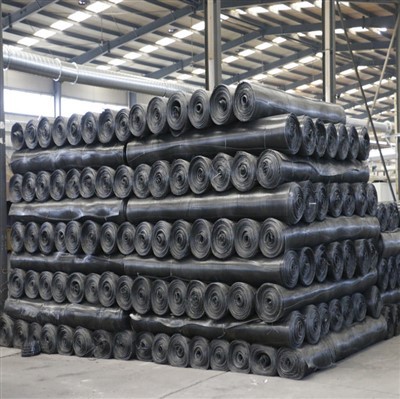
If you’ve ever stood on a sun-baked construction site, watching materials get hauled, compacted, and laid out under hours of unfiltered daylight, you know how much UV radiation impacts ground stabilization materials. As a supplier of biaxial geogrids, I get asked this question at least a dozen times a week: “Does biaxial geogrid have good UV resistance?” It’s a fair question—especially for projects where geogrids sit exposed to sunlight for weeks or even months before being covered with asphalt, gravel, or soil. After all, a stabilization product that breaks down in the sun before it even does its job is useless, no matter how strong it is. Let me break this down, from the science of UV degradation to how our products hold up, and what you need to know to pick the right geogrid for your project.
First, let’s get on the same page about what biaxial geogrids are, for anyone new to the space. These are plastic grid structures made by extruding and punching a sheet of polymer, then stretching it in two (bidirectional) directions to create a rigid, uniform grid with consistent junction strength. They’re used to reinforce soil, base layers, and pavements, distribute loads, and prevent things like uneven settling or gravel displacement. If you want to dive deeper into how they’re engineered, our page on Bidirectional Geogrid lays out the manufacturing process and core use cases in more detail.
Now, the science of UV damage starts with polymers—since that’s the main material in most standard biaxial geogrids. At a molecular level, UV radiation (specifically the short-wave UVA and UVB rays that make up most of the sun’s harmful ground-level radiation) carries enough energy to break the covalent bonds that hold polymer chains together. This process, called photodegradation, doesn’t just make the geogrid look faded or brittle over time. It breaks down the tensile strength—one of the most critical properties of a geogrid. If a grid’s molecular structure breaks down, it can’t resist tension, can’t distribute loads, and fails at the exact time you need it most: when heavy traffic or construction loads hit the stabilized layer.
That’s why UV resistance isn’t a nice-to-have for exposed geogrids—it’s a non-negotiable. For projects where geogrids are going to be uncovered for more than, say, 90 days, or where the local climate has high average UV exposure (think desert regions, high-altitude sites, or areas with consistently clear skies) the right UV treatment can mean the difference between a project that lasts 20 years and one that needs costly repairs in just 5.
So, what makes biaxial geogrids UV-resistant? It all comes down to the polymer base and the additives used during manufacturing. Most standard biaxial geogrids are made from high-density polyethylene (HDPE) or polypropylene (PP). Both are durable polymers, but they’re prone to photodegradation on their own. That’s why every reputable geogrid manufacturer adds UV stabilizers during the extrusion process—things like carbon black, hindered amine light stabilizers (HALS), and ultraviolet absorbers (UVA). These additives work by either absorbing UV rays before they can damage the polymer, or by scavenging the free radicals that form when UV rays break polymer bonds, preventing chain reaction degradation.


Here’s the thing, though: not all UV stabilizers are created equal, and not all geogrids get the same level of treatment. Cheap, low-quality geogrids often use minimal or low-grade UV additives, which means they might hold up for a few weeks of partial sun exposure, but fall apart after a few months in full daylight. At our company, every biaxial geogrid we produce uses a proprietary blend of carbon black and HALS that’s tested to resist UV degradation for at least 12 months of continuous outdoor exposure—no extra coatings needed, no extra maintenance required.
Let me put that in real-world terms. Last year, we worked with a contractor on a large-scale quarry access road in Arizona, where construction took nearly 110 days to complete before they could cover the base layer with asphalt. They initially used a cheaper geogrid they’d sourced from a local supplier, and halfway through the build, they noticed the grid was starting to crack and turn brittle. They switched to our steel-plastic geogrid (you can learn more about our steel-plastic option on the Steel Plastic Geogrid page) mid-project, and that grid sat fully exposed for the full 110 days without any visible signs of degradation. That’s the kind of performance we design for.
Another common point of confusion: is extrusion-based geogrid more UV-resistant than other types? Extruded geogrids, which are made by heating and stretching polymer sheets to create the grid structure, have a more uniform molecular structure than woven geogrids (another common type of geogrid). That uniformity means the UV stabilizers are evenly distributed throughout the entire grid, not just on the surface. For that reason, extruded geogrids tend to have better long-term UV resistance than woven or stitch-bonded geogrids. If you’re researching the specifics, our Extruded Geogrid page breaks down the manufacturing differences and performance benefits compared to other grid types.
Now, let’s talk about edge cases that test UV resistance even more. What about geogrids used for gravel stabilization, where they might sit under a thin layer of gravel but still get lots of sun filtering through? That’s a common application, and it’s another scenario where UV resistance matters. Even under a few inches of gravel, UV rays can penetrate and cause degradation over time, especially in areas with intense sun. Our Geo Grids For Gravel are engineered with extra UV stabilizers tailored for this exact use case, so they maintain their tensile strength even when partially exposed to sunlight through the gravel layer for years.
Wait, but what about geogrids for long-term exposed applications? Say, for example, a temporary construction access road that’s going to be exposed for 2 or 3 years, or a retaining wall geogrid that will sit partially uncovered for extended periods. For those applications, we also offer carbon fiber geogrid (you can find details on that material and its performance on the Carbon Fiber Geogrid page). Carbon fiber is inherently UV-resistant—unlike polymer grids, it doesn’t rely on chemical additives to fight photodegradation, because its molecular structure is far more stable. That makes it ideal for projects where long-term exposure is a given, even in the harshest sun environments.
I’ve heard some people say that any geogrid will hold up just fine if you cover it quickly. That’s partially true, but “quickly” is a vague term. If your project is delayed for any reason—supply chain issues, weather events, permitting holdups—your geogrid might end up exposed longer than planned. When we design our biaxial geogrids, we test their UV resistance through accelerated aging tests that mimic 1, 2, and even 5 years of outdoor sun exposure. Our standard HDPE biaxial geogrids maintain over 85% of their original tensile strength after 12 months of continuous UV exposure, which meets and exceeds industry standards set by organizations like the Federal Highway Administration (FHWA).
One common mistake I see contractors make is assuming that all geogrids sold as “UV-resistant” are the same. We’ve had customers come to us after testing competitor geogrids that claimed 12 months of UV resistance, only to find that after 3 months of exposure, their tensile strength dropped by more than 50%. That’s not just poor performance—it’s a safety risk. A geogrid that loses half its strength can’t support the loads it’s designed for, leading to pavement cracking, settling, or even structural failure. That’s why we make our UV resistance data public—any customer can request a third-party test report showing our geogrids’ performance under UV exposure, so you don’t have to take our word for it.
Another factor that affects UV performance: the thickness of the geogrid’s ribs. Thicker ribs mean more polymer, which means more room for UV stabilizers, and a slower rate of degradation. Our biaxial geogrids have consistent rib thickness across the entire grid, so every part of the grid—including the critical junction points where load is transferred—has the same level of UV protection. Cheaper geogrids often have thinner ribs, or inconsistent thickness, so the weakest points degrade first, leading to early failure.
Let’s circle back to the original question: does biaxial geogrid have good UV resistance? The short answer is: when it’s engineered and manufactured correctly, yes, it has excellent UV resistance. But the key here is “correctly.” Not all biaxial geogrids are the same. Cheap, untested geogrids with minimal UV additives will degrade quickly in sunlight, but high-quality geogrids formulated with the right stabilizers, uniform manufacturing processes, and third-party tested performance will hold up for months, even years, under full sun exposure.
If you’re working on a project where your geogrid will be exposed to UV radiation for any length of time, here are a few things to look for:
- Third-party test data for UV resistance, not just manufacturer claims
- A polymer blend with verified UV stabilizers (look for carbon black or HALS in the material specs)
- Consistent rib thickness and uniform grid structure, which ensures even UV protection across the entire product
- A product that’s tailored to your specific exposure timeline (if you need 12 months of exposure, don’t use a geogrid rated for 3 months)
At the end of the day, the best UV-resistant biaxial geogrid for your project isn’t just about the material—it’s about matching the geogrid’s performance to your project’s timeline and conditions. If you’re not sure which geogrid is right for your specific application, or you want to test our products’ UV resistance for your next site, we’re here to help. We work with contractors, engineers, and project managers across all kinds of sectors, from road construction to mining to land development, and we can help you find the right solution that balances performance, cost, and durability.
When it comes to ground stabilization, cutting corners on material quality almost always ends up costing more in the long run. A few extra dollars for a UV-resistant biaxial geogrid that holds up in the sun isn’t an expense—it’s an investment in the long-term performance of your project, no matter how long that geogrid spends exposed before being covered.
References:
- Federal Highway Administration. (2020). Geosynthetic Materials for Roadway and Highway Applications. Federal Highway Administration Office of Infrastructure Research and Development.
- Kosior, E., & Jeszka, J. (2018). Photodegradation of Polymeric Geogrids for Civil Engineering Applications. Construction and Building Materials, 171, 542-550.
- American Society for Testing and Materials. (2021). Standard Test Method for Accelerated Aging of Geosyntheses by Xenon Arc Radiation (ASTM D4355-21). ASTM International.
- Hsuan, Y. G., & Koerner, R. M. (2016). Long-Term Performance of Geosynthetics Exposed to Ultraviolet Radiation. Geotextiles and Geomembranes, 44(3), 385-393.