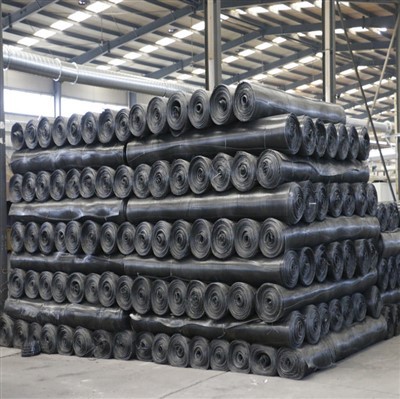

Geogrids are an essential component in modern civil engineering and construction projects, playing a crucial role in soil stabilization and reinforcement. As a leading geogrids supplier, we understand the significance of how geogrids interact with aggregate materials. This interaction is the cornerstone of many successful construction applications, from roadways to retaining walls.
The Basics of Geogrids and Aggregate Materials
Geogrids are synthetic materials, typically made from polymers such as polypropylene or polyester, formed into a grid - like structure. They come in different types, including uniaxial, biaxial, and triaxial geogrids, each designed for specific engineering requirements. Aggregate materials, on the other hand, are composed of crushed stone, gravel, sand, or recycled concrete. These materials are widely used in construction due to their strength, durability, and availability.
The primary function of geogrids in combination with aggregate materials is to enhance the overall performance of the construction system. By providing reinforcement, geogrids can increase the load - bearing capacity, reduce settlement, and improve the stability of the aggregate layer.
Different Types of Geogrids and Their Interaction with Aggregates
Uniaxial Geogrids For Civil Engineering
Uniaxial geogrids are designed to have high tensile strength in one direction. When used with aggregate materials, they are particularly effective in applications where there is a dominant load direction, such as in embankments or retaining walls. The uniaxial geogrid restrains the lateral movement of the aggregate, preventing it from spreading under load. This confinement increases the shear strength of the aggregate - geogrid system. For more information on uniaxial geogrids for civil engineering, you can visit Uniaxial Geogrids For Civil Engineering.


Biaxial Geogrids
Biaxial geogrids have significant tensile strength in two perpendicular directions. They are commonly used in applications where the load is distributed in multiple directions, such as in road construction. When placed within an aggregate layer, biaxial geogrids interlock with the aggregate particles. This interlocking mechanism distributes the load more evenly across the entire area, reducing the stress concentration on individual aggregate particles. Our Biaxial Polypropylene Geogrid is a popular choice for such applications, thanks to its high strength and chemical resistance.
Triaxial Geogrids
Triaxial geogrids have a unique triangular cell structure that provides excellent lateral restraint and load distribution capabilities. In road construction and ground reinforcement projects, triaxial geogrids interact with aggregate materials in a more efficient way compared to other types. The triangular cells of the geogrid trap the aggregate particles, creating a composite structure that is more resistant to deformation. For road construction, our Triaxial Geogrid For Road Construction offers enhanced performance in terms of rutting resistance and pavement life. And for ground reinforcement, Triaxial Geogrid For Ground Reinforcement provides a stable foundation by effectively interacting with the underlying aggregate.
Mechanisms of Interaction between Geogrids and Aggregate Materials
Frictional Interaction
Friction is one of the primary mechanisms of interaction between geogrids and aggregate materials. As the aggregate particles are in contact with the geogrid, frictional forces develop at the interface. These forces resist the relative movement between the geogrid and the aggregate. The surface texture of the geogrid plays a crucial role in determining the frictional resistance. A rougher surface will result in higher frictional forces, which can better restrain the aggregate particles.
Interlocking
Interlocking occurs when the aggregate particles fit into the openings of the geogrid. In the case of biaxial and triaxial geogrids, the grid structure allows for a more effective interlocking mechanism. The aggregate particles are trapped within the cells of the geogrid, preventing them from moving independently. This interlocking not only enhances the shear strength of the system but also improves its overall stability.
Tensile Reinforcement
Geogrids provide tensile reinforcement to the aggregate layer. When the aggregate - geogrid system is subjected to load, the geogrid resists the tensile forces, which would otherwise cause the aggregate to deform or fail. The high tensile strength of the geogrid redistributes the load and reduces the stress on the aggregate, allowing the system to carry larger loads without significant deformation.
Factors Affecting the Interaction
Aggregate Properties
The size, shape, and gradation of the aggregate particles have a significant impact on the interaction with geogrids. Well - graded aggregates with a variety of particle sizes can provide better interlocking with the geogrid. Angular particles also tend to have higher frictional resistance compared to round particles, which can enhance the overall performance of the geogrid - aggregate system.
Geogrid Properties
The aperture size, tensile strength, and surface texture of the geogrid are important factors. A suitable aperture size should be selected to ensure proper interlocking with the aggregate particles. If the aperture is too large, the aggregate may pass through without effective interlocking. On the other hand, if the aperture is too small, the aggregate may not be able to penetrate the geogrid, reducing the interaction.
Installation Conditions
Proper installation of the geogrid is crucial for achieving optimal interaction with the aggregate. The geogrid should be laid flat and without wrinkles on a prepared surface. The aggregate should be placed and compacted properly on the geogrid to ensure maximum contact and interlocking. Inadequate installation can lead to reduced performance and premature failure of the system.
Applications of Geogrid - Aggregate Interaction
Road Construction
In road construction, the combination of geogrids and aggregate materials can significantly improve the performance of the pavement. Geogrids help to reduce rutting, which is a common problem in flexible pavements. By confining the aggregate base layer, geogrids distribute the traffic loads more evenly, reducing the stress on the subgrade. This results in a longer pavement life and lower maintenance costs. Our Triaxial Geogrid For Road Construction is specifically designed to meet the demanding requirements of road construction projects.
Retaining Walls
Geogrids are widely used in the construction of retaining walls. When combined with aggregate backfill, geogrids provide reinforcement to the wall structure. The interaction between the geogrid and the aggregate increases the stability of the backfill, allowing the retaining wall to withstand higher lateral earth pressures. This is especially important in areas with limited space or where the soil conditions are poor.
Ground Reinforcement
For ground reinforcement applications, geogrids can be used to improve the bearing capacity of weak soils. By placing geogrids within an aggregate layer on top of the weak soil, the load - bearing capacity of the ground can be significantly increased. The Triaxial Geogrid For Ground Reinforcement is an excellent choice for such applications, as it can effectively interact with the aggregate to provide a stable foundation.
Conclusion
The interaction between geogrids and aggregate materials is a complex but well - understood phenomenon that forms the basis of many successful construction projects. As a geogrid supplier, we are committed to providing high - quality geogrids that are designed to optimize this interaction. Our range of products, including Triaxial Geogrid For Road Construction, Biaxial Polypropylene Geogrid, Uniaxial Geogrids For Civil Engineering, Triaxial Geogrid For Ground Reinforcement, and Biaxial Geogrid & Geogrid Fabric, are engineered to meet the diverse needs of the construction industry.
If you are involved in a construction project that requires geogrids and aggregate interaction, we invite you to contact us for more information and to discuss your procurement needs. Our team of experts is ready to assist you in selecting the most suitable geogrid products for your specific application.
References
- Koerner, R. M. (2012). Designing with Geosynthetics. Pearson.
- Bonaparte, R., & Christopher, B. R. (1991). Geosynthetic - soil interaction: State of the art. Geotechnical Special Publication, 29, 1 - 20.
- Giroud, J. P., & Han, J. (2004). Design and construction guidelines for mechanically stabilized earth walls and reinforced soil slopes. FHWA - IF - 04 - 027.