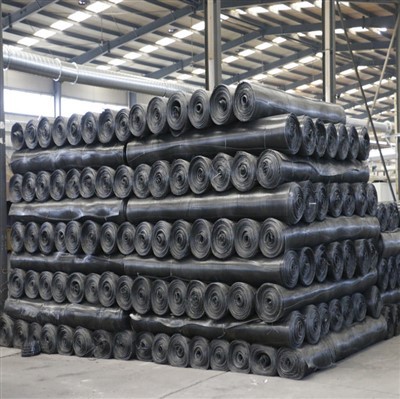
Hey there! As a geogrids supplier, I've been asked about how geogrids interact with geotextiles quite a bit. So, I thought I'd write this blog to share my insights on this topic.
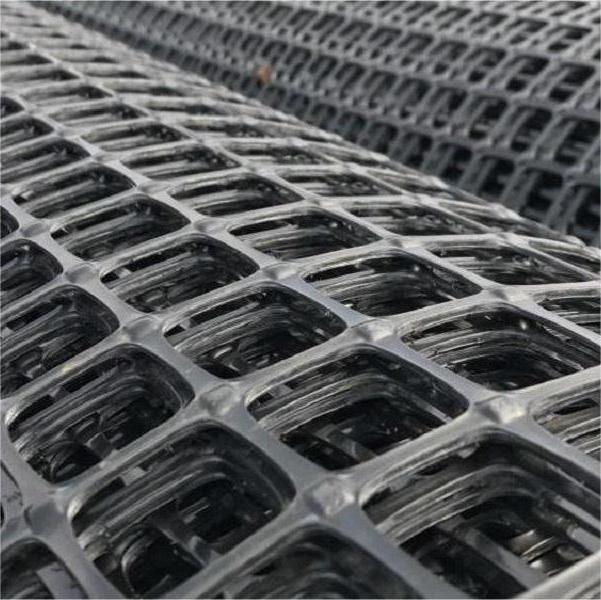
Let's start with the basics. Geogrids are a type of geosynthetic material that are made up of a grid-like structure. They're typically used for soil reinforcement, ground stabilization, and other civil engineering applications. On the other hand, geotextiles are permeable fabrics that are used for filtration, drainage, separation, and reinforcement.
When geogrids and geotextiles are used together, they can create a powerful system that enhances the performance of both materials. Here's how they interact:
1. Reinforcement
One of the main ways geogrids and geotextiles interact is through reinforcement. Geogrids provide tensile strength to the soil, which helps to distribute loads and prevent soil movement. Geotextiles, on the other hand, can help to reinforce the soil by adding additional strength and stability.
When geogrids and geotextiles are used together, they can create a composite system that is stronger and more stable than either material alone. For example, in a retaining wall application, a geogrid can be used to provide horizontal reinforcement, while a geotextile can be used to provide vertical reinforcement. This combination can help to prevent soil erosion and improve the overall stability of the wall.
2. Filtration and Drainage
Geotextiles are often used for filtration and drainage purposes. They can help to prevent soil particles from clogging drainage systems and can also help to filter out contaminants from water. Geogrids, on the other hand, can help to improve the flow of water through the soil by creating channels for water to flow through.
When geogrids and geotextiles are used together, they can create a more effective filtration and drainage system. For example, in a landfill application, a geotextile can be used to filter out soil particles and prevent them from clogging the drainage system, while a geogrid can be used to improve the flow of water through the soil and prevent the buildup of water pressure.
3. Separation
Geotextiles are also used for separation purposes. They can help to prevent different types of soil or materials from mixing together. Geogrids, on the other hand, can help to provide a stable base for the geotextile and prevent it from being displaced.
When geogrids and geotextiles are used together, they can create a more effective separation system. For example, in a road construction application, a geotextile can be used to separate the subgrade from the base layer, while a geogrid can be used to provide a stable base for the geotextile and prevent it from being displaced by traffic.
4. Compatibility
It's important to note that not all geogrids and geotextiles are compatible with each other. When choosing a geogrid and geotextile for a specific application, it's important to consider the compatibility of the two materials.
For example, some geogrids are made from materials that are not compatible with certain types of geotextiles. In these cases, the two materials may not bond together properly, which can reduce the effectiveness of the system. It's also important to consider the chemical and physical properties of the two materials to ensure that they are compatible with each other.
Our Geogrids
As a geogrids supplier, we offer a wide range of geogrids that are designed to work with geotextiles. Our Polyester Geogrid For Soil Reinforcement is made from high-strength polyester fibers and is designed to provide excellent tensile strength and durability. It's ideal for use in soil reinforcement applications, such as retaining walls, embankments, and slopes.
Our Plastic Geogrid For Ground Stabilization is made from high-density polyethylene (HDPE) and is designed to provide excellent ground stabilization. It's ideal for use in applications such as roads, parking lots, and airports.
Our Uniaxial Geogrid for Retaining Wall is made from high-strength polypropylene and is designed to provide excellent horizontal reinforcement. It's ideal for use in retaining wall applications, such as retaining walls, embankments, and slopes.

Conclusion
In conclusion, geogrids and geotextiles can interact in a variety of ways to create a powerful system that enhances the performance of both materials. When used together, they can provide reinforcement, filtration, drainage, and separation, which can help to improve the stability and durability of civil engineering projects.
If you're interested in learning more about our geogrids or how they can work with geotextiles, please don't hesitate to contact us. We'd be happy to discuss your specific needs and help you find the right solution for your project.
References
- Koerner, R. M. (2012). Designing with Geosynthetics. Pearson.
- Bonaparte, R., & Daniel, D. E. (1990). Geosynthetics in waste containment. Van Nostrand Reinhold.
- Giroud, J. P., & Bonaparte, R. (1989). Design of geotextile-reinforced unpaved roads. Journal of Geotechnical Engineering, 115(11), 1542-1561.