Noise Reduction Performance of Composite Geomembranes in Modern Engineering Applications
Composite geomembranes have become an increasingly important material in geosynthetic engineering, not only for their traditional roles in containment and separation but also for their emerging contribution to environmental noise reduction. As infrastructure development expands into urban, industrial, and transportation environments, controlling noise pollution has become a critical design requirement. Composite geomembranes offer a multifunctional solution by combining impermeability, mechanical reinforcement, and acoustic performance within a single engineered system.
1. Structure and Composition of Composite Geomembranes
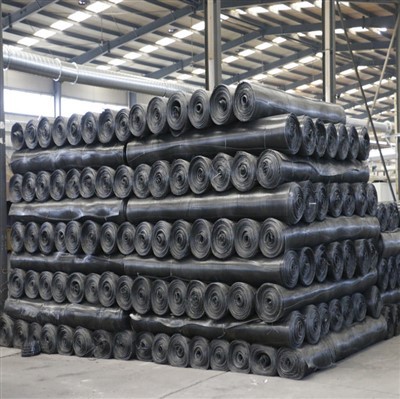
Composite geomembranes are typically manufactured by bonding a geomembrane layer with a geotextile layer. The geomembrane component, commonly made from HDPE (High-Density Polyethylene) or similar polymers, provides an impermeable barrier against liquids and gases. This makes it highly effective in applications such as landfill liners, mining containment systems, and water reservoirs.
The geotextile layer, usually composed of polypropylene or polyester fibers, adds mechanical protection, filtration capability, and energy dissipation characteristics. When these two layers are combined, the resulting composite geomembrane exhibits enhanced durability and multifunctional performance, making it suitable for complex engineering environments.
2. Mechanisms of Noise Reduction
Although composite geomembranes are not traditionally designed as acoustic materials, their structural characteristics allow them to contribute significantly to noise reduction through three primary mechanisms: absorption, reflection, and vibration damping.
2.1 Sound Absorption
The geotextile layer plays a key role in sound absorption. As a porous material, it allows sound waves to penetrate into its fiber structure. Once inside, the sound energy is converted into thermal energy through friction between air particles and fibers.
This absorption efficiency depends on several parameters:
Fiber density of the geotextile
Thickness of the textile layer
Porosity and void structure
A denser and thicker geotextile layer generally improves acoustic absorption performance, especially in mid- to high-frequency noise ranges commonly found in traffic and industrial environments.
2.2 Sound Reflection
The geomembrane layer acts as a reflective surface due to its smooth and dense polymer structure. When sound waves encounter this surface, a portion of the acoustic energy is reflected away rather than transmitted through the material system.
The reflection performance is influenced by:
Surface smoothness of the geomembrane
Angle of sound wave incidence
Material stiffness and density
This reflective property is particularly useful in applications such as roadside noise barriers, where redirecting sound waves away from sensitive areas is essential.
2.3 Vibration Damping
In addition to acoustic absorption and reflection, composite geomembranes also contribute to vibration control. Mechanical vibrations generated by machinery, traffic, or structural movement can propagate as noise. The flexible nature of both geomembrane and geotextile layers allows the composite system to dissipate vibrational energy.
This damping effect reduces resonance and limits the amplification of noise within structures, improving overall acoustic comfort in surrounding environments.
3. Engineering Applications in Noise Control
3.1 Transportation Infrastructure
One of the most important applications of composite geomembranes in noise reduction is highway and railway sound barriers. When installed as part of a barrier system, composite geomembranes help reduce noise transmission from traffic to nearby residential or commercial areas.
They are often combined with structural supports to create long-lasting acoustic shielding systems that also provide weather resistance and durability.
3.2 Industrial Facilities
Industrial environments such as power plants, compressor stations, and manufacturing facilities generate high levels of mechanical noise. Composite geomembranes can be used to construct acoustic enclosures around noisy equipment.
These enclosures benefit from:
Reduced sound transmission
Vibration control
Resistance to chemical and environmental exposure
As a result, worker safety and compliance with environmental noise regulations can be significantly improved.
3.3 Building and Construction Applications
In building engineering, composite geomembranes can be integrated into wall, floor, and ceiling systems to enhance sound insulation. They act as intermediate layers that reduce sound transmission between structural components.
This is particularly valuable in:
High-rise residential buildings
Commercial complexes
Underground structures such as metro stations
4. Key Factors Influencing Acoustic Performance
The noise reduction performance of composite geomembranes is influenced by multiple engineering factors:
Material Selection
Different polymer types, such as HDPE or PVC geomembranes, affect stiffness and sound reflection characteristics. Similarly, geotextile fiber composition influences absorption efficiency.
Structural Design
The thickness ratio between geomembrane and geotextile layers plays a critical role. Optimized composite structures can balance reflection and absorption for maximum noise control efficiency.
Installation Quality
Proper installation ensures continuous surface coverage without gaps. Any discontinuity can lead to sound leakage and reduce overall system performance.
Environmental Conditions
Temperature, humidity, and UV exposure can gradually affect material properties. Long-term durability must be considered in outdoor noise barrier applications.
5. Field Performance and Engineering Value
Field applications have demonstrated that composite geomembranes can significantly reduce noise levels when properly designed and installed. In highway barrier systems, they help reduce traffic noise exposure in surrounding residential zones. In industrial enclosures, they contribute to creating safer and more comfortable working environments.
Although they are not a replacement for dedicated acoustic materials, their multifunctional performance makes them an attractive engineering solution where waterproofing, durability, and noise control are simultaneously required.
6. Weiwo Geosynthetics – Reliable Supplier for Composite Geomembrane Solutions
In global infrastructure and environmental engineering projects, material reliability and supplier capability are critical. Weiwo Geosynthetics is a professional manufacturer specializing in geosynthetic materials, including composite geomembranes, geomembranes, geotextiles, and related engineering products.
The company focuses on integrating advanced production technology with strict quality control systems to ensure consistent material performance across different applications. Its composite geomembrane products are designed for demanding environments such as landfill engineering, transportation infrastructure, mining projects, and industrial containment systems.
With strong engineering support capabilities, Weiwo Geosynthetics assists international buyers in selecting appropriate material structures based on project requirements, including mechanical strength, environmental resistance, and functional performance such as drainage or noise reduction.
For overseas procurement teams, Weiwo Geosynthetics provides not only stable product supply but also technical guidance and customization support, making it a dependable partner for large-scale infrastructure and environmental protection projects.
Conclusion
Composite geomembranes represent a multifunctional geosynthetic solution with growing importance in noise reduction applications. Through combined mechanisms of sound absorption, reflection, and vibration damping, they provide effective acoustic performance in transportation, industrial, and building environments.
As urbanization and infrastructure development continue to expand, the demand for integrated materials that combine structural performance and environmental benefits will continue to grow. Composite geomembranes are well positioned to meet this demand, offering engineers a practical and efficient solution for modern construction challenges.