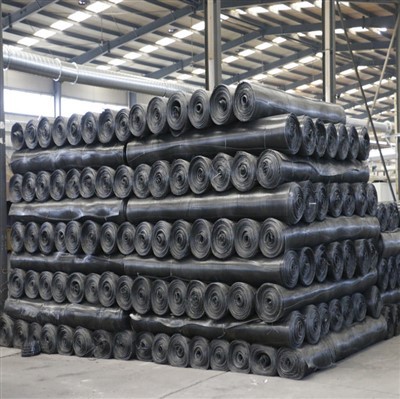
Agriculture is the backbone of human civilization, and over the years, various technologies and materials have been introduced to enhance its efficiency and productivity. One such material that has gained significant attention in recent agricultural applications is the uniaxial geogrid. As a leading uniaxial geogrid supplier, I am excited to share with you the diverse agricultural uses of this remarkable product.
Soil Stabilization
One of the primary agricultural uses of uniaxial geogrid is soil stabilization. In agricultural fields, soil erosion is a major concern, especially on sloped terrains. When heavy rainfall or irrigation occurs, the top - soil can easily be washed away, taking with it essential nutrients and organic matter. Uniaxial geogrids can be installed on the soil surface or within the soil profile to provide a stable framework.


The uniaxial geogrid's structure, with its high - strength ribs oriented in one direction, interlocks with the soil particles. This interlocking mechanism increases the soil's shear strength, preventing it from sliding down slopes. For example, in vineyards located on hilly areas, installing UX Rigid Uniaxial Geogrid can help maintain the integrity of the soil around the grapevines. The geogrid acts as a reinforcement, holding the soil in place and reducing the risk of soil erosion, which could otherwise damage the root systems of the vines.
Retaining Wall Construction
In agriculture, retaining walls are often used to create terraced fields or to separate different areas of the farm. Uniaxial geogrids play a crucial role in the construction of these retaining walls. When building a retaining wall, the uniaxial geogrid is placed within the soil backfill. The high - strength uniaxial geogrid distributes the lateral earth pressure exerted by the soil, reducing the stress on the wall structure.
The Uniaxial Geogrid for Retaining Wall is specifically designed for this purpose. It has excellent tensile strength, which allows it to withstand the forces generated by the soil. By using uniaxial geogrids in retaining wall construction, farmers can build more stable and long - lasting structures. This is particularly important in areas where space is limited, and terraced farming is necessary to maximize the use of land.
Pavement Reinforcement in Agricultural Areas
Agricultural operations often involve the use of heavy machinery, such as tractors, harvesters, and trucks. These vehicles can cause significant damage to the farm roads and pavements over time. Uniaxial geogrids can be used to reinforce the pavements in agricultural areas.
The One - way Stretch Uniaxial Geogrid For Pavement is engineered to improve the load - bearing capacity of the pavement. When installed within the pavement structure, the geogrid distributes the load from the vehicles more evenly across the surface. This reduces the formation of cracks and rutting, extending the lifespan of the pavement. For example, on a large - scale farm where trucks are constantly transporting harvested crops, using a uniaxial geogrid in the road construction can save on maintenance costs and ensure smooth traffic flow.
Vegetation Support
Uniaxial geogrids can also be used to support vegetation growth in agricultural settings. In areas where the soil is loose or has poor fertility, the geogrid can provide a stable base for plants to grow. The geogrid's open - mesh structure allows water, air, and nutrients to penetrate the soil, promoting healthy root development.
For grasslands or pastures, UX Uniaxial Geogrid can be laid on the soil surface. The geogrid helps to hold the soil in place, preventing it from being displaced by grazing animals. At the same time, it provides a physical support for the grass roots, enabling them to grow more firmly. This can lead to improved grass cover and better forage quality for livestock.
Drainage Enhancement
Proper drainage is essential in agriculture to prevent waterlogging, which can damage crops. Uniaxial geogrids can be used in combination with drainage systems to enhance their efficiency. When placed in the soil near the drainage pipes or channels, the geogrid helps to maintain the stability of the soil around the drainage infrastructure.
The Polyester Uniaxial Geogrid is a good choice for drainage applications due to its corrosion - resistant properties. It can prevent the soil from clogging the drainage pipes by acting as a filter. The geogrid allows water to flow freely through the soil while retaining the soil particles, ensuring that the drainage system functions effectively.
Cost - effectiveness and Sustainability
Using uniaxial geogrids in agriculture offers several economic and environmental benefits. From a cost - effectiveness perspective, the initial investment in uniaxial geogrids can lead to long - term savings. For example, by reducing soil erosion, farmers can avoid the need for frequent soil replacement and fertilization. The extended lifespan of pavements and retaining walls also means lower maintenance and replacement costs.
In terms of sustainability, uniaxial geogrids help to conserve soil and water resources. By preventing soil erosion, they protect the top - soil, which is rich in nutrients and organic matter. This is crucial for maintaining soil fertility and biodiversity. Additionally, the use of geogrids in drainage systems can reduce water wastage and improve water quality by preventing soil runoff into water bodies.
Conclusion
The agricultural uses of uniaxial geogrids are diverse and far - reaching. From soil stabilization and retaining wall construction to pavement reinforcement and vegetation support, uniaxial geogrids offer practical solutions to many agricultural challenges. As a uniaxial geogrid supplier, we are committed to providing high - quality products that meet the specific needs of farmers and agricultural businesses.
If you are interested in learning more about how our uniaxial geogrids can benefit your agricultural operations, or if you are looking to place an order, we invite you to contact us for a detailed discussion. Our team of experts is ready to assist you in choosing the right product for your specific requirements.
References
- Koerner, R. M. (2012). Designing with Geosynthetics. Pearson.
- Giroud, J. P., & Bonaparte, R. (1989). Design of soil - geosynthetic systems. Journal of Geotechnical Engineering, 115(1), 67 - 87.
- National Cooperative Highway Research Program (NCHRP). (2001). Geosynthetics in transportation applications. NCHRP Report 472.