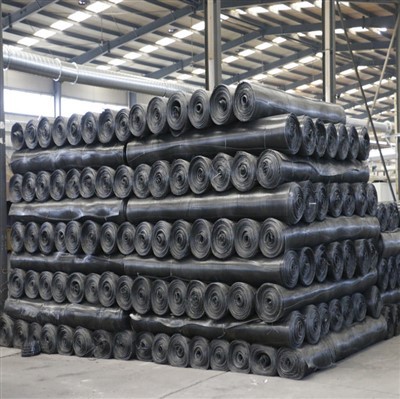
As a supplier of composite geonets, I've had the privilege of witnessing firsthand the remarkable versatility and effectiveness of these geosynthetic materials in a wide range of civil engineering and environmental applications. Composite geonets, which typically consist of a combination of geotextiles and geonets, offer excellent drainage, filtration, and reinforcement properties. However, like any engineering material, they have their limitations. In this blog post, I'll explore some of the key limitations of composite geonets to help you make informed decisions when considering their use in your projects.
1. Limited Strength in High - Load Situations
One of the primary limitations of composite geonets is their relatively limited strength compared to some other geosynthetic materials or traditional construction materials. While they are suitable for many applications where moderate loads are involved, such as in small - scale drainage systems or lightweight soil reinforcement, they may not be sufficient for high - load scenarios.
For instance, in large - scale earthworks projects like highway embankments or large retaining walls, the forces exerted on the geosynthetic material can be substantial. Composite geonets may not have the tensile strength required to withstand these high loads without significant deformation or failure. In such cases, stronger materials like geogrids or steel reinforcements might be more appropriate.
2. Susceptibility to UV Degradation
Composite geonets are often made from polymers, which are susceptible to ultraviolet (UV) radiation. When exposed to sunlight for extended periods, the polymers can degrade, leading to a reduction in their mechanical properties. This degradation can result in a decrease in tensile strength, elongation at break, and overall durability of the composite geonet.
To mitigate this issue, manufacturers often add UV stabilizers to the polymers during the production process. However, these stabilizers have a limited lifespan, and over time, the protective effect will diminish. In outdoor applications where the composite geonet is exposed to sunlight, regular inspections are necessary to monitor the degree of UV degradation. If significant degradation is detected, replacement of the geonet may be required.
3. Clogging and Reduced Drainage Efficiency
Another limitation of composite geonets is their susceptibility to clogging. The drainage function of composite geonets relies on the open structure of the geonet and the filtration properties of the geotextile. However, over time, fine particles, sediment, and organic matter can accumulate within the geonet and geotextile, reducing the flow capacity and drainage efficiency.
In applications such as landfill leachate collection systems or subsurface drainage in agricultural fields, clogging can be a significant problem. Once the composite geonet is clogged, it may no longer be able to effectively drain water, which can lead to waterlogging, increased pore water pressure, and potential failure of the structure. To address this issue, proper design and maintenance are crucial. This may include the use of pre - filtration layers, regular flushing of the drainage system, or the selection of composite geonets with larger pore sizes.
4. Limited Chemical Resistance
Composite geonets are made from polymers, and their chemical resistance can vary depending on the type of polymer used. In some environments, such as industrial sites or areas with high concentrations of chemicals, the composite geonet may be exposed to corrosive substances. If the polymer is not resistant to these chemicals, it can lead to degradation of the material.
For example, in a landfill where leachate may contain a variety of chemicals, the composite geonet used for leachate collection needs to be resistant to the specific chemicals present. If the geonet is not chemically resistant, it can break down over time, compromising its drainage and filtration functions. When selecting a composite geonet for a project, it's essential to consider the chemical environment and choose a material with appropriate chemical resistance.
5. Installation Challenges
Installing composite geonets can be challenging, especially in complex or uneven terrain. The geonets need to be properly laid and secured to ensure their effectiveness. If the installation is not done correctly, it can lead to problems such as wrinkles, folds, or gaps, which can reduce the performance of the composite geonet.
In addition, the installation process may require specialized equipment and skilled labor. For example, in large - scale projects, heavy machinery may be needed to unroll and position the geonet. Improper handling during installation can also damage the geonet, reducing its strength and durability.
6. Cost - Benefit Considerations
While composite geonets offer many benefits, they can be relatively expensive compared to some other drainage and reinforcement materials. The cost of composite geonets includes not only the material cost but also the cost of installation, maintenance, and potential replacement.
In some projects, the cost of using composite geonets may outweigh the benefits, especially if there are alternative materials that can achieve similar results at a lower cost. When considering the use of composite geonets, it's important to conduct a thorough cost - benefit analysis to determine if they are the most cost - effective solution for the project.


7. Limited Compatibility with Certain Soils
Composite geonets may not be suitable for all types of soils. In some cases, the interaction between the geonet and the soil can affect its performance. For example, in cohesive soils, the geonet may not provide sufficient drainage due to the low permeability of the soil. In such cases, additional measures may be required, such as the use of sand layers or other drainage aids.
On the other hand, in very coarse - grained soils, the geotextile component of the composite geonet may not be able to effectively filter out the soil particles, leading to clogging and reduced performance. Understanding the soil characteristics and selecting the appropriate composite geonet for the specific soil type is crucial for achieving optimal performance.
Conclusion
Despite their limitations, composite geonets remain a valuable tool in civil engineering and environmental applications. By understanding these limitations, engineers and project managers can make more informed decisions when selecting and using composite geonets.
If you are considering using composite geonets in your project, I encourage you to explore our 3D Composite Geonet and Composite Drainage Geonet products. Our team of experts is ready to assist you in choosing the right composite geonet for your specific needs. Feel free to contact us for more information and to discuss your project requirements. We look forward to working with you to find the best solution for your project.
References
- Koerner, R. M. (2012). Designing with Geosynthetics. Pearson Prentice Hall.
- Giroud, J. P., & Bonaparte, R. (1989). Geotextile and geogrid reinforcement of soil slopes. Journal of Geotechnical Engineering, 115(6), 840 - 857.
- ASTM International. (2019). Standard test methods for geotextiles and geotextile - related products. ASTM International.