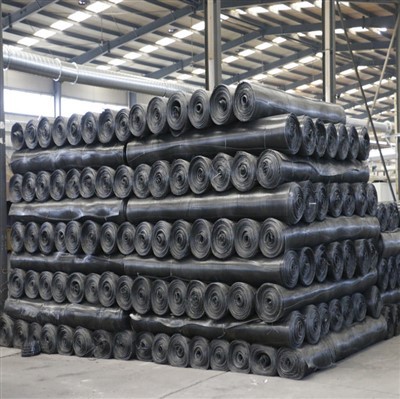
Hey there! As a supplier of PVC geomembrane, I'm super excited to share with you all about the physical properties of this amazing material. PVC geomembrane is a versatile and widely used product, and understanding its physical properties can help you make better decisions when it comes to your projects.

Thickness
One of the most basic physical properties of PVC geomembrane is its thickness. The thickness can vary depending on the specific application and requirements. Generally, PVC geomembranes come in thicknesses ranging from 0.5 mm to 2.0 mm. Thicker geomembranes are often used in applications where more durability and puncture resistance are needed, such as in landfill liners or pond liners. Thinner geomembranes, on the other hand, are suitable for applications where flexibility and ease of installation are more important, like in small-scale water features or agricultural applications.
Tensile Strength
Tensile strength is another crucial property of PVC geomembrane. It refers to the maximum amount of stress that the material can withstand before it breaks. PVC geomembranes typically have high tensile strength, which makes them resistant to stretching and tearing. This is especially important in applications where the geomembrane will be subjected to mechanical stress, such as in landfill covers or canal liners. The tensile strength of PVC geomembrane can be measured in pounds per square inch (psi) or newtons per square millimeter (N/mm²).
Elongation at Break
Elongation at break is the percentage increase in length that a material can undergo before it breaks. PVC geomembranes have a relatively high elongation at break, which means they can stretch significantly without breaking. This property is important in applications where the geomembrane needs to conform to irregular surfaces or where there may be some movement or settlement. For example, in a pond liner, the geomembrane needs to be able to stretch as the water level changes or as the ground settles.
Puncture Resistance
Puncture resistance is a measure of how well a material can resist being punctured by sharp objects. PVC geomembranes have good puncture resistance, which makes them suitable for applications where there is a risk of puncture, such as in landfill liners or construction sites. The puncture resistance of PVC geomembrane can be improved by adding reinforcement layers or by using a thicker geomembrane.
Chemical Resistance
PVC geomembranes are resistant to a wide range of chemicals, including acids, bases, and salts. This makes them suitable for use in applications where they will come into contact with chemicals, such as in chemical storage tanks or wastewater treatment plants. However, it's important to note that the chemical resistance of PVC geomembrane can vary depending on the specific chemicals involved and the duration of exposure.
UV Resistance
UV resistance is an important property for PVC geomembranes that will be exposed to sunlight. PVC geomembranes are typically treated with UV stabilizers to improve their resistance to UV radiation. This helps to prevent the geomembrane from deteriorating or becoming brittle over time. The UV resistance of PVC geomembrane can be measured by its ability to maintain its physical properties after exposure to UV radiation for a certain period of time.
Seam Strength
The seam strength of PVC geomembrane is an important factor in ensuring the integrity of the liner. PVC geomembranes are typically joined together using heat welding or adhesive bonding. The seam strength should be at least as strong as the base material to prevent leaks. A strong seam is essential in applications where the geomembrane is used to contain liquids or gases, such as in landfill liners or water storage tanks.
Flexibility
PVC geomembranes are flexible, which makes them easy to install and conform to irregular surfaces. This flexibility allows the geomembrane to be used in a variety of applications, including ponds, lakes, and swimming pools. The flexibility of PVC geomembrane also makes it suitable for applications where there may be some movement or settlement, such as in earthquake-prone areas.
Density
The density of PVC geomembrane is an important property that affects its weight and buoyancy. PVC geomembranes typically have a density of around 1.3 to 1.4 g/cm³. The density can affect the handling and installation of the geomembrane, as well as its performance in certain applications. For example, a higher density geomembrane may be more suitable for applications where it needs to sink to the bottom of a body of water, while a lower density geomembrane may be more suitable for floating applications.
Now that you have a better understanding of the physical properties of PVC geomembrane, you can see why it's such a popular choice for a wide range of applications. Whether you're looking for a liner for a pond, a landfill, or a chemical storage tank, PVC geomembrane has the properties you need to get the job done.
If you're interested in learning more about our PVC Geomembrane Liner or have any questions about our products, feel free to reach out to us. We're here to help you find the right solution for your project. Contact us today to start the conversation and let's work together to meet your needs.
References
- ASTM International. (2023). ASTM D4397 - 23 Standard Specification for Polyvinyl Chloride (PVC) Geomembranes.
- Geosynthetic Institute. (2022). Geomembrane Handbook.