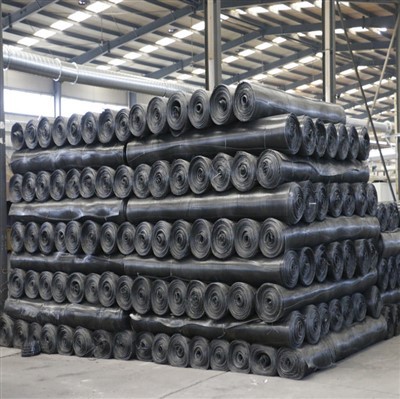

The elongation at break of uniaxial geogrid is a critical property that significantly influences its performance and suitability for various geotechnical applications. As a trusted uniaxial geogrid supplier, we understand the importance of this parameter and its implications for engineers, contractors, and project managers. In this blog, we will delve into the concept of elongation at break, its significance, and how it relates to the quality and functionality of our uniaxial geogrids.
Understanding Elongation at Break
Elongation at break, also known as ultimate elongation, is a measure of the maximum amount of strain a material can withstand before it fractures or breaks. In the context of uniaxial geogrids, it refers to the percentage increase in length of the geogrid specimen when it reaches its breaking point under a uniaxial tensile load. This property is typically expressed as a percentage and is determined through standardized testing procedures.
The elongation at break is a crucial characteristic because it provides insights into the geogrid's ability to deform and adapt to the changing conditions of the soil or foundation. A higher elongation at break indicates that the geogrid can stretch more before failing, which is particularly important in applications where significant ground movement or settlement is expected. On the other hand, a lower elongation at break may be desirable in situations where minimal deformation is required, such as in the reinforcement of rigid structures.
Factors Affecting Elongation at Break
Several factors can influence the elongation at break of uniaxial geogrids. These include the material composition, manufacturing process, and the design of the geogrid.
- Material Composition: The type of polymer used in the production of the geogrid plays a significant role in determining its elongation at break. For example, polyester uniaxial geogrids Polyester Uniaxial Geogrid are known for their high tensile strength and relatively low elongation at break, making them suitable for applications where high stiffness and minimal deformation are required. In contrast, polypropylene geogrids may have a higher elongation at break, which can be advantageous in situations where greater flexibility is needed.
- Manufacturing Process: The manufacturing process can also affect the elongation at break of the geogrid. For instance, the extrusion process used to produce the geogrid can influence the molecular orientation of the polymer, which in turn affects its mechanical properties. A well-controlled manufacturing process can result in a geogrid with consistent and predictable elongation at break values.
- Geogrid Design: The design of the geogrid, including the shape and size of the apertures, can also impact its elongation at break. Geogrids with larger apertures may have a higher elongation at break compared to those with smaller apertures, as they allow for more deformation before the geogrid reaches its breaking point.
Significance of Elongation at Break in Geotechnical Applications
The elongation at break of uniaxial geogrids is of great significance in various geotechnical applications. Here are some examples:


- Slope Stabilization: In slope stabilization projects, uniaxial geogrids are used to reinforce the soil and prevent slope failure. A geogrid with a high elongation at break can accommodate the movement and settlement of the soil, reducing the risk of slope instability. Our Uniaxial Geogrid For Slope Stabilization is designed to provide excellent elongation at break, ensuring long-term stability of slopes.
- Foundation Reinforcement: When used in foundation reinforcement, uniaxial geogrids help distribute the load more evenly and reduce the settlement of the foundation. A geogrid with an appropriate elongation at break can adapt to the differential settlement of the soil, preventing the formation of cracks and ensuring the integrity of the structure.
- Road Construction: In road construction, uniaxial geogrids are used to improve the performance of the pavement and reduce the rutting and cracking. A geogrid with a high elongation at break can withstand the repeated loading and deformation caused by traffic, extending the service life of the road.
Testing and Quality Control
To ensure the quality and performance of our uniaxial geogrids, we conduct rigorous testing and quality control procedures. Our geogrids are tested in accordance with international standards, such as ASTM and ISO, to determine their elongation at break and other mechanical properties. We also perform in-house testing to verify the consistency and reliability of our products.
In addition to testing, we have a strict quality control system in place to monitor every stage of the manufacturing process. This includes raw material inspection, production process control, and final product testing. By adhering to these quality control measures, we can ensure that our uniaxial geogrids meet or exceed the requirements of our customers.
Choosing the Right Uniaxial Geogrid
When selecting a uniaxial geogrid for a specific application, it is important to consider the elongation at break along with other factors such as tensile strength, aperture size, and chemical resistance. Our team of experts can help you choose the right geogrid based on your project requirements and budget.
We offer a wide range of uniaxial geogrids, including UX Uniaxial Geogrid, which is designed to provide high tensile strength and excellent elongation at break. Our geogrids are available in different sizes and specifications to meet the diverse needs of our customers.
Conclusion
The elongation at break of uniaxial geogrids is a critical property that affects their performance and suitability for various geotechnical applications. As a leading uniaxial geogrid supplier, we are committed to providing high-quality products that meet the needs of our customers. Our geogrids are designed to offer excellent elongation at break, ensuring long-term stability and performance in a wide range of applications.
If you are interested in learning more about our uniaxial geogrids or have any questions about the elongation at break or other properties, please feel free to contact us. Our team of experts will be happy to assist you in choosing the right geogrid for your project.
References
- ASTM D6637/D6637M - 18 Standard Test Method for Tensile Properties of Geotextiles by the Wide-Width Strip Method.
- ISO 10319:2016 Geosynthetics - Determination of tensile properties of geogrids.