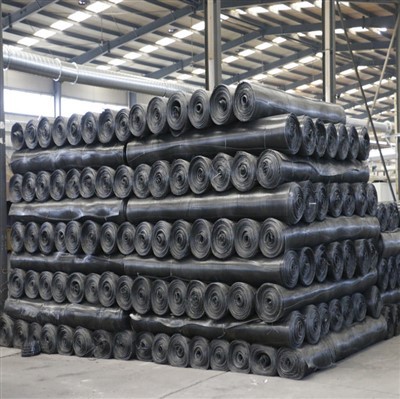
If you’ve ever been deep in the biogas world—whether you’re a farmer, waste management pro, or someone just trying to cut down on energy bills—you’ve probably asked: “Wait, can HDPE geomembrane even work in a biogas digester?” I get it. When I first started in the HDPE geomembrane supply game years ago, I didn’t realize how closely these two industries tie together. I was just selling liners for roads and reservoirs back then, but I quickly learned that digesters are a whole different beast. Let me break this down like I would over a coffee with a client—no stuffy jargon, just real talk.
First, let’s get one thing straight: HDPE geomembrane isn’t some random plastic sheet. It’s a engineered material, made to hold up under harsh conditions. If you’re new here, our main HDPE geomembrane page is a good starting point to wrap your head around what this stuff actually does. It’s not like the thin plastic drop cloth you buy at the hardware store. This is heavy-duty, formulated to resist chemicals, UV rays, and all kinds of gunk that would tear regular plastic apart.
Now, biogas digesters—what are they, exactly? They’re closed systems where organic matter (manure, food scraps, sewage sludge) breaks down without oxygen, releasing methane and carbon dioxide. That methane is used for heating, electricity, even cooking—super sustainable, right? But here’s the catch: digesters need to be completely leak-proof. If gas escapes, you lose energy. If liquid seeps out, you’re messing with soil and water, which is a huge regulatory headache. So the liner you use has to do two big jobs: keep all the biogas inside, and keep all that chunky, smelly organic slurry inside too.
So back to the question: Can HDPE geomembrane pull this off in a digester? Short answer? Hell yeah, if you pick the right type. Let’s talk about why it works, and why some folks might have doubts.
First, chemical resistance. The stuff inside a digester isn’t just dirt—it’s a mix of volatile organic acids, ammonia, and all kinds of anaerobic bacteria. Regular plastics get eaten away or weakened by this, but HDPE is a rockstar here. I’ve seen liners go 15+ years in digesters without corroding. That’s a big deal—you don’t want to replace your digester liner every few years. Just to put this in perspective, our carbon black HDPE liner is extra formulated to handle even the nastier industrial-grade digester inputs, like food processing waste. The carbon black additives block UV too, which is helpful if you have any part of your digester exposed (even most covered ones get some sunlight).


Next, gas tightness. This is non-negotiable for biogas. Methane molecules are tiny, way smaller than water molecules, so the liner needs to stop both. HDPE has a very low permeability rate for methane—way lower than other materials like PVC or EPDM. I once had a farmer tell me his old digester used to lose 20% of its gas overnight before switching to our HDPE liner. After installation? That drop was less than 2%—game-changer for his energy bills. You can’t afford to waste that gas, especially when you’re counting on that electricity to run your farm or plant.
Wait, but what about installation? I know a lot of people think “liners are just layering a sheet.” No, it’s way more involved. You can’t just dump a roll in a hole and call it done. HDPE geomembrane needs proper welding—hot air or extrusion welding—to seal every seam. If you do that right, the seams are actually stronger than the liner itself. I always tell clients to hire certified installers for this. Mess up a weld, and you’ve got a leak before you even fill the digester. There are ISO certified geomembrane options that make this easier, because they come with standardized thicknesses and quality checks, so you know the weld will hold.
Now, let’s talk about common pitfalls. I’ve seen a few bad calls from digester operators who tried to save money with cheaper liners. Like, one guy went with a thin, untested HDPE sheet from a no-name supplier. It lasted 3 years before splitting, and by then his digester had leaked thousands of gallons of slurry into a nearby stream—costing him a fortune in fines and cleanup. The takeaway here is: don’t skimp on quality. Our HDPE geomembrane is formulated for long-term use in harsh environments, not just short-term jobs. If you’re using a digester for commercial or industrial purposes, you need a liner that’s built to last.
Another thing to consider: temperature. Digesters can run at mesophilic (around 35°C/95°F) or thermophilic (around 55°C/131°F) temperatures. HDPE handles both great—mesophilic is standard for most small to medium digesters, and thermophilic for higher-output systems. I’ve had clients in warmer climates run thermophilic digesters with our liners for 10+ years without any issues. PVC, on the other hand, starts to break down at higher temps, and EPDM can get stiff and crack in cold weather. HDPE is way more versatile across different climate zones.
Wait, but is there a case where HDPE geomembrane isn’t the right pick? I’d say only if you’re working with extremely aggressive chemicals, like very strong acids or solvents that digesters don’t usually produce. But for standard agricultural or municipal biogas digesters, HDPE is the go-to. I’ve seen it used successfully for everything from small farm digesters that power a few homes to huge municipal systems that process tons of food waste every day.
Let’s also tie this back to other industries we serve, because it’s all connected. We sell geomembrane for road construction too, but that’s a different use—roads need liners to prevent soil contamination from fuel or salt. Reservoir waterproofing liners? Similar leak-proofing needs, but for water instead of gas. The core technology is the same, but we tweak the formulation based on the job. For digesters, we adjust the chemical resistance and gas permeability specifically for biogas, so it’s not a one-size-fits-all deal, but it’s all built on HDPE’s core strengths.
Now, if you’re thinking about using HDPE for your digester, what should you ask your supplier? First, ask about the formulation—does it have UV stabilizers? Carbon black? What’s the thickness? Most digester liners are 1.5mm to 2.5mm thick, which is thick enough to resist punctures from rocks or heavy slurry movement. Thinner liners might be cheaper, but they tear easily during installation or when the digester is being agitated (that stirring process mixes the organic matter, so it’s rough on the liner).
Second, ask about welding support. A good supplier will either send their own crew to install and weld the liner, or point you to certified installers they trust. Weld quality is make or break. I always do a spark test after welding—run a spark along the seam, and if it lights up, that means there’s a gap. Fix those gaps, and you’re good to go.
Third, ask about longevity. A quality HDPE geomembrane for digesters should have a lifespan of 20 years or more, some even 30. Compare that to other materials—concrete digesters can crack, metal ones rust. HDPE keeps working, no matter what’s inside (as long as it’s not extreme chemicals).
I know switching to a new liner can feel overwhelming, especially if you’ve been using the same old setup for years. But biogas is only going to get bigger as the world moves toward renewable energy. More farmers, more cities, more businesses are investing in digesters to cut waste and lower energy costs. The right liner is a huge part of making that investment last.
At the end of the day, I’ve talked to hundreds of digester operators, and the ones that use HDPE geomembrane are the ones that don’t have headaches—no leaks, no constant repairs, just reliable biogas. If you’re in the market for a liner, don’t waste time on cheap, untested options. Go with something that’s built for the job.
If you’re ready to chat about your specific digester needs—whether you’re a small farm or a large municipal project—we’re here to help. We’ve got the ISO certified geomembrane options, carbon black HDPE liners, and all the support you need to get your digester set up right. Hit us up to talk through specs, installation tips, or pricing. Don’t leave your biogas system vulnerable—make sure your liner is up to the task.
References
- American Geosynthetics Society. (2020). HDPE Geomembrane Design and Installation for Waste and Energy Applications.
- International Biogas Association. (2021). Liner Materials for Anaerobic Digestion Systems: Performance and Durability.
- Plastics Industry Association. (2019). Chemical Resistance of HDPE to Common Agricultural and Industrial Digester Substrates.
- European Commission. (2022). Sustainable Biogas Infrastructure: Leak Prevention and Material Standards.
- Field Study Report, U.S. Department of Agriculture. (2020). Long-Term Performance of HDPE Liners in Small-Scale Agricultural Biogas Digesters.