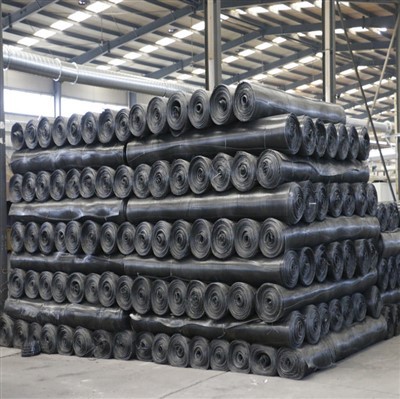

As a geosynthetics supplier specializing in uniaxial geogrids, I’ve worked alongside civil engineers, geotechnical contractors, and project managers for years to solve some of the most common challenges in ground stabilization, slope protection, and road construction. One question I hear repeatedly is: “Why pair uniaxial geogrid with other geosynthetics?” It’s a fair one—after all, uniaxial geogrid is already a workhorse on its own, designed to deliver high tensile strength in a single direction, making it perfect for reinforcing structures that experience linear tension, like retaining walls, embankments, and roadbeds. But here’s the thing: when you combine it with complementary geosynthetics, you unlock benefits that no single material can provide. Over the years, I’ve seen projects go from “good” to “exceptional” just by making the right pairings, and I want to break down exactly why that works, with examples from real jobs I’ve supported.
First, let’s start with a quick refresher on uniaxial geogrid to set context. Unlike biaxial geogrids that have strength in both directions, uniaxial geogrid is manufactured with parallel ribs connected by thinner crossbars, so all its tensile force runs along one axis. That design makes it ideal for holding back soil or distributing load along a straight line—for instance, along the length of a retaining wall or the direction of a road’s traffic lanes. But its biggest limitations? It doesn’t stop soil from eroding through its gaps (a big issue on slopes) and it can’t prevent moisture from seeping into the reinforced layer, which weakens soil over time. That’s where other geosynthetics come in—each solves a specific gap in uniaxial geogrid’s performance, creating a system that’s more durable, cost-effective, and efficient than using either material alone.
Let’s talk about the most common and high-impact pairing first: uniaxial geogrid with geotextiles. Geotextiles are porous fabric-like materials that separate soil layers, filter water, and protect against erosion. When you lay uniaxial geogrid between two layers of geotextile, you get a three-layer system that addresses three critical problems. Let’s take slope stabilization, a use case I know well because so many contractors reach out for solutions there. Slopes are constantly exposed to rainfall, runoff, and loose topsoil that can wash away, and uniaxial geogrid alone can’t hold fine-grained soil in place—its rib gaps are too big. By adding a non-woven geotextile beneath the geogrid, you create a filter: water can drain through, but soil particles stay trapped, preventing internal erosion (a common cause of slope failure). The geotextile also acts as a separator, keeping the reinforced soil (or “backfill”) from mixing with the underlying native soil, which would reduce the geogrid’s tensile strength over time. I worked on a highway embankment project in western Pennsylvania two years ago where the original plan only used uniaxial geogrid; during a test, heavy rain washed 20% of the slope’s backfill through the geogrid. We switched to a non-woven geotextile paired with our UX Uniaxial Geogrid (link: /geogrids/uniaxial-geogrid/ux-uniaxial-geogrid.html) and the slope held through a 100-year rain event later that year. Contractors often ask if this pairing adds cost, but I point out that it cuts down on maintenance costs long-term—we saw that project’s projected 10-year maintenance drop by 40% because the erosion risk was eliminated.
Next, uniaxial geogrid with geomembranes. Geomembranes are thin, flexible plastic sheets used for containment—think landfill liners, reservoir linings, or areas where chemical contamination is a risk. Uniaxial geogrid’s high tensile strength makes it perfect for reinforcing the base of a landfill liner, but geomembranes are thin and prone to punctures from sharp stones in the backfill. Pairing high-density polyethylene (HDPE) uniaxial geogrid (link: /geogrids/uniaxial-geogrid/hdpe-uniaxial-geogrid.html) with a geomembrane solves that. The geogrid acts as a protective layer, distributing the weight of the backfill over a larger area and preventing sharp rocks from piercing the geomembrane. But wait, there’s more: the combination also improves the stability of the liner’s base. The geomembrane prevents leachate from seeping into the ground, while the uniaxial geogrid reinforces the soil to reduce settlement, which would cause the geomembrane to tear over time. I recently supported a large municipal landfill expansion in Ohio where the geotechnical engineer specified this exact pairing. Originally, they planned to use a thicker geomembrane (which costs 30% more) and no geogrid. By switching to our HDPE uniaxial geogrid and a standard 60-mil geomembrane, they stayed under budget and hit all regulatory requirements for liner integrity. That’s a win-win—you get the containment you need, plus the reinforcement to avoid costly failures.
Another pairing that’s transformative for road and pavement projects: uniaxial geogrid with geocells. Geocells are honeycomb-shaped 3D structures made from polymer strips that expand to form a cellular mattress. For roadbeds, uniaxial geogrid is often used to reinforce the subgrade (the layer of soil beneath the pavement), but on soft or low-bearing-capacity soil, even the strongest geogrid can’t prevent lateral movement of backfill. That’s where geocells come in. When you place uniaxial geogrid at the base of a geocell layer, you get a two-part system: the geocell confines the backfill in 3D, preventing it from spreading laterally under traffic loads, while the uniaxial geogrid provides longitudinal strength to resist tensile stress from heavy truck traffic. This combination reduces the thickness of the pavement layer by up to 50% compared to traditional road construction methods, which is a huge cost saver for state and federal DOT projects. I worked on a rural road rehabilitation project in West Virginia last year where the subgrade was made of soft, expansive clay that would have required removing 2 feet of soil and replacing it with granular material. Instead, we used our Polyester Uniaxial Geogrid (link: /geogrids/uniaxial-geogrid/polyester-uniaxial-geogrid.html) at the base of a 8-inch geocell layer, topped with a 4-inch asphalt overlay. The road has since withstood heavy logging truck traffic without any cracking or settlement, and the client saved $120,000 in material and excavation costs. What’s more, this pairing is perfect for unpaved access roads too—mining sites, construction camps, and agricultural properties use it to create a durable surface that doesn’t turn to mud in wet weather.
Let’s not forget vertical applications like retaining walls, where uniaxial geogrid pairs with drainage composites. Drainage composites are rigid panels made of plastic cores wrapped in geotextile, designed to collect and redirect water behind retaining walls. Retaining walls rely on uniaxial geogrid to hold back the soil behind them, but if water builds up behind the wall, hydrostatic pressure can cause the wall to bulge or collapse. By pairing uniaxial geogrid with a drainage composite, you solve that water problem. The geogrid provides the tensile strength to hold the soil in place, while the drainage composite collects groundwater and directs it away from the wall, reducing pressure on the structure. This pairing is particularly critical for walls built on clay soils, which hold water more than sandy soils. I recently provided materials for a residential retaining wall project in North Carolina where the homeowner wanted a 10-foot wall to level their backyard for a patio. The original design only used uniaxial geogrid, but a soil test showed high groundwater levels in the area. We added a drainage composite behind the geogrid, and the wall has held perfectly through two heavy rain seasons. The homeowner didn’t have to worry about water seeping into their patio or the wall failing, which would have been a major headache (and expense) down the line.


Now, you might be wondering: how do I know which geosynthetic to pair with uniaxial geogrid for my specific project? That’s a question I help customers with every day, because there’s no one-size-fits-all solution. Let’s outline a quick guide: if your project is about slope stabilization or soil erosion, pair uniaxial geogrid with a non-woven geotextile. If you’re dealing with containment (landfills, reservoirs), pair it with a geomembrane. If you’re working on roadbeds or unpaved access roads, pair it with geocells. For retaining walls, pair it with a drainage composite. And if you’re working on civil engineering projects of any kind, including those I’ve mentioned, our Uniaxial Geogrids For Civil Engineering (link: /geogrids/uniaxial-geogrid/uniaxial-geogrids-for-civil-engineering.html) page has detailed specs and case studies to help you plan.
I should also address a common misconception: some people think adding more materials will make a project less reliable. But in reality, when geosynthetics are designed to work together, they form a synergistic system—each component complements the others, filling gaps that the single material can’t cover. For example, uniaxial geogrid is strong in tension, but it’s weak in filtration and protection; geotextiles and geomembranes add those functions without compromising the geogrid’s strength. What’s more, using this combination often reduces the overall volume of materials needed. In the road project I mentioned earlier, using geogrid and geocells meant we didn’t have to excavate and replace the soft subgrade, which reduced the amount of soil moved and cut carbon emissions from construction equipment. That’s a double win—you save money and reduce environmental impact, which is a big deal for many projects now, especially with stricter sustainability rules.
From my perspective as a supplier, the key to successful pairing is understanding both the geogrid’s properties and the other geosynthetic’s role. Uniaxial geogrid works because it’s engineered to stretch only along one axis, so when you pair it with a material that works in another dimension (like a geocell’s 3D structure or a geotextile’s filtration), you create a system that’s balanced. I’ve seen too many projects where contractors try to cut corners by using only uniaxial geogrid, and they end up with delays, repairs, or even failures. The projects that stand the test of time are the ones where the team takes the time to pair materials strategically.
If you’re working on a project—whether it’s a small residential retaining wall, a highway slope, a landfill liner, or a rural access road—and you’re not sure how to combine uniaxial geogrid with other geosynthetics, I’m here to help. I’ve supported thousands of projects across the country, and I can help you select the right materials, calculate the quantities, and provide technical guidance to make sure your project is durable, cost-effective, and built to last. Don’t hesitate to reach out to start a conversation about your project needs.
References
- Holtz, R. D., Christopher, B. R., & Berg, R. R. (1997). Geosynthetics Engineering: Principles and Practice. John Wiley & Sons.
- Koerner, R. M. (2012). Designing with Geosynthetics (6th ed.). Xlibris.
- U.S. Department of Transportation, Federal Highway Administration. (2018). Soil Reinforcement Using Geogrids: Design and Construction Guidelines. FHWA-NHI-18-003.
- International Geosynthetics Society. (2020). Geosynthetics in Slope Stabilization and Erosion Control: Best Practices. IGS Technical Report.
- Borden, R. H., & Sheehan, K. (2019). “Synergistic Effects of Geosynthetic Combinations in Roadway Subgrade Reinforcement.” Journal of Geotechnical and Geoenvironmental Engineering, 145(8), 04019047.