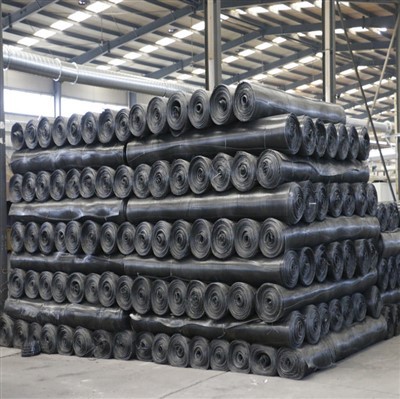
In the dynamic landscape of construction and environmental protection materials, composite geomembranes have emerged as a formidable player, competing vigorously with alternative products. As a supplier of composite geomembranes, I have witnessed firsthand the unique attributes that set our product apart and enable it to thrive in a highly competitive market.
Understanding Composite Geomembranes
Composite geomembranes are engineered materials that combine a geomembrane with geotextiles. The geomembrane, typically made of polymers such as high - density polyethylene (HDPE), provides an impermeable barrier, while the geotextiles offer protection, reinforcement, and filtration functions. This combination results in a product that is both durable and versatile.
One of the key advantages of composite geomembranes is their excellent impermeability. They can effectively prevent the leakage of liquids, whether it is water in a reservoir, chemicals in an industrial waste pond, or landfill leachate. This is a crucial feature, as it helps to protect the environment from contamination and ensures the integrity of various engineering projects.
Competing with Traditional Clay Liners
One of the most common alternative products to composite geomembranes is traditional clay liners. Clay liners have been used for centuries in various applications, such as lining ponds and landfills. However, they have several limitations when compared to composite geomembranes.
Firstly, the installation of clay liners is a labor - intensive and time - consuming process. It requires large amounts of clay to be excavated, transported, and compacted. In contrast, composite geomembranes can be quickly and easily installed, saving both time and labor costs. For example, a large - scale landfill project that would take weeks to line with clay can be completed in a fraction of the time using composite geomembranes.
Secondly, the performance of clay liners is highly dependent on the quality of the clay and the compaction process. If the clay is not properly compacted or if the soil conditions change over time, the liner may develop cracks and leaks. Composite geomembranes, on the other hand, are less affected by soil movements and can maintain their integrity even under challenging conditions.
Rivaling Geosynthetic Clay Liners (GCLs)
Geosynthetic clay liners (GCLs) are another alternative product in the market. GCLs consist of a layer of bentonite clay sandwiched between two geotextiles. While GCLs also offer good impermeability, composite geomembranes have some distinct advantages.
Composite geomembranes have a higher puncture resistance compared to GCLs. In applications where there is a risk of sharp objects puncturing the liner, such as in landfill construction or mining operations, composite geomembranes are a more reliable choice. The additional strength provided by the geomembrane layer in composite geomembranes helps to prevent damage and maintain the integrity of the liner.
Moreover, composite geomembranes are less sensitive to moisture variations. GCLs rely on the swelling of bentonite clay when wet to achieve impermeability. In dry conditions, the bentonite may shrink, leading to potential leakage. Composite geomembranes, with their polymer - based geomembrane layer, are not affected by such moisture - related issues.
Standing Against Single - Layer Geomembranes
Single - layer geomembranes are also in competition with composite geomembranes. While single - layer geomembranes offer good impermeability, they lack the additional protection and reinforcement provided by the geotextile layers in composite geomembranes.
The geotextile layers in composite geomembranes act as a cushion, protecting the geomembrane from damage during installation and use. They also help to distribute loads more evenly, reducing the stress on the geomembrane. This results in a longer service life for composite geomembranes compared to single - layer geomembranes.

In addition, the geotextile layers in composite geomembranes can provide filtration and drainage functions. This is particularly useful in applications such as landfill leachate collection systems, where the geotextile can prevent fine particles from clogging the drainage pipes.
Marketing and Promotion of Composite Geomembranes
As a composite geomembrane supplier, we understand the importance of effective marketing and promotion to compete with alternative products. We highlight the unique features and benefits of our composite geomembranes through various channels.
We participate in industry trade shows and conferences to showcase our products. At these events, we demonstrate the performance of our composite geomembranes through live demonstrations and case studies. We also distribute brochures and technical data sheets to potential customers, providing them with detailed information about our products.
Our website Composite Geomembrane Liner serves as an important platform for promoting our composite geomembranes. It provides comprehensive information about the product, including its specifications, applications, and installation guidelines. We also use social media platforms to engage with customers and share success stories of our composite geomembranes in different projects.
Customer Education and Support
Another key aspect of competing with alternative products is customer education and support. We offer training programs for our customers to help them understand the proper installation and maintenance of composite geomembranes. Our technical experts are available to provide on - site support and answer any questions that customers may have.
We also conduct research and development to continuously improve our composite geomembranes. By staying at the forefront of technology, we can offer products that meet the evolving needs of our customers and outperform alternative products in the market.
Conclusion
In conclusion, composite geomembranes have several competitive advantages over alternative products such as traditional clay liners, geosynthetic clay liners, and single - layer geomembranes. Their excellent impermeability, high puncture resistance, and additional protection and reinforcement provided by the geotextile layers make them a preferred choice for many applications.
As a composite geomembrane supplier, we are committed to providing high - quality products and excellent customer service. If you are in need of a reliable liner solution for your project, we invite you to contact us for more information and to discuss your specific requirements. Our team of experts is ready to assist you in finding the best composite geomembrane solution for your needs.
References
- Koerner, R. M. (2012). Designing with Geosynthetics. Pearson.
- Giroud, J. P., & Bonaparte, R. (1989). Geomembrane durability: An overview. Geotextiles and Geomembranes, 8(1 - 2), 1 - 23.
- Rowe, R. K. (2005). Geosynthetic clay liners for waste containment facilities. CRC Press.