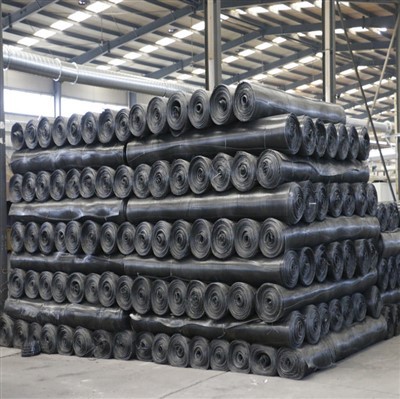
Hey there! If you’ve ever worked on a construction project—whether it’s building a road, a railway, or even stabilizing a wobbly piece of ground—you’ve probably heard of triaxial geogrid. But you might be wondering: What’s the cost of triaxial geogrid, anyway? As someone who’s been selling triaxial geogrid for years (I run a small but tight-knit team that supplies to contractors, civil engineers, and local governments across the country), I get that cost is one of the first questions you ask before picking any material. Let me break this down like I would to a guy on a job site who’s rushing to get quotes for a paving project—no stuffy jargon, just real talk about what goes into pricing, what affects the cost, and why it’s not just a random number we pull out of thin air.
First off, let’s make sure we’re on the same page about what triaxial geogrid actually is. Unlike uniaxial or biaxial geogrids, which are made with two or one set of ribs, triaxial geogrid has a three-way, triangular pattern that makes it way stronger at distributing load evenly. It’s basically the unsung hero of ground stabilization—you put it under roads so the asphalt doesn’t crack, under railway sub-ballast to keep the track from settling, and in soft soil so you don’t have to dig up 10 feet of mud to build a foundation. If you want to dive deeper into the basics, you can check out our Triaxial Plastic Geogrid page for specs and close-up shots of the grid pattern. That stuff isn’t just plastic stretched thin, by the way—we use high-density polyethylene (HDPE) that’s treated to resist UV rays, chemicals, and that rough job site wear and tear. That quality isn’t cheap, but it saves you money in the long run.
Now, let’s get to the good part: the actual cost. I know you don’t just want a price tag—you want context. Right now, as of 2024, the average cost of triaxial geogrid is between $0.60 and $1.80 per square foot. Wait, I hear you—“that’s a huge range!” Yeah, I get it. That spread isn’t random. There are a dozen factors that push the price up or down, and I’m gonna walk you through the biggest ones so you can figure out what you’re actually paying for.


First, and this is the biggest one: material grade and thickness. Not all HDPE is created equal. The cheap stuff is thin, has a rough finish, and might crack after a year of sitting in the sun. The good stuff—like what we supply—is thicker, has added UV stabilizers, and is molded to those perfect triangular ribs. Thicker grid means more material, so higher cost. But here’s the catch: a $0.50 per square foot grid might look cheaper on paper, but if it doesn’t hold up, you’ll have to come back in 2 years to replace it. We’ve had contractors come to us after buying that cheap stuff, saying it fell apart during installation—they had to double the order and redo the job, costing them way more than if they’d just gone with the better option up front.
Next, size and quantity. Duh. If you need a tiny roll for a small driveway repair, the per-square-foot cost is way higher than if you’re buying a full truckload for a 10-mile highway project. We’ve got a lot of regulars who are state DOTs—they buy hundreds of thousands of square feet at a time, so we can pass on volume discounts. But don’t sleep on small orders, either—we don’t charge you an arm and a leg for a single roll, because we know not every project is a mega highway. Just shoot us a note, and we’ll give you a custom quote whether you need 10 sq ft or 100,000.
Then there’s the application. What are you using this triaxial geogrid for? That changes the type of grid you need, which changes the cost. Let’s break that down: if you’re working on a railway, you need a grid that can handle the constant pounding of train cars—so it’s thicker, has higher tensile strength, and is treated to resist the oils and gravel in the sub-ballast. For that, check out our Triaxial Geogrid for Railway Sub-Ballast Stabilisation page—we’ve got specific specs for railroad projects. If you’re dealing with soft, mushy soil like in a wetland or a new subdivision, you need a grid that distributes load super evenly so the ground doesn’t sink. Our Triaxial Geogrid For Soft Soil Stabilization is made exactly for that, and it’s priced accordingly. For pavement, you need a grid that goes under asphalt to prevent cracking from traffic and temperature changes—our Triaxial Geogrid For Pavement Reinforcement is a popular pick for road crews, and it’s a little lighter than the railway grade but still tough enough to last 15+ years. And if you just need general ground reinforcement for a parking lot or a foundation, our standard Triaxial Geogrid For Ground Reinforcement is a great middle-of-the-road option that doesn’t break the bank.
Another factor: location and shipping. If you’re in our local area (let’s say within 500 miles of our warehouse), shipping is cheap—maybe $50-$100 per truckload. But if you’re on the West Coast or down in Florida, shipping costs add up, because we’re in the Midwest. We’ve worked out partnerships with freight companies to get better rates than most, so we pass that savings on to you, but it’s still something to consider when you’re budgeting. Also, if you need it fast (like a last-minute fix for a road that’s falling apart), expedited shipping will bump up the cost, but we usually can get it to you within 3 days if you’re in a pinch.
Wait, let’s talk about hidden costs, too. A lot of contractors I work with don’t think about these, but they add up. First, installation: triaxial geogrid is easy to put down, but if you get the wrong grade, it’s a pain to work with. The thin, cheap stuff stretches too much or tears when you’re rolling it out, so your crew might take twice as long to install it, which means higher labor costs. Our grid is flexible but tough, so your crew can lay it faster, saving you money on labor. Then there’s long-term maintenance: the good stuff we supply doesn’t need to be touched for 10-20 years. That means no patching roads, no regrading railway sub-ballast, no fixing settled foundations. The cheap stuff? You’re doing that every 3-5 years. I’ve had a customer tell me that switching from a competitor’s cheap grid to ours saved him $120,000 over 10 years in maintenance. That’s a huge number—way more than the extra he paid for the grid up front.
Let me give you a real example to make this concrete. Last month, a guy named Jake from a local paving company needed 15,000 sq ft of triaxial geogrid for a new subdivision road. He first got a quote from a big national supplier that was $0.55 per sq ft. But when he looked at the specs, he saw that it was only 1mm thick, no UV stabilizers, and tensile strength half of what we offer. Our quote was $1.10 per sq ft—double the national supplier. But here’s the thing: Jake told us that the national supplier’s grid had a reputation for cracking within 2 years on small subdivision roads. He went with us, and he said even though the upfront cost was higher, he didn’t have to worry about coming back to fix it. Plus, our grid was 1.5mm thick, had UV stabilizers, and a 15-year warranty. That’s the math you need to do, not just the per-square-foot price.
Also, let’s talk about where we source our materials. We buy our HDPE from a US-based manufacturer that’s been in business for 40 years. No cutting corners on materials—we test every roll before it leaves our warehouse. We’ve had people ask me if we can use cheaper HDPE from overseas, but I tell them no. That overseas stuff might cost less, but it has additives that don’t hold up in extreme temperatures, and it’s often inconsistent—one roll is strong, the next is weak. For construction, consistency is everything. You can’t have a section of road that’s reinforced with a strong grid and the next section with a weak one—it’ll crack unevenly.
Wait, what about warranties? That’s a big one. When you pay for a higher-quality triaxial geogrid, you’re usually getting a warranty. Our grid comes with a 10-15 year warranty against manufacturing defects and UV degradation. The cheap stuff? Maybe a 1-year warranty, if that. So if it falls apart within the first year, you’re on your own. That’s another cost to factor in—risk of failure.
Now, let’s address some common misconceptions. A lot of people think triaxial geogrid is just for big projects. No way—we supply homeowners doing a driveway extension, too. We have small rolls (1,000 sq ft or less) for that, and we price it so it’s affordable for residential use. Last quarter, we had a guy use it for his back yard to build a patio on soft clay—he paid around $800 total, including shipping, and said it’s been perfect for 2 years. So it’s not just for DOT projects—any project where the ground is weak or load is heavy, triaxial geogrid is worth it.
Another thing: regulations. Some state DOTs have specific specs for geogrids used on their projects. If you’re bidding on a state road project, you can’t just use any cheap grid—you have to meet their tensile strength, thickness, and UV requirements. We supply grid that meets all DOT standards across the country, so you don’t have to worry about failing an inspection. That’s another hidden benefit—we make sure our product is code-compliant, so you don’t have to do extra testing or risk getting rejected.
So, putting this all together: the cost of triaxial geogrid isn’t just a number—it’s a combination of material quality, quantity, application, shipping, and long-term value. You can get cheap grid, but it’s likely to cost you more in the long run. You can get expensive grid, but it doesn’t have to be overpriced. We pride ourselves on giving fair, transparent pricing—no hidden fees, no bait and switch. We’ll send you a quote that shows exactly what you’re paying for, so you can make an informed decision.
If you’re ready to get a real quote, or if you have questions about which type of triaxial geogrid is right for your project, just reach out to our team. We work with contractors, engineers, and homeowners all the time, and we’re happy to walk you through specs, pricing, and even installation tips. Don’t waste time shopping around for random quotes—we’ll give you a no-pressure, honest number that includes all the details.
At the end of the day, triaxial geogrid is an investment in your project. Whether it’s a small driveway, a railway, or a highway, you want something that will hold up for years, save you maintenance costs, and make your work look good. We’re here to help you find the right balance between cost and quality—no salesy talk, just real advice from people who’ve been in the game for years. So if you’re ready to move forward, get in touch—we’d love to work with you.
References:
- ASTM D6638, Standard Test Method for Determining Tensile Properties of Geogrids by the Single Rib Tension Test
- Federal Highway Administration (FHWA) Report: Geogrid Reinforcement for Flexible Pavements (2021)
- American Railway Engineering and Maintenance-of-Way Association (AREMA) Manual for Railway Engineering, Chapter 30: Track Structures (2022)
- Geosynthetic Institute (GSI) Bulletin 15: Triaxial Geogrids for Ground Stabilization (2023)
- High-density Polyethylene (HDPE) Properties for Geosynthetic Applications, Plastic Pipe and Fittings Association (PPFA) Technical Note (2024)