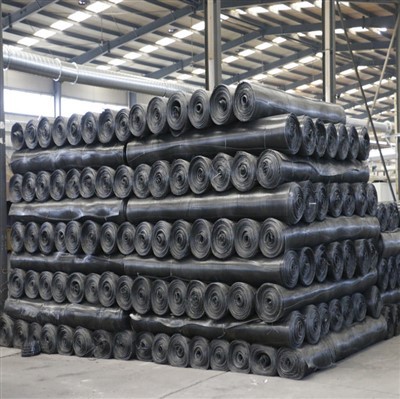
As a supplier of uniaxial geogrids, I've witnessed firsthand the critical role these materials play in civil engineering projects. One aspect that often gets overlooked but has a profound impact on the performance of uniaxial geogrids is the installation tension. In this blog, I'll delve into the details of how installation tension affects the performance of uniaxial geogrids and why it's crucial to get it right.
Understanding Uniaxial Geogrids
Before we discuss the impact of installation tension, let's first understand what uniaxial geogrids are. Uniaxial geogrids are high - strength, polymeric materials that are primarily designed to provide reinforcement in one direction. They are commonly used in a variety of civil engineering applications, such as soil reinforcement, retaining wall construction, and pavement reinforcement.
You can find more information about the different types of uniaxial geogrids and their applications on our website: Uniaxial Geogrids For Civil Engineering. These geogrids are typically made from high - density polyethylene (HDPE), which offers excellent durability and resistance to environmental factors. For more details on HDPE uniaxial geogrids, visit Hdpe Uniaxial Geogrid.
The Concept of Installation Tension
Installation tension refers to the amount of force applied to the uniaxial geogrid during the installation process. This tension is crucial because it determines how effectively the geogrid will interact with the surrounding soil or other materials. When a geogrid is installed with the appropriate tension, it can better distribute loads and provide the necessary reinforcement.
Impact on Load Distribution
One of the primary functions of a uniaxial geogrid is to distribute loads over a larger area. When the geogrid is installed with insufficient tension, it may not be able to fully engage with the soil. As a result, the load will not be distributed evenly, and the geogrid may not perform as expected. For example, in a soil reinforcement application, if the geogrid is too slack, the soil may move independently of the geogrid, leading to settlement and instability.
On the other hand, when the geogrid is installed with the right amount of tension, it can form a strong bond with the soil. This allows the geogrid to transfer the load from the soil to a wider area, reducing the stress on any single point. In a retaining wall construction, proper installation tension ensures that the geogrid can effectively resist the lateral pressure of the soil, preventing the wall from collapsing. You can learn more about using uniaxial geogrids for retaining wall construction at Uniaxial Geogrid For Retaining Wall Construction.


Influence on Soil - Geogrid Interaction
The installation tension also affects the interaction between the soil and the geogrid. A well - tensioned geogrid can increase the frictional resistance between the soil and the geogrid. This frictional force is essential for the geogrid to hold the soil in place and prevent it from sliding or eroding.
In a pavement reinforcement application, for instance, a uniaxial geogrid installed with proper tension can improve the stability of the pavement structure. The geogrid helps to distribute the traffic loads and reduces the deformation of the pavement. The increased frictional resistance between the geogrid and the pavement materials also prevents the formation of cracks and rutting. To know more about one - way stretch uniaxial geogrids for pavement, visit One - way Stretch Uniaxial Geogrid For Pavement.
Effect on Long - Term Performance
The long - term performance of uniaxial geogrids is significantly influenced by the installation tension. If the geogrid is installed with too little tension, it may experience excessive stretching over time. This stretching can lead to a loss of strength and effectiveness, reducing the geogrid's ability to provide reinforcement.
Conversely, if the installation tension is too high, it can cause damage to the geogrid, such as tearing or breaking. This damage can compromise the integrity of the geogrid and lead to premature failure of the structure. Therefore, finding the optimal installation tension is crucial for ensuring the long - term performance and durability of the uniaxial geogrid.
Determining the Optimal Installation Tension
Determining the optimal installation tension for a uniaxial geogrid depends on several factors, including the type of application, the soil properties, and the design requirements. In general, it's recommended to follow the manufacturer's guidelines and industry standards.
For soil reinforcement applications, the installation tension should be sufficient to ensure that the geogrid can effectively hold the soil in place. This may require conducting soil tests to determine the soil's shear strength and other properties. In retaining wall construction, the tension should be calculated based on the height of the wall, the lateral pressure of the soil, and the design load.
Importance of Professional Installation
Given the critical role of installation tension in the performance of uniaxial geogrids, it's essential to have the geogrids installed by professionals. Professional installers have the knowledge and experience to determine the appropriate installation tension and ensure that the geogrid is installed correctly.
They can also use specialized equipment to measure and apply the tension accurately. This helps to minimize the risk of installation errors and ensures that the uniaxial geogrid performs as expected.
Conclusion
In conclusion, the installation tension has a significant impact on the performance of uniaxial geogrids. It affects load distribution, soil - geogrid interaction, and long - term performance. By understanding the importance of installation tension and ensuring that it is applied correctly, we can maximize the effectiveness of uniaxial geogrids in various civil engineering applications.
If you're considering using uniaxial geogrids for your next project, we're here to help. Our team of experts can provide you with detailed information about our products and assist you in determining the optimal installation tension. We also offer a wide range of uniaxial geogrids for different applications, such as Uniaxial Geogrids For Soil Reinforcement.
Don't hesitate to reach out to us to discuss your project requirements and explore how our uniaxial geogrids can meet your needs. We look forward to working with you and helping you achieve a successful and durable civil engineering project.
References
- Bonaparte, R., & Christopher, B. R. (1994). Geosynthetics in soil reinforcement. Prentice - Hall.
- Koerner, R. M. (2012). Designing with geosynthetics. Pearson.
- Schlosser, F., & Long, A. (1990). Soil - geosynthetic interaction. Elsevier.