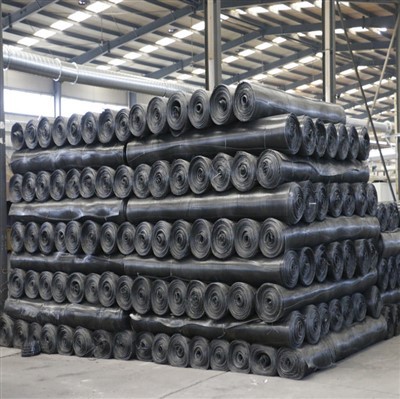

The permeability coefficient of geomembrane is a crucial parameter that determines its effectiveness in various applications, especially in containment and environmental protection. As a geomembrane supplier, we understand the significance of this coefficient and its impact on the performance of our products.
Understanding the Permeability Coefficient
The permeability coefficient, often denoted as "k," is a measure of the ability of a material to allow the passage of a fluid (usually water) through it. In the context of geomembranes, it represents the rate at which water or other fluids can permeate through the membrane. A lower permeability coefficient indicates better impermeability, which is desirable in most applications.
The permeability coefficient is typically expressed in units of length per time, such as centimeters per second (cm/s) or meters per day (m/d). It is determined through laboratory tests, where a sample of the geomembrane is subjected to a specific hydraulic head, and the flow rate of the fluid through the membrane is measured.
Factors Affecting the Permeability Coefficient
Several factors can influence the permeability coefficient of a geomembrane. These include:
- Material Type: Different types of geomembranes, such as HDPE, PVC, and EPDM, have different permeability characteristics. HDPE geomembranes, for example, are known for their low permeability and excellent chemical resistance. You can learn more about Hdpe Geomembrane Sheet and Hdpe Geomembrane Liner on our website.
- Thickness: Thicker geomembranes generally have lower permeability coefficients. This is because a thicker membrane provides more resistance to the flow of fluid.
- Temperature: The permeability coefficient of a geomembrane can increase with temperature. Higher temperatures can cause the material to expand and become more porous, allowing for greater fluid flow.
- Chemical Exposure: Exposure to certain chemicals can affect the permeability of a geomembrane. Some chemicals may cause the material to swell or degrade, increasing its permeability. For PVC geomembranes, you can find detailed information about PVC Geomembrane Liner.
- Installation Quality: Proper installation is essential for ensuring the low permeability of a geomembrane. Any damage or improper sealing during installation can lead to increased permeability.
Importance of the Permeability Coefficient in Geomembrane Applications
The permeability coefficient plays a critical role in the performance of geomembranes in various applications, including:
- Landfill Liners: In landfill applications, geomembranes are used as liners to prevent the leaching of hazardous waste into the surrounding soil and groundwater. A low permeability coefficient is essential to ensure the long - term containment of waste and protect the environment.
- Pond and Reservoir Liners: Geomembranes are used to line ponds and reservoirs to prevent water seepage. A low permeability coefficient helps to maintain the water level and reduce water loss.
- Mining Applications: In mining, geomembranes are used to contain tailings and prevent the release of harmful substances into the environment. A low permeability coefficient is crucial for the safe disposal of mining waste.
- Agricultural Applications: Geomembranes can be used in agricultural applications, such as irrigation canals and water storage ponds. A low permeability coefficient helps to conserve water and improve the efficiency of water use.
Measuring the Permeability Coefficient
There are several methods for measuring the permeability coefficient of geomembranes. The most common method is the constant - head test, where a sample of the geomembrane is placed in a permeameter, and a constant hydraulic head is applied. The flow rate of the fluid through the membrane is then measured, and the permeability coefficient is calculated using Darcy's law.
Another method is the falling - head test, which is used for materials with lower permeability. In this test, the hydraulic head decreases over time, and the permeability coefficient is calculated based on the change in head and the flow rate.


Our Geomembrane Products and Permeability
As a geomembrane supplier, we offer a wide range of geomembrane products with different permeability coefficients to meet the diverse needs of our customers. Our HDPE geomembranes have extremely low permeability coefficients, making them ideal for applications where high - level impermeability is required.
We ensure that our products are tested rigorously in our state - of - the - art laboratories to meet the highest industry standards. Our quality control measures include testing for permeability, tensile strength, and chemical resistance.
Conclusion
The permeability coefficient of geomembrane is a vital parameter that determines its performance in various applications. Understanding the factors that affect the permeability coefficient and choosing the right geomembrane for a specific application is crucial for ensuring the long - term success of a project.
If you are in need of high - quality geomembranes for your project, we invite you to contact us for a detailed discussion. Our team of experts can help you select the most suitable geomembrane based on your specific requirements and provide you with all the necessary technical support. We look forward to working with you to meet your geomembrane needs.
References
- ASTM D5887 - Standard Test Method for Determining the Permeability of Geomembranes to Liquids.
- Giroud, J. P., & Bonaparte, R. (1993). Geomembrane permeability. Geosynthetics International, 1(1), 1 - 30.
- Rowe, R. K. (2005). Geomembrane performance: A review. Geotextiles and Geomembranes, 23(1), 1 - 26.