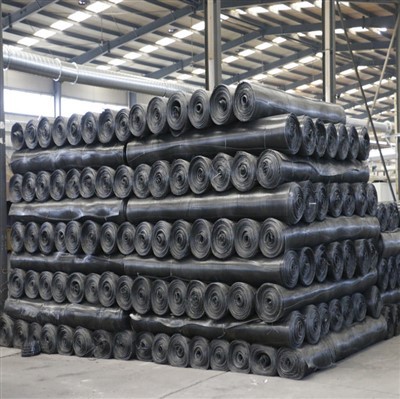
In the field of geotechnical engineering, soil stability is a crucial factor that significantly influences the performance and longevity of infrastructure projects. One of the innovative solutions that have emerged in recent years to enhance soil stability is the use of Biaxial Plastic Geogrid. As a reputable Biaxial Plastic Geogrid supplier, I am excited to delve into how this remarkable product affects the lateral deformation of soil.
Understanding Biaxial Plastic Geogrid
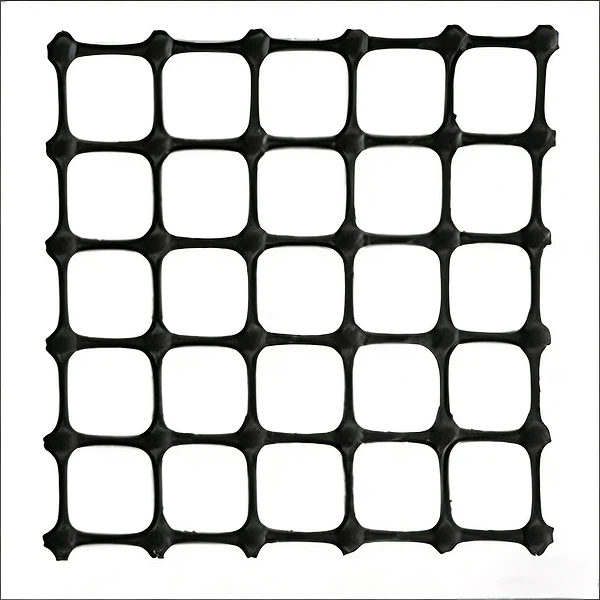
Biaxial Plastic Geogrid is a high - strength geosynthetic material made from polymers such as polypropylene. It is characterized by a grid - like structure with apertures that allow soil particles to interlock with the grid. This interlocking mechanism is the key to its effectiveness in soil reinforcement. The biaxial design means that the grid has high strength in both the machine - direction (MD) and the cross - machine direction (CD), providing balanced reinforcement in two perpendicular directions.
You can find more information about our Biaxial Plastic Geogrid on our website.
The Problem of Lateral Soil Deformation
Lateral soil deformation is a common issue in geotechnical engineering. When a load is applied to the soil surface, such as the weight of a building, a road, or a retaining wall, the soil tends to spread out laterally. This can lead to a variety of problems, including settlement, slope instability, and failure of the structure. In the case of roads, lateral soil deformation can cause rutting and cracking, reducing the service life of the pavement. For retaining walls, it can result in the wall's movement and potential collapse.
How Biaxial Plastic Geogrid Affects Lateral Deformation
Mechanism of Interlocking
The primary way Biaxial Plastic Geogrid affects lateral soil deformation is through the interlocking of soil particles with the grid. When the geogrid is placed within the soil, the soil particles fill the apertures of the grid. As the soil is subjected to a load, the grid restrains the movement of the soil particles. The interlocking between the soil and the grid creates a composite system, where the geogrid provides additional strength and stiffness to the soil mass.
This interlocking mechanism is similar to the principle of a reinforced concrete structure, where the steel bars provide tensile strength to the concrete. In the case of the Biaxial Plastic Geogrid and soil system, the geogrid resists the lateral movement of the soil, preventing it from spreading out under load.

Redistribution of Stress
Another important aspect is the stress redistribution effect of the Biaxial Plastic Geogrid. When a load is applied to the soil surface, the stress is initially concentrated in the area directly under the load. However, when a geogrid is present, it helps to distribute the stress over a larger area. The geogrid acts as a load - spreading layer, reducing the stress intensity at the soil - structure interface.
This stress redistribution reduces the likelihood of local soil failure and lateral deformation. By spreading the load, the geogrid allows the soil to support the load more efficiently, enhancing the overall stability of the soil mass.
Reinforcement of Shear Strength
Biaxial Plastic Geogrid also reinforces the shear strength of the soil. Shear strength is the ability of the soil to resist sliding along a plane. When the geogrid is embedded in the soil, it increases the shear resistance of the soil by providing additional frictional and interlocking forces.
In a slope or an embankment, for example, the geogrid helps to prevent the soil from sliding downwards. The interlocking between the geogrid and the soil particles creates a stable structure that can withstand the shear forces acting on the slope. This reinforcement of shear strength is particularly important in areas with steep slopes or unstable soil conditions.
Case Studies and Experimental Results
Numerous case studies and experimental research have demonstrated the effectiveness of Biaxial Plastic Geogrid in reducing lateral soil deformation. In a road construction project, for instance, the installation of Biaxial Plastic Geogrid under the pavement significantly reduced the rutting and cracking caused by traffic loads. The geogrid helped to distribute the load more evenly, preventing the soil from deforming laterally and maintaining the integrity of the pavement.
In laboratory tests, soil samples with and without Biaxial Plastic Geogrid were subjected to lateral loading. The results showed that the soil reinforced with the geogrid had a much lower lateral deformation compared to the unreinforced soil. The geogrid effectively constrained the soil particles, reducing their movement and improving the overall stability of the soil mass.
Applications of Biaxial Plastic Geogrid
Biaxial Plastic Geogrid has a wide range of applications in geotechnical engineering. It is commonly used in road construction, railway embankments, retaining walls, and slope stabilization.
In road construction, Biaxial Geogrid Rolls For Soil Stabilisation can be placed between the subgrade and the base layer to improve the load - bearing capacity of the road. The geogrid helps to prevent the lateral movement of the soil, reducing rutting and extending the service life of the road.
For retaining walls, BX Geogrids For Ground Stabilisation can be used to reinforce the backfill soil. The geogrid provides additional support to the wall, preventing the soil from pushing against the wall and causing its failure.
Advantages of Using Biaxial Plastic Geogrid
There are several advantages of using Biaxial Plastic Geogrid in soil reinforcement. Firstly, it is a cost - effective solution. Compared to traditional methods of soil stabilization, such as using piles or concrete structures, the use of geogrid is relatively inexpensive.
Secondly, Biaxial Plastic Geogrid is easy to install. It can be rolled out on the soil surface and fixed in place with stakes or other fastening methods. This reduces the construction time and labor costs.
Thirdly, the geogrid is environmentally friendly. It is made from recyclable polymers and does not cause pollution to the environment. Additionally, it can be used in a variety of soil conditions, making it a versatile solution for different geotechnical projects.
Conclusion
In conclusion, Biaxial Plastic Geogrid has a significant impact on the lateral deformation of soil. Through the mechanisms of interlocking, stress redistribution, and reinforcement of shear strength, it effectively reduces the lateral movement of soil under load. This not only improves the stability of soil - based structures but also enhances the performance and longevity of infrastructure projects.
If you are interested in our Biaxial Plastic Geogrid products and would like to discuss your specific project requirements, please feel free to contact us. We are committed to providing high - quality geogrid solutions to meet your needs.
References
- Koerner, R. M. (2012). Designing with Geosynthetics. Pearson Prentice Hall.
- Bonaparte, R., & Christopher, B. R. (1993). Geosynthetic - reinforced soil retaining walls. Transportation Research Record, 1390, 1 - 12.
- Mitchell, J. K., & Solymar, L. (1990). Geosynthetics in geotechnical engineering. Journal of Geotechnical Engineering, 116(1), 1 - 24.