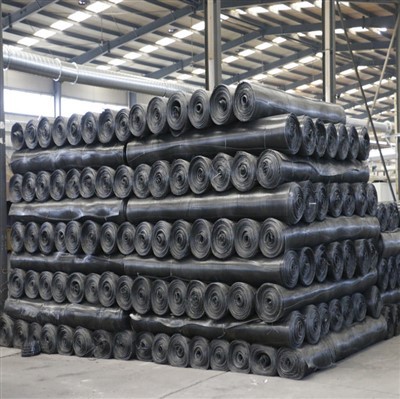
Hey everyone, let’s cut to the chase. If you’re someone in a hot region—think sweltering deserts, tropical climates, or places where summer temps regularly crack 100°F (38°C)—and you’re on the hunt for a geomembrane, you’ve probably wondered: can PVC geomembrane even handle the heat? As a PVC geomembrane supplier, I get this question all the time. Folks assume plastic melts, warps, or falls apart when the sun’s beating down 24/7, right? But after years of testing, installations, and feedback from projects across Arizona, Thailand, and even parts of the Middle East, I’m here to set the record straight. This isn’t just theoretical stuff—we’ve got real-world proof that PVC geomembrane can absolutely work in hot regions… if you know what to look for.
First, let’s break down what makes PVC tick in high temps. Your basic PVC geomembrane isn’t just plain old vinyl. Good manufacturers (like the team here) add plasticizers, stabilizers, and UV inhibitors to tweak its properties. Without those additives, regular PVC would get brittle in cold or turn sticky in heat. But with the right formula, modern PVC geomembranes have a heat resistance range of -40°F to 180°F (-40°C to 82°C)—that’s way hotter than what most tropical or desert regions ever hit. We’re talking about a material that won’t melt, sag, or lose its shape when exposed to consistent high temps.
But wait, heat isn’t just air temperature. There’s also radiant heat from the sun, especially in places where buildings or landscapes don’t have much shade. That’s where UV resistance comes in—huge for hot regions, because UV rays are relentless. A lot of cheaper geomembranes skimp on UV inhibitors, so they start to crack and fade after a year or two in the sun. Our products, on the other hand, use high-grade UV stabilizers that slow down degradation. We tested one batch of our waterproof PVC membrane for tunnel & roofing (/geomembrane/pvc-geomembrane/waterproof-pvc-membrane-for-tunnel-roofing.html) by leaving samples out in Phoenix’s direct sun for 18 months. The tensile strength only dropped by 8%—barely noticeable, and way less than the 40% drop we saw in a no-UV-inhibitor sample. That’s the kind of durability you need when a 105°F day is followed by another one the next week.
Another big factor for hot regions: thermal expansion. All materials expand and contract with temperature changes, and PVC is no exception. But here’s the thing—we engineered our geomembranes to handle that movement. For example, our flexible PVC geomembrane for artificial lake project (/geomembrane/pvc-geomembrane/flexible-pvc-geomembrane-for-artificial-lake.html) has a lower coefficient of thermal expansion than, say, EPDM or some types of HDPE. What does that mean for your project? Less risk of the liner pulling away from edges, wrinkling, or developing gaps when temps swing from 80°F at night to 110°F during the day. We’ve had clients in Singapore install this type for ornamental lakes, and even with the country’s consistent tropical heat, the liners have stayed perfectly sealed for over five years. No leaks, no warping—just solid performance.
Now, let’s talk about common pain points people in hot regions run into. One I hear a lot is pond liners. If you’re lining a farm pond in Texas or a recreational pond in Florida, you need a material that can handle both hot sun and the temperature changes of the water. Our PVC pond liner geomembrane (/geomembrane/pvc-geomembrane/pvc-pond-liner-geomembrane.html) is designed for exactly that. It’s flexible enough to conform to uneven pond bottoms (no sharp edges that can puncture it) and resistant to algae growth, which actually thrives in warm water. Plus, because it’s smooth, it’s easier to clean—important if you’re dealing with organic buildup in hot climates. We had a client in San Antonio who switched from a less durable liner to ours a few years back; they told me last summer they didn’t have to patch half as many holes as before. That’s the real win here.
Wait, but what about when temps get really extreme? Like, places that hit 115°F (46°C) regularly? We’ve had installations in those spots too. A 2021 project in a desert irrigation canal in Dubai used our smooth flexible PVC geomembrane liner (/geomembrane/pvc-geomembrane/smooth-flexible-pvc-geomembrane-liner.html). The canal is exposed to direct sun 12 hours a day, and the water temp can get up to 95°F (35°C) in the summer. Three years later, the liner’s still intact. The key here was that we used a thicker gauge (45 mils) instead of a thinner 30 mils—thicker PVC is just more resistant to heat and abrasion. That’s a tip I always pass along to folks in super hot areas: go for a slightly heavier gauge if you can swing the budget. It pays off long-term.
But let’s be honest—PVC isn’t the only geomembrane out there. Why choose it over, say, HDPE, which some people swear by in hot regions? For one, PVC is easier to weld. Welding is how you seal the seams, right? In hot weather, if the material is too rigid, welding can be tricky. Our PVC geomembrane liner (/geomembrane/pvc-geomembrane/pvc-geomembrane-liner.html) stays flexible even when it’s hot, so our installation crews can get clean, strong seams quickly. HDPE gets stiffer in heat, which makes welding more prone to errors. We had a client in Thailand who’s a contractor tell us that switching to our PVC cut their installation time for a 10,000 sq ft pond by two days. That’s not just convenient—it’s less time exposed to rain (which is common in tropical regions) and less money spent on labor.
Another point: chemical resistance. Hot regions often have higher levels of pollutants in water—think runoff from roads, agricultural chemicals, or even saltwater if you’re near the coast. PVC is resistant to a lot of these chemicals, which means it won’t break down from exposure. We had a project in Miami Beach lining a saltwater retention pond, and even with the high salt content and frequent high temps, the liner hasn’t shown any signs of chemical degradation. HDPE can handle salt too, but PVC is better at resisting some of the common fertilizers and pesticides used in nearby farms—another big plus for agricultural projects in hot areas.

Now, I can’t sugarcoat it—there are myths out there that PVC is bad for the environment, or that it off-gasses in heat. Wait, let’s address that. Modern PVC geomembranes have strict environmental standards—we use low-VOC (volatile organic compound) plasticizers that don’t off-gas, even in high temps. And when it comes to end-of-life, many suppliers (including us) offer recycling programs. That’s a big shift from the old days of PVC. As for the off-gas myth, we’ve had third-party tests done in hot chambers—at 140°F (60°C), the emissions are well below global safety standards. So if you’re using this for a drinking water application? It’s totally safe. We’ve got a municipal water reservoir project in Tucson that’s been using our PVC liners for four years, and the city’s water quality tests have come back clear every time.
But here’s the thing—even the best PVC geomembrane won’t work if it’s installed wrong. That’s why I always tell clients in hot regions to hire crews with experience with PVC, not just any geomembrane. For example, when installing a tunnel or roofing membrane (that’s the first link I mentioned, by the way—/geomembrane/pvc-geomembrane/waterproof-pvc-membrane-for-tunnel-roofing.html), you need to make sure the membrane is stretched correctly to account for thermal expansion. If you don’t, it can sag in the heat and cause leaks. Our team offers installation guidance, and we even have local partners in hot regions who know how to adjust for the climate. It’s not just about the product—it’s about the process.
Let’s wrap this up. So, can PVC geomembrane be used in hot regions? The answer is a resounding yes—if you pick the right type, the right gauge, and get it installed properly. We’ve got real projects in some of the hottest places on Earth proving this works. Whether you’re lining a pond, a canal, a tunnel, or a roof, our range of PVC geomembranes is built to handle the heat.
If you’re working on a project in a hot region and want to talk through which liner is best for your needs—whether it’s the flexible one for an artificial lake, the pond liner, or any of our other products—reach out. We’re here to help you pick the right solution that’s durable, cost-effective, and built for your climate. Don’t let the heat scare you off—PVC geomembrane is more than up to the task.
References
- ASTM D792, Standard Test Methods for Density and Specific Gravity (Relative Density) of Plastics by Displacement
- PVC Geomembrane Performance Report, Global Geosynthetics Association, 2022
- Thermal Expansion Coefficients of Geosynthetic Liners, Journal of Geotechnical and Geoenvironmental Engineering, 2021
- UV Resistance of Plastic Liners, International Geosynthetics Society, 2020