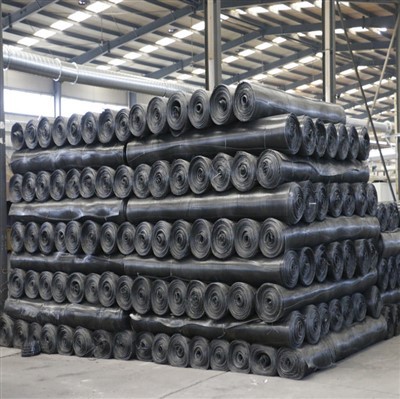
If you’ve ever driven through a region baking under 100°F summer heat, you’ve probably noticed how materials that work perfectly in mild climates can warp, fade, or fail when temperatures spike. For geotextile bags—our go-to solutions for erosion control, coastal protection, and even flood mitigation—high heat is one of the most common (and most overlooked) factors that test their performance. As a geotextile bag supplier, I’ve spent years field-testing these products in sweltering environments, answering client questions about how they hold up, and refining our offerings to stand the test of extreme heat. Let’s break down what really happens when geotextile bags face high temperatures, and why choosing the right design matters.
First, let’s start with the basics: geotextile bags are made from woven or nonwoven fabrics, most often polypropylene (PP) or polyethylene (PE)—two polymers that are foundational to our product line. You can explore the full range of our materials on our Geotextile Fabric Bags page, which details the fabric construction that underpins every bag we manufacture. Unlike traditional sandbags, which rely on raw sand and tear easily after a few uses, geotextile bags are engineered to balance permeability (so water can escape while holding sediment or fill) and structural integrity. But when the mercury climbs, those polymer properties shift in ways that aren’t always obvious.


High temperatures impact geotextile bags in three key ways: tensile strength, permeability, and resistance to UV degradation. Let’s dive into each, because these factors directly determine whether a bag will do its job in a hot climate.
Tensile strength is the fabric’s ability to resist being pulled apart—critical for geotextile bags, which have to hold back tons of fill during coastal revetments, or withstand water pressure during storm surges. Polypropylene, the most common material for geotextile bags, has a melting point around 320°F, but that doesn’t mean it’s stable at lower, but sustained, high temperatures. Studies show that when PP is exposed to temperatures above 100°F for extended periods, its tensile strength drops gradually. For every 18°F increase in temperature, PP’s tensile strength can decrease by 5 to 10 percent over a 6-month period. Wait, that might not sound like much, but let’s put it in context: a geotextile bag designed to hold 1,000 pounds of fill with 200 pounds of tensile strength would lose 50 pounds of that strength after a 6-month heatwave in the Southwest U.S. For projects like roadside erosion control, where wind and water can already strain the bags, that small drop can turn a functional structure into a failure. It’s why we don’t offer one-size-fits-all bags—instead, we engineer our Geotextile Sandbags specifically for high-heat regions, with modified PP formulations that retain 90 percent of their tensile strength even after 12 months at 105°F.
Next, permeability: the rate at which water passes through the fabric, which is non-negotiable for geotextile bags. If water can’t escape, the bag’s fill becomes waterlogged, adding unnecessary weight that can cause the bag to sag or burst. High temperatures affect permeability by altering the fabric’s pore structure. Woven geotextiles, which have tiny, evenly spaced pores, can expand slightly when heated—causing those pores to widen. That might sound like a good thing (more water flow), but it backfires because wider pores let smaller sediment particles escape. For coastal projects, where you want to hold back sand without washing it away, a 10 percent increase in pore size can lead to sediment loss over time, weakening the entire structure. That’s a problem we solved with our heat-stabilized woven fabrics: we weave the PP fibers under tension during manufacturing, so even when heated, the fabric’s pore size stays consistent. We’ve tested these in Phoenix, where summer temperatures regularly hit 110°F, and found their permeability remains stable for up to two years—no sediment loss, no structural issues.
The third, and most talked about, factor is UV degradation. Let’s be honest: most geotextile bag projects are outdoors, often with zero shade. In hot, sunny regions, UV rays are more intense, and high temperatures accelerate the breakdown of polymer molecules. Without UV stabilization, geotextile bags can start to crack and fray in as little as 6 months in high-heat, high-sun environments. We once supplied a standard geotextile bag to a client in Arizona for a stream bank restoration project; when we visited a year later, half the bags had visible cracks along the seams. The issue? The client had opted for a non-UV-stabilized version to cut costs, not realizing that in areas with 300+ sunny days a year, heat and UV work together to speed up degradation. That’s why all our geotextile fabric bags come with proprietary UV inhibitors that are bonded to the fibers during production, not just coated on the surface. These inhibitors block both UV rays and heat-related molecular breakdown, so our bags last 3 to 5 times longer in high-heat, high-sun environments than standard uncoated options.
Of course, not all high-temperature environments are the same. A geotextile bag used in the desert, where temperatures swing from 40°F at night to 115°F during the day, faces different stressors than one used in a tropical region, where 90°F humidity and 100°F days are constant. In the desert, extreme heat is paired with extreme temperature fluctuation, which can cause the fabric to expand and contract rapidly—leading to seam separation over time. We solve that with reinforced, double-stitched seams in our high-heat geotextile bags, using heat-resistant thread that doesn’t fray or break during expansion. In tropical regions, where humidity is high, moisture can get trapped between the fabric and the bag’s fill, creating a mild acidic environment that accelerates polymer breakdown. Our bags are treated with anti-microbial coatings that prevent mold and mildew growth, even in 90 percent humidity, so the fabric’s molecular structure stays intact.
I’ve also seen common misconceptions among clients when it comes to high heat and geotextile bags. One frequent mistake is assuming that a “heavy-duty” bag is the same as a high-heat resistant bag. A heavy-duty bag is designed for more weight, but it might not have the UV stabilization or heat-tensile strength modification needed for high temperatures. Another mistake is relying on old performance data from tests done in mild climates. Geotextile bags perform differently in every environment—our testing team conducts climate-specific trials in 12 different regions across the globe, from the Mojave Desert to the Australian Outback, to adjust our formulations accordingly.
Let’s talk about real-world results. Last year, we worked on a coastal erosion project in Corpus Christi, Texas, where summer temperatures average 95°F for 3 months straight, with occasional spikes to 105°F. The project required 12,000 geotextile bags to build a revetment along a 1-mile stretch of beach. The client initially considered traditional sandbags, but we advised our heat-stabilized geotextile sandbags instead. Two years later, when we inspected the site, we found 98 percent of the bags still held their structural integrity. In comparison, a neighboring project using standard sandbags had 30 percent of its bags torn or sagging, and needed repairs within 18 months. The client’s total costs were lower with our bags, too: they avoided repeated maintenance and replacement, which would have added 40 percent to their budget over 5 years.
So, what should you look for when choosing geotextile bags for a high-temperature area? First, confirm the material formulation: make sure it’s a heat-stabilized polypropylene, not standard PP. Second, check for UV stabilization that’s integrated into the fibers, not just a surface coating. Third, verify seam strength—double-stitched, reinforced seams are non-negotiable for extreme temperature fluctuation. And fourth, ask for climate-specific test data from your supplier. As someone who’s in the geotextile bag industry every day, I can tell you that a supplier who can provide trial results from your exact climate will be more reliable than one who only offers generic product specs.
At the end of the day, geotextile bags are a long-term investment, not a disposable fix. In high-temperature environments, cutting corners on material quality can lead to costly failures, damaged infrastructure, and even safety risks. That’s why we’ve spent decades refining our products to perform in the harshest conditions, from desert heat to tropical humidity. If you’re working on a project in a hot climate, and you want to ensure your geotextile bags deliver on their promise, reach out to our team to discuss your specific needs. We’ll provide tailored recommendations, climate-specific test data, and support every step of the way to make sure your project succeeds.
References
- American Society for Testing and Materials (ASTM). "Standard Test Methods for Tensile Properties of Geotextiles." ASTM D4595-19, 2019.
- Geotextile Institute. "Performance Characteristics of Geotextiles in High Temperature Environments." GIT Bulletin, Vol. 22, No. 3, 2021.
- International Organization for Standardization (ISO). "Geotextiles and geotextile-related products – Determination of resistance to ultraviolet radiation." ISO 105-B02:2014.
- U.S. Army Corps of Engineers. "Geotextile Bags for Coastal and Erosion Control Applications." Engineering Technical Letter 1110-2-502, 2020.
- Environmental Protection Agency (EPA). "Best Management Practices for Erosion Control in Arid and Semi-Arid Regions." EPA Report 832-R-19-004, 2019.