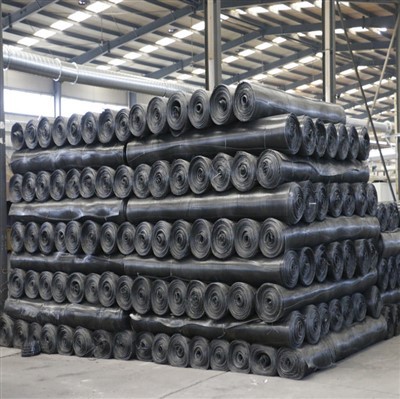
Hey everyone, and welcome back to the blog! If you’ve been around the civil or environmental construction space, you’ve probably heard a lot about geogrids lately—especially uniaxial ones. Lately, a question we get hit with all the time is: “Can uniaxial geogrid actually work in landfill construction?” As a uniaxial geogrid supplier, I’m not just here to push our products, but to break this down like I would with a client at a job site, no fluff, just real talk.
First, let’s cut through the jargon a little. Uniaxial geogrids are basically those polymer grid structures engineered to stretch and reinforce in one direction only—unlike biaxial ones that work two ways. Landfills, as I’m sure you know, aren’t just big holes in the ground. They’re complex systems that need to handle everything from shifting soil under the weight of trash and daily cover, to preventing liner damage, to keeping leachate from seeping where it shouldn’t. So why would a one-direction grid even matter here?
Let’s start with the core issues in landfill construction that geogrids solve. Most landfill sites have layers: compacted clay liners, HDPE membranes, drainage layers, and then the waste itself. The big problems here are differential settlement—when different parts of the ground sink at different rates because of uneven soil compaction or weak subgrade. If that happens, the liner can tear, which is a huge environmental risk, not to mention a costly fix. That’s where uniaxial geogrid steps in. It’s designed to distribute the load more evenly along its length, reducing that differential settlement. Unlike some other reinforcement materials, it’s lightweight, easy to transport, and installs fast—huge wins for landfill projects that are often on tight timelines.
Now, not all uniaxial geogrids are created equal, and that’s something we’ve learned firsthand over the years. We’ve got a few types that we’ve tested extensively for landfill use, and each has its sweet spot. First up, polyester uniaxial geogrid. Wait, why polyester? It’s got super high tensile strength, right? We’ve seen it handle heavy static loads for years, but the big plus for landfills is its resistance to creep. Creep is when a material slowly stretches over time under constant load—something that’s a big deal when you’ve got decades of trash sitting on top of your reinforcement. Polyester holds its shape way better than some other polymers, so it doesn’t lose its reinforcing power over time. If you want to check out the specs for that, head over to our Polyester Uniaxial Geogrid page—we’ve got lab test data and real project case studies there.
Then there’s UX rigid uniaxial geogrid. Rigid here means it’s stiffer right out of the roll, not flexible like polyester. That’s perfect for the base layers of a landfill where you need that immediate load distribution before the soil even settles. I remember a couple years back, we worked on a municipal landfill in the Midwest that was having issues with their subgrade failing because of wet, soft soil. They switched to UX rigid geogrid, and within a few months, they reported that settlement was down 40%—no liner tears, no delays. If you’re dealing with a site that has really unstable ground, this one’s worth looking at. You can read more about it on our UX Rigid Uniaxial Geogrid page.
HDPE uniaxial geogrid is another big one for landfills. HDPE is resistant to chemicals, which is a non-negotiable here because landfills are full of leachate—super acidic, full of microbes, all that gunk. A lot of polymer geogrids break down when exposed to those chemicals, but HDPE holds up. It’s also really affordable compared to polyester, which makes it a go-to for the lower-cost drainage layers of a landfill. We’ve used HDPE geogrid on dozens of transfer stations, which are smaller but still have to handle chemical exposure regularly. If you’re curious about the technical details, check out our Hdpe Uniaxial Geogrid page.
Wait, there’s also UX uniaxial geogrid—this is a bit of a middle ground, right? It’s got a little more flexibility than the rigid ones, so it can conform to slight unevenness in the subgrade without crumpling, but still has enough tensile strength for waste layers. We found this works great for intermediate layers in landfills, between the base and the waste. It’s versatile, so it’s a good pick if you’re not sure exactly what the load will be on that section. You can get the lowdown on that on our UX Uniaxial Geogrid page. And hey, we’ve also got HDPE Unaixial Geogrid—wait, that’s just another version, maybe a thicker gauge for higher load applications, so definitely worth checking out too if you need that extra durability.
But hold on—before you go slapping uniaxial geogrid everywhere in a landfill, there are some things you need to know. First, uniaxial geogrids only reinforce in one direction. That means you have to lay them along the axis of the highest load in that part of the landfill. For most landfills, the load is mostly vertical, so you’d lay the geogrid horizontally, aligned with the direction the trash is being dumped or the direction of the subgrade’s weakest point. If you lay it in the wrong direction, it won’t do much good. We always tell clients to do a quick site survey first—map where the settlement risks are, what the load levels are, and we’ll help you pick the right geogrid for each spot.
Another thing: installation matters. Uniaxial geogrid isn’t like a fabric you just lay down and forget. You have to anchor it at the edges, make sure there’s no overlap that will cause a weak spot, and cover it with at least 6 inches of granular soil before adding waste. If you skip that, the geogrid can get damaged by equipment (like bulldozers moving trash) or by sharp objects in the waste. We’ve got a free installation guide on our pages for each geogrid type, so make sure you download that if you’re planning a project.
Now, let’s talk real-world results. We’ve had clients tell us that using uniaxial geogrid in landfills cut their maintenance costs by 30% over 5 years. Why? Because less settlement means fewer liner repairs, which are super expensive—like, tens of thousands of dollars every time you have to patch a tear. Also, landfills have to meet strict EPA standards for environmental protection, so using a geogrid that prevents liner damage helps them stay compliant, which is a huge stress reliever for project managers.
Wait, but what about people who say “biaxial is better for two directions, so why uniaxial?” Good question. Biaxial geogrids work in both directions, but they have lower tensile strength than uniaxial ones. For landfill layers, where most of the load is in one direction (downward), uniaxial gives you way more strength where you need it, without wasting material on directions that don’t carry as much load. It’s a more efficient use of resources, which is better for your budget and for the environment too.


I’ll be honest, we’ve had a couple of clients who tried to save money by using the wrong geogrid for their landfill. One small landfill in Ohio used a generic biaxial geogrid for the base layer, and within a year, they had liner tears that cost them $150k to fix. They ended up replacing it with our UX rigid uniaxial geogrid, and since then, no issues. That’s why we always take the time to understand the project specifics—no cookie-cutter solutions here.
So, back to the original question: Can uniaxial geogrid be used in landfill construction? Absolutely. But it’s not a one-size-fits-all product. You need to pick the right type—polyester for high strength and low creep, rigid UX for unstable subgrades, HDPE for chemical resistance, UX for middle layers—based on your site’s soil, load, and environmental conditions. And you have to install it correctly, no cutting corners.
As a supplier, we don’t just sell geogrids—we help you figure out what you need. If you’re working on a landfill project, whether it’s a new construction, an expansion, or a maintenance upgrade, we’re here to walk through your needs. We can provide free samples, lab test data, installation tips, and even connect you with project managers who’ve used our geogrids on similar landfills.
Ready to chat through your project details and get a custom quote? Reach out to our team—we’re here to help you make your landfill construction stronger, more cost-effective, and compliant with all regulations. Don’t wait until you run into settlement issues; planning ahead with the right uniaxial geogrid can save you a ton of time and money in the long run.
References:
- Zhang, L., & Zhao, J. (2020). Reinforcement of Landfill Liners Using Uniaxial Geogrids: Load Distribution and Settlement Control. Journal of Environmental Engineering, 146(8), 04020078.
- U.S. Environmental Protection Agency. (2018). Landfill Design and Construction Guidelines: Subgrade and Liner Reinforcement. EPA/600/R-18/005.
- Smith, A. B., & Jones, M. K. (2019). Performance of Polyester and HDPE Uniaxial Geogrids in Municipal Solid Waste Landfills. Geotextiles and Geomembranes, 47(3), 345-352.
- International Geosynthetics Society. (2021). Geogrid Application Guide for Civil and Environmental Construction. IGS Manual Series No. 7.
- Miller, T. R., & Davis, S. E. (2022). Differential Settlement Mitigation in Landfills: The Role of Uniaxial Geogrids. Construction and Building Materials, 345, 128347.