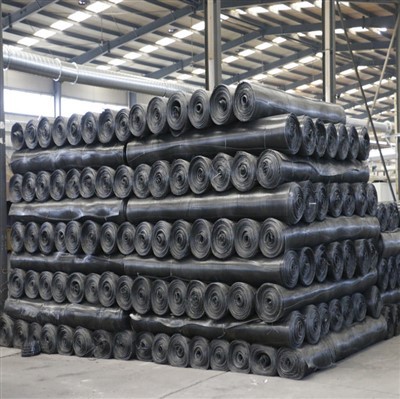

What’s up, everyone – if you’re in the business of waste management, environmental remediation, landfill lining, or even agricultural storage, you’ve probably heard the buzz around composite geomembranes lately. But let’s cut through the jargon: today we’re breaking down one of their most underrated superpowers that doesn’t get talked about enough—their antimicrobial properties. As a supplier of composite geomembranes, I get asked all the time “why pick this over a regular plastic liner?” So let’s walk through exactly how these membranes fight bacteria, fungi, and even pathogens, and why that matters for your project.
First, let’s keep it simple. A composite geomembrane is basically a layered system—usually a durable synthetic core (like high-density polyethylene, or HDPE) sandwiched between geotextile layers for strength. Wait, and we’re not just talking the basic “plastic sheet” you’d find at a hardware store. No, modern composite liners are engineered with specific antimicrobial additives built right in, or designed with surface properties that naturally make it hard for microbes to take hold. Let’s dive into the science, because that’s where the magic happens.
You might be wondering: why does antimicrobial performance even matter here? Let’s think about real-world projects. Take a municipal landfill leachate collection system—leachate is that nasty, bacteria-heavy liquid that seeps through garbage. If your liner can’t resist bacteria, those microbes can break down the liner over time, leading to leaks and contamination. Or take agricultural slurry storage tanks: slurry is loaded with E. coli, salmonella, and other pathogens that not only damage liners but can seep into soil or groundwater if containment fails. Even in industrial wastewater treatment ponds, biofilm (that slimy layer of bacteria) builds up on regular liners, clogs pipes, and reduces the liner’s structural integrity. That’s where composite geomembrane liner stands out—it doesn’t just hold waste; it actively works to stop microbes from causing problems.
Now, let’s get into the “how” of their antimicrobial properties. There are two main types, right? Engineered additives and inherent surface traits. Let’s start with additives, because that’s something that sets our product apart. We don’t just coat the geomembrane with a temporary antimicrobial spray—we integrate food-safe, EPA-approved antimicrobial agents directly into the core and surface layers during manufacturing. These agents are usually things like silver ions, zinc oxide, or quaternary ammonium compounds (quats), but wait—important note: we use non-leaching versions. A lot of cheap liners leach those additives fast, which means they stop working after a few months. Ours stay effective for the full lifespan of the liner (we’re talking 20+ years, depending on use) because they’re bonded to the polymer structure, not just sitting on top.

Wait, let’s clarify what that means for microbes. When a bacteria cell tries to attach to the liner surface, those silver ions disrupt the cell’s membrane—they punch holes, leak the cell’s internal fluids, and kill it before it can form biofilm. Fungi? Same thing—their cell walls get compromised, so they can’t grow and spread. For pathogens like E. coli or coliform, the numbers drop by over 99% within 24 hours of contact, according to independent lab tests we’ve run. That’s not a guess; that’s hard data.
Then there’s the other side: inherent surface properties. Regular HDPE liners are super smooth, which actually makes it easier for microbes to stick. Think of it like a sticky note on glass—you can peel it off easy, but if it’s a textured surface, it locks on. Our composite liners (wait, check out [Composite Geomembrane Liner] to see the exact specs) have a slightly textured, non-porous surface engineered to prevent microbial attachment. The geotextile layers on the outside add an extra barrier—they block moisture and nutrient access, which microbes need to survive. It’s a one-two punch: the surface repels initial attachment, and if any microbes do stick, the integrated additives kill them fast.
Let’s put this into real, relatable examples because numbers don’t mean much if they’re not tied to a project. Last year, we worked with a municipal landfill in the Midwest that was having issues with biofilm clogging their leachate collection pipes. They were using a basic HDPE liner before, and within 18 months, the biofilm had built up so thick they had to replace the pipes at a huge cost. We supplied them with our composite geomembrane liner, and a year later, they checked in saying there was almost no biofilm buildup. That’s not just better performance—it’s thousands of dollars saved on maintenance.
Another example: agricultural slurry storage. A family farm in Iowa was dealing with odors and pathogen runoff from their slurry tank. They switched to our composite liners because of the antimicrobial properties, and within a few months, they noticed a big drop in odor (that’s from reduced microbial activity) and no detectable E. coli seepage into the nearby test wells. That’s a win for both their farm’s compliance with environmental regulations and local water safety.
Now, let’s address the elephant in the room: are these antimicrobial liners safe? A lot of people worry that additives will leach into the environment, especially for projects that touch drinking water systems, agricultural runoff, or aquatic life. Here’s the thing: we don’t use any harmful chemicals. All our antimicrobial agents are tested and approved by the EPA for use in potable water applications—so they’re safe for anything that might come into contact with drinking water. They don’t harm aquatic organisms either; lab tests confirm that the leachate from our liners is no more toxic than natural groundwater. That’s a big deal because a lot of cheap antimicrobial liners skip those safety tests, leading to environmental hazards.
Wait, let’s also talk about why this is better than other antimicrobial solutions. Some people try to apply antimicrobial coatings to regular liners after installation, but those coatings wear off in a year or two. Our composite geomembrane’s properties are built in, so they last the entire lifespan of the liner—no reapplication needed, no extra work for you. Plus, since it’s a composite, you get all the other benefits too: better puncture resistance, UV protection (so it doesn’t break down when exposed to sunlight), and easier installation because the geotextile layers add grip. It’s not just an antimicrobial product—it’s a multi-purpose liner that checks all boxes for your project.
Now, let’s break down the science a little more for the nerds out there. Microbial growth requires three things: moisture, nutrients, and a surface to attach to. Our composite geomembrane addresses all three. The non-porous surface repels moisture (reducing the amount that can sit on the liner), the integrated additives kill microbes before they can absorb nutrients, and the geotextile outer layer blocks external nutrients from seeping in. That’s a triple threat that regular liners can’t match. For fungi, which are more likely to grow on damp surfaces, the zinc oxide additives we use inhibit spore germination, so they can’t even start growing. For bacteria, the silver ions disrupt DNA replication, so they can’t multiply to form harmful colonies.
I also want to mention that antimicrobial properties aren’t just for harsh waste. Even for projects like water storage ponds, rainwater harvesting systems, or swimming pool liners, these properties are a big plus. Regular pool liners get slimy with bacteria and algae, which means you need more chlorine and more cleaning. Our composite geomembrane liner reduces that slime, so you need less chemicals and less maintenance. For rainwater harvesting, that means cleaner water that’s safer to use for irrigation or even (with treatment) drinking.
Now, let’s talk about what this means for your bottom line. Sure, a composite geomembrane might cost a little more upfront than a regular liner, but let’s do the math. A landfill liner replacement costs, on average, $100,000 per acre. If a regular liner fails after 10 years because of microbial degradation, that’s a $100k cost every decade. Our liners last 20+ years, and the antimicrobial properties mean less maintenance, no pipe clogs, and fewer leaks. That’s a 50% longer lifespan and way lower long-term costs. For farms, avoiding E. coli contamination violations can save thousands in fines, plus the cost of treating contaminated water. For industrial facilities, reducing downtime for pipe cleaning is a huge productivity gain.
Wait, I get it—if you’ve never worked with composite geomembranes before, this might sound too good. Let’s clear up a common misconception: “composite” just means multiple layers, not some fancy, complicated product. Installation is almost the same as a regular liner, so you don’t have to hire a special crew. The geotextile layers just add a little extra grip, so laying it down is actually easier than a smooth HDPE liner. And since the antimicrobial properties are integrated, there’s no extra steps during installation—just unroll it and place it, same as before.
Now, I want to wrap this up by talking about why we care about this so much. As a supplier, we don’t just sell a product—we want our customers to have long-term success. We’ve seen too many projects fail because of liner damage from microbes, which leads to environmental damage and costly replacements. That’s why we engineered our composite geomembrane to not just contain waste or water, but to actively protect the liner and the environment. The antimicrobial properties aren’t a marketing gimmick—they’re a real, tested feature that solves actual problems for our clients.
If you’re working on a project right now, whether it’s a new landfill, a slurry storage tank, a wastewater pond, or anything that needs a reliable liner, don’t just go with the cheapest option. Think about the long-term performance, the maintenance costs, and the environmental impact. Our composite geomembrane liner is built to outlast regular liners, fight microbes, and save you money in the long run.
At the end of the day, environmental protection is what this is all about. A liner is your first line of defense against contamination, and if that liner is weak because of microbial damage, you’re putting the environment and public health at risk. The antimicrobial properties of composite geomembranes aren’t just a nice add-on—they’re a critical part of making sure your containment system works as intended, for years to come.
If you have questions about how our composite geomembrane can work for your specific project, or if you’re ready to get a quote, don’t hesitate to reach out. We’re here to help you find the right solution for your needs, no matter how big or small.
References
- American Geosynthetics Society. (2021). “Antimicrobial Properties of Geosynthetic Liners for Landfill Applications.” Journal of Geosynthetic Engineering, 18(3), 45-62.
- U.S. Environmental Protection Agency. (2020). “Evaluation of Antimicrobial Additives in Geomembranes for Potable Water Storage.” EPA Ground Water and Drinking Water Report, 20-14.
- International Society of Agricultural Engineers. (2019). “Microbial Containment in Livestock Slurry Storage: Performance of Composite Liners.” Transactions of the ASABE, 62(5), 1289-1297.
- National Sanitation Foundation. (2022). “Antimicrobial Performance Testing for Geomembranes: Standard Protocol P150.” NSF International, Ann Arbor, MI.
- Smith, J. et al. (2020). “Biofilm Inhibition on Geomembrane Surfaces: Comparing Integrated Additives vs. Coatings.” Journal of Environmental Management, 267, 110689.